‘stalkerazzo’: meaning and origin
USA, 1995—a freelance videographer or photographer, characterised as being extremely aggressive in pursuing celebrities to video or photograph them—a blend of the nouns ‘stalker’ and ‘paparazzo’
Read More
“ad fontes!”
USA, 1995—a freelance videographer or photographer, characterised as being extremely aggressive in pursuing celebrities to video or photograph them—a blend of the nouns ‘stalker’ and ‘paparazzo’
Read More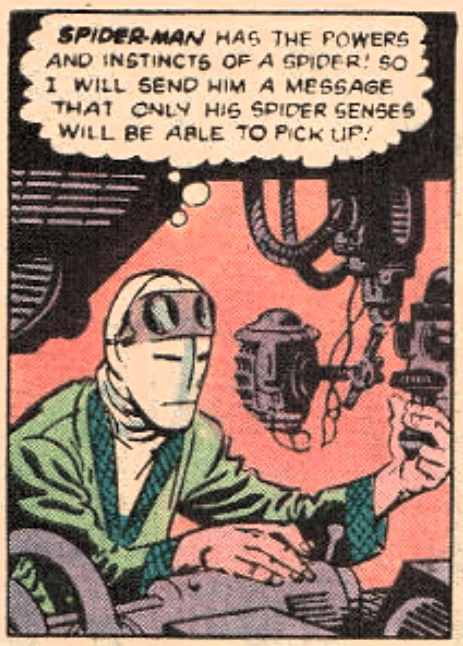
UK, 1914: an apparent ability to sense or intuit the presence of nearby spiders—USA, 1963, in reference to Spider-Man: a supernatural ability or power to perceive things beyond the normal range of human senses
Read MoreNew Zealand (1890) & Australia (1891)—to terrify somebody—probably modelled on the earlier phrase ‘to knock seven bells out of somebody’ (‘to give a severe beating to somebody’)
Read MoreUSA, 1826, as ‘to flog somebody like seven bells’—to give a severe beating to somebody—‘seven’ is perhaps simply an arbitrary intensifier—cf. phrases such as ‘like seven bells half-struck’ (‘with as much speed as possible’) and ‘to blow seven bells’ (‘to blow a violent gale’)
Read MoreUK & Ireland, 2005—the last Friday before Christmas—refers to the high number of fights caused by revellers on that day
Read Morean intelligence operative, also an intelligence operation—UK, 1966—from ‘sneaky’ (furtive, deceitful) and ‘beaky’ (referring to an overly inquisitive person, with allusion to a prominent nose)
Read MoreIreland, 1826—an expression of approval or support for a person who is involved in an activity that the speaker regards as praiseworthy
Read MoreSouthwest England—a tourist—first used in The System (1964), a British film written by Peter Draper and directed by Michael Winner—of uncertain origin
Read More1815—inner ruthlessness and determination disguised in outward gentleness and courtesy—loan translation from French ‘une main de fer dans un gant de velours’ (1814)
Read MoreUSA, second half of the 19th century—to eliminate minor difficulties—the image is of removing the creases from a piece of fabric, using a hot iron
Read More
