‘cauliflower ear’ | ‘oreille en chou-fleur’
‘cauliflower ear’ (USA, 1887)—French calque ‘oreille en chou-fleur’ (1913)—an ear permanently deformed as a result of injuries from repeated blows, as in boxing
Read More
“ad fontes!”
‘cauliflower ear’ (USA, 1887)—French calque ‘oreille en chou-fleur’ (1913)—an ear permanently deformed as a result of injuries from repeated blows, as in boxing
Read Moreto perform outstandingly well—UK, 1902, originally in football: to play an excellent game—the image may be of a footballer whose speed and skill overpower opponents
Read Moreprostitution—1889 as ‘the most ancient profession in the world’ in On the City Wall, by Rudyard Kipling—was used earlier, with positive connotations, of various professions, especially agriculture
Read Morein a state of nudity—1732 as ‘in one’s birthday clothes’—refers to the naked condition in which a person is born—here, ‘birthday’ means ‘the day on which a person was born’
Read More
USA, 1888—an enigmatic, mysterious smile, reminiscent of that represented in the Mona Lisa, a portrait of Monna Lisa del Giocondo, painted by Leonardo da Vinci
Read More1923: a small garment worn to cover the genitals—hence (1926): anything intended to conceal something regarded as shameful or indecent—from French ‘cache-sexe’, from ‘cacher’ (to hide) and ‘sexe’ (sex, genitals)
Read MoreUK, 1803, as an adjective—UK, 1842, as a noun—in reference to the action or practice of attacking, or acting against, someone in a treacherous or underhand manner
Read MoreIreland, 1914—the action or practice of attacking, or acting against, someone in a candid or open manner, as opposed to deceptively or duplicitously—coined after ‘backstabbing’ (i.e., the action or practice of attacking, or acting against, someone in a treacherous or underhand manner)
Read MoreUSA, 1995—a freelance videographer or photographer, characterised as being extremely aggressive in pursuing celebrities to video or photograph them—a blend of the nouns ‘stalker’ and ‘paparazzo’
Read More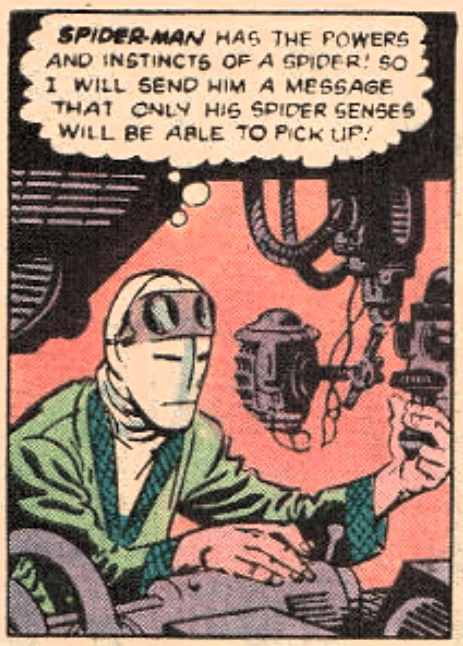
UK, 1914: an apparent ability to sense or intuit the presence of nearby spiders—USA, 1963, in reference to Spider-Man: a supernatural ability or power to perceive things beyond the normal range of human senses
Read More
