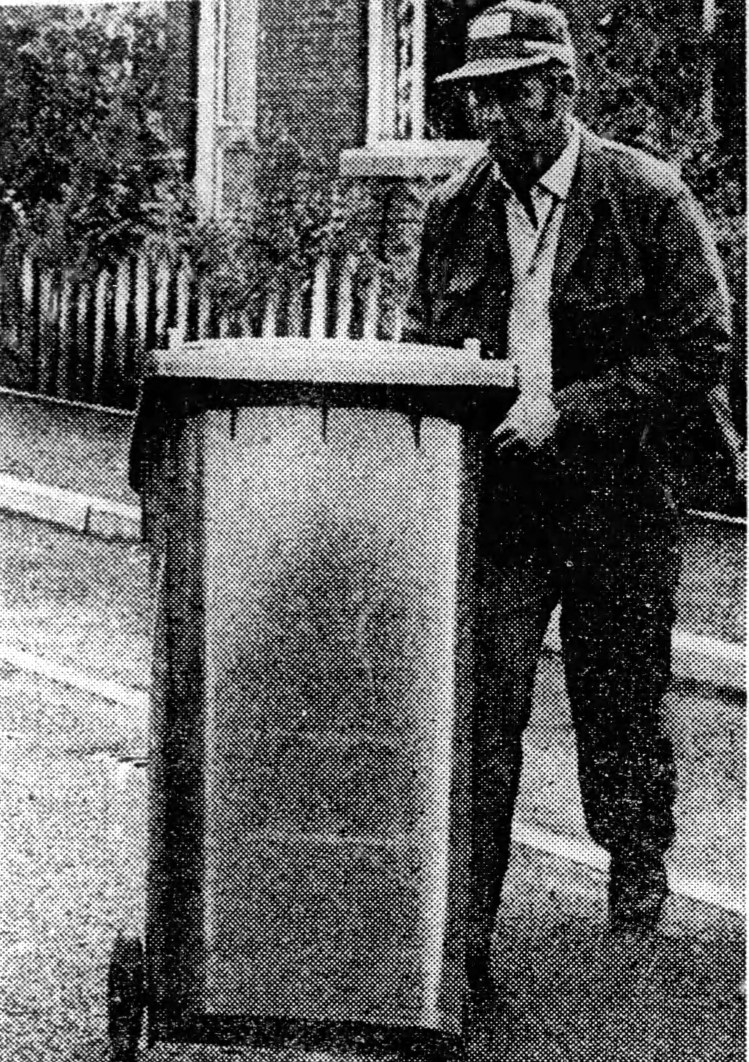
UK, 1983—a large, rectangular dustbin with a hinged lid and wheels on two of the corners—bins on wheels were introduced into the United Kingdom in 1980 on the model of what was done in the Federal Republic of Germany
to vomit from drunkenness—U.S. students’ slang, 1980—likens the position of the hands of a person holding onto the sides of a toilet bowl while vomiting therein, to that of a bus driver’s hands holding the steering wheel
the Jerusalem artichoke—UK, 1968—blend of ‘fart’ and ‘artichoke’ in ‘Jerusalem artichoke’—refers to the flatulence caused by eating Jerusalem artichokes
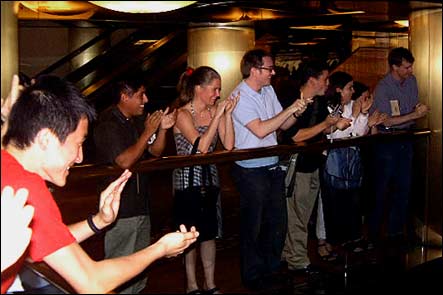
USA, 2003—a group of people organised by means of the internet, mobile phones or other wireless devices, who assemble in public to perform a prearranged action together and then quickly disperse
USA 1813—a heavy metal ball secured by a chain to a person’s leg to prevent escape or as a punishment—figuratively, mid-19th century: anything seen as a heavy restraint, especially the matrimonial bonds
to put someone in a difficult, vulnerable or compromising situation, especially by exposing them to blame—USA, 1945, sports—the image is of suspending wet washing in the open so that it can dry
In French, the concept of dependency underlies the semantic distribution of some basic lexical items: the female is strictly defined in her relation of dependency to the male, as a daughter or as a spouse.
a gesture (made by a French person to deny responsibility, knowledge or agreement) consisting typically in shrugging one’s shoulders while upturning one’s hands
alludes to the belief that such a hat or cap protects the wearer from mind control, surveillance or similar types of threat—USA, 1972 as ‘tinfoil-lined hat’



 word histories