someone or something that is fashionably or artfully dishevelled or dilapidated—in early use: someone or something whose dishevelment or dilapidation is unintentionally attractive or fashionable—USA, 1901
The phrase never put anything smaller than your elbow in your ear was explained as follows in Guidelines: Put nothing smaller than your elbow in your ear, published by Industrial Safety & Hygiene News (Birmingham, Michigan, USA) on 10th January 2017: Updated clinical guidelines published the journal Otolaryngology-Head and Neck Surgery say cotton swabs are […]
British slang, 1960s—‘to disappear up one’s own arse’: to become self-involved, pretentious or conceited—‘to be up one’s own arse’: to be self-involved, pretentious or conceited
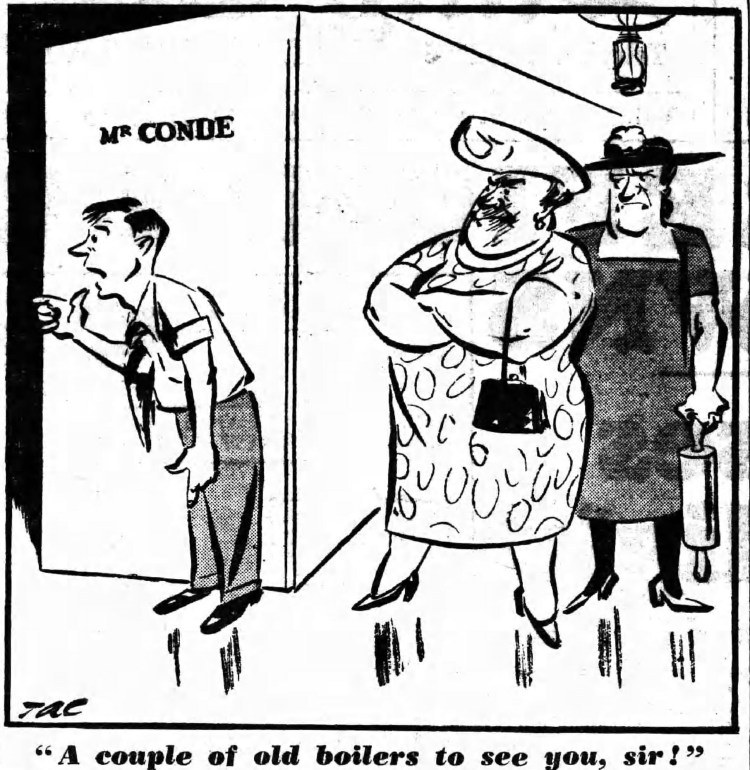
Australia, 1950—UK, 1962—derogatory and offensive: a middle-aged or elderly woman, especially one who is unattractive or unfeminine—refers to ‘boiler’, i.e., a tough old chicken for cooking by boiling
the discipline of moving rapidly and freely over or around the obstacles presented by an urban environment by running, jumping, climbing, etc.—French—altered spelling of the noun ‘parcours’ in ‘parcours d’obstacles’ (i.e., ‘obstacle course’)
an international athletic competition, modelled on the Olympic Games, for disabled athletes—UK, 1953—from the prefix ‘para-‘ in ‘paraplegic’ and ‘-lympics’ in ‘Olympics’—cf. early synonym ‘Paraplegic Games’