The Ranz des Vaches – from A Complete Dictionary of Music (1779) The term ranz-des-vaches denotes a type of Swiss melody, traditionally played on the Alpenhorn or sung in order to call cows scattered over the mountainside. The melody is characterised by the reiteration of short phrases and usually contains an element […]
The phrasal verb shell out means to pay a specified amount of money, especially one regarded as excessive. It is first recorded in Moral tales for young people (1801), by the Anglo-Irish novelist and educationist Maria Edgeworth (1768-1849): “One of you, it’s plain, must shell out your corianders.” (The word coriander (or coliander), short for coriander-seed (or coliander-seed), was slang for coin, money. The form coliander-seed, […]
The phrase (as) happy (or jolly) as a sandboy means extremely happy or carefree—cf. also happy as a clam and happy as Larry. A sandboy was a boy hawking sand for sale. It seems that the earliest use of the word is The Rider and Sand-boy: a Tale, the title of a poem written by a certain Mr Meyler and published in Harvest-Home in 1805: […]
The noun myrmidon denotes a follower or subordinate of a powerful person, typically one who is unscrupulous or carries out orders unquestioningly. This word first appeared in the plural forms Mirmydanes and Murmindones in The Laud Troy book, a poem about the siege of Troy composed around 1400. It is from the classical Latin plural […]
“HUNS KILL WOMEN AND CHILDREN!” “TELL THAT TO THE MARINES!” First-World-War US recruiting poster by James Montgomery Flagg image: Disappearing Idioms This poster, which attracted a great deal of attention, portrays an angry-looking young man in the act of pulling off his coat as though he were anxious to get into a fight. The […]
The compound apple-pie order means perfect order or neatness. Its first known user was a British Royal Navy officer, Admiral Sir Thomas Pasley (1734-1808), in his journal in 1780: Exercised Great Guns and small Arms as I constantly do every Tuesday and Friday, and fired Volleys; Wash and Fumigate, Wednesdays and Saturdays, Air Spare Sails […]
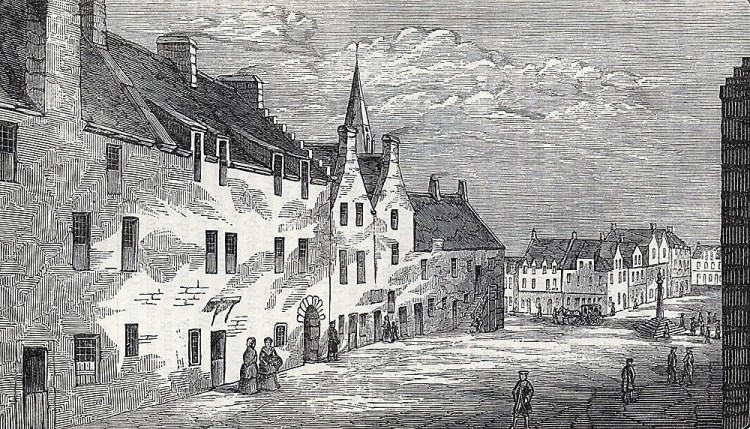
the Rotten-row in Glasgow, circa 1570 image: The Glasgow Story The street name Rotten Row occurs in many different towns. For example, The Caledonian Mercury (Edinburgh) of 10th December 1728 published the following advertisement: There is just come to Leith, a Parcel of fine Figs both in Casks and Frails [= baskets], […]
The phrase at sixes and sevens means in a state of total confusion or disarray. Based on the language of dicing, the phrase was originally to set (all) on six and seven. It denoted the hazard of one’s whole fortune, or carelessness as to the consequences of one’s actions. From this earlier association with reckless behaviour came the idea that things in […]
The word pedigree appeared in the early 15th century in the Latin form pedicru and in English forms such as pe-de-grew and pedegru, from Anglo-Norman French pé de grue and variants (pied de grue in Modern French), meaning literally foot of crane. The Anglo-Norman French word is first recorded during the second Michaelmas term (i.e. during the second session, beginning soon after Michaelmas, of the […]
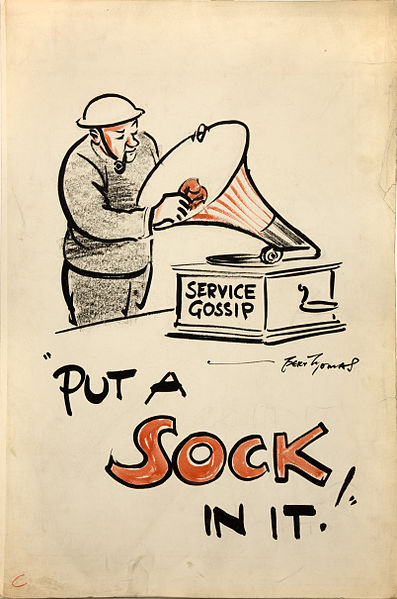
This cartoon by Bert Thomas (1883-1966) for the British Ministry of Information during World War II illustrates the folk etymology of the phrase. MEANING stop talking! ORIGIN The earliest known mention of this phrase is in a letter published by the London literary magazine The Athenæum of 8th August 1919: Sir, The […]



 word histories