‘trickle-down theory’ and ‘crumbs from a rich man’s table’
‘crumbs from a rich man’s table’—late 18th century—from the parable of the rich man and Lazarus in the gospel of Luke, 16:19-31
Read More
“ad fontes!”
‘crumbs from a rich man’s table’—late 18th century—from the parable of the rich man and Lazarus in the gospel of Luke, 16:19-31
Read Moremeaning: everybody imaginable—UK, 1898 in extended form, 1899 in current form—alludes to the names listed in the Devon ballad ‘Widdecombe Fair’
Read MoreIn the phrase ‘sleep tight’ (USA, 1873), the adjective ‘tight’ is used as an adverb meaning ‘soundly’, i.e. ‘deeply and without disturbance’, as in the combination ‘tight asleep’ (USA, 1847).
Read More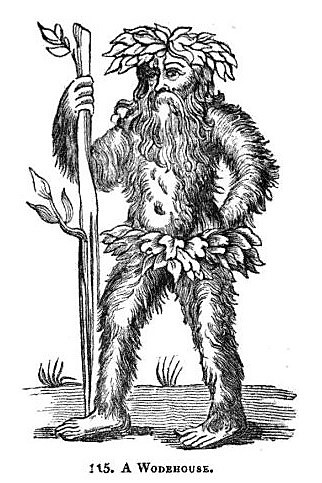
three meanings: 1/ in outdoor pageants: a man dressed in greenery, representing a wild man of the woods—2/ in inn names and signs: a forester—3/ in medieval English churches: a representation of a man’s face composed of, surrounded by, or sprouting foliage or branches
Read MoreUSA—‘to go Dutch’ (1907): to have every participant pay their own expenses, or share expenses equally—via ‘to go Dutch treat’ (1887), from ‘Dutch treat’ (1873): a meal, etc., at which each participant pays their share of the expenses—from a German practice
Read MoreA calque of German ‘blauer Montag’, ‘blue Monday’ originally denoted a Monday on which people chose not to work as a result of excessive indulgence over the course of the weekend. Under the influence of the adjective ‘blue’ in the sense ‘dismal’, it came to denote a Monday that is depressing or trying.
Read More
‘Hobby’, diminutive of ‘Hob’, pet form of ‘Robert’, was used to denote a small horse, hence a child’s toy with a horse’s head, hence a favourite occupation—cf. French ‘dada’, child’s word for horse, used to denote a favourite pastime
Read MoreTwelfth Day denotes the twelfth day after Christmas, i.e. 6th January, on which the festival of the Epiphany is celebrated, and which was formerly observed as the closing day of the Christmas festivities. (Epiphany denotes the festival commemorating the manifestation of Christ to the Gentiles in the persons of the Magi; via Old-French and Anglo-Norman forms such as epyphane (Modern […]
Read MoreEtymologically, ‘Shrovetide’ denotes the period during which it was customary to attend confession in preparation for Lent—but this period was also marked by feasting before the Lenten fast.
Read MoreFrench—from the noun use of the Latin adjective ‘natalis’ (from Christian-Latin ‘natalis dies’, ‘day of birth’), denoting the festival of the nativity of Christ
Read More word histories