UK, 1831—to startle or upset a sedate or conventionally-minded community—most probably from the following lines in The Tragedy of Coriolanus (circa 1607), by William Shakespeare: “like an eagle in a dove-cote, I | Flutter’d your Volscians in Corioli”
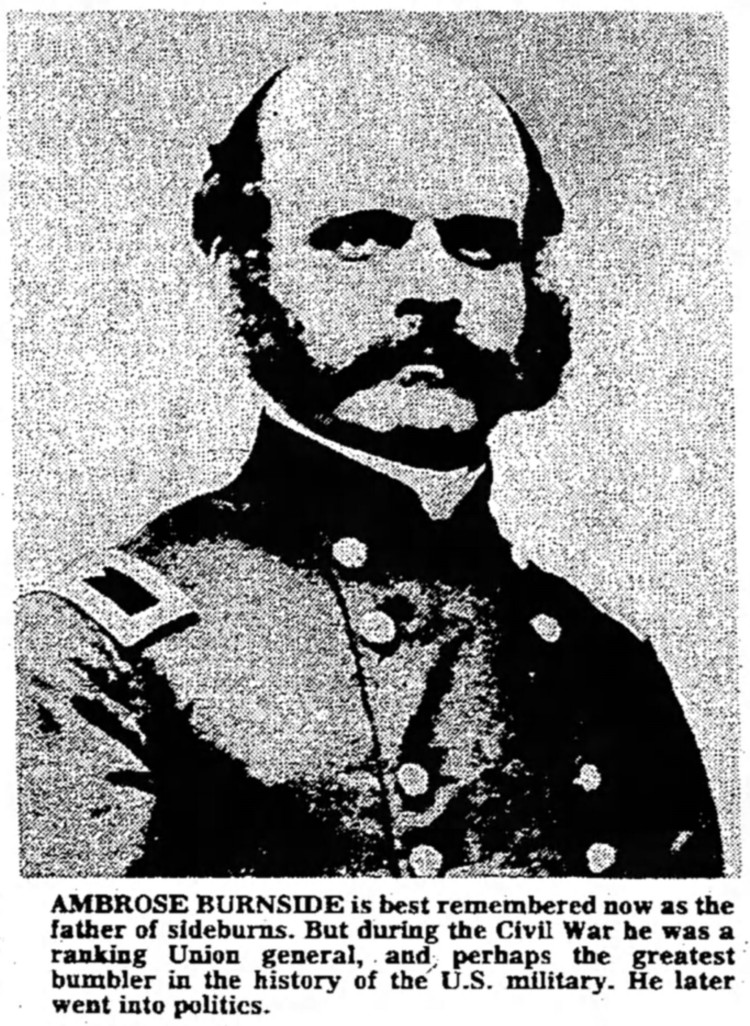
After Ambrose Burnside, Union general in the U.S. Civil War, ‘burnsides’ (1866) denotes thick side whiskers worn with a moustache and clean-shaven chin; on the pattern of ‘side whiskers’, it was altered to ‘sideburns’ (1875), itself altered to ‘sideboards’ (1882).
‘dunce’: originally a follower of John Duns Scotus (circa 1265-1308), scholastic theologian; in the 16th century, Scotus’s system was attacked with ridicule by the humanists and the reformers as a farrago of needless entities and useless distinctions
‘slipshod’: ‘characterised by a lack of care, thought or organisation’—formed after the obsolete noun ‘slip-shoe’ (= ‘a loosely fitting shoe or slipper’); ‘shod’ (meaning ‘wearing shoes’) is the past participle of the verb ‘shoe’
The name ‘Quorn’ was first registered as a trademark—for certain edible products other than meat substitutes—by the Quorn Specialities Company of Leicester, England, in 1914. The meat substitute was subsequently developed by the successors of this company.
From Japanese ‘taikun’, ‘tycoon’ was originally the title by which the shogun of Japan was described to foreigners. The current sense originated in the Japanese Embassy to the United States in 1860, not from the use of ‘tycoon’ as a nickname of Abraham Lincoln.
USA, 1948—espresso coffee mixed with steamed milk—borrowed from Italian ‘cappuccino’, literally ‘Capuchin’, because the colour of this type of coffee resembles that of a Capuchin’s habit—cf. French ‘capucin’ (= ‘Capuchin’), a name for the hare, from the colour of the animal’s fur
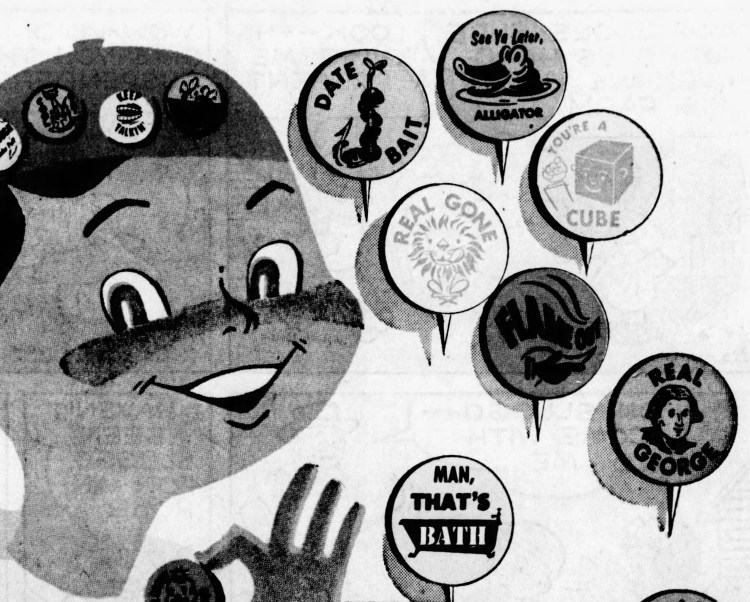
The colloquial see you later, alligator, which originated in American English, is a catchphrase used on parting. The expected response is in, or after, a while, crocodile. —Cf. also notes on ‘see you later, agitator’. The earliest instance of see you later, alligator that I have found is from Teenagers’ Slang Expressions Are Explained by […]
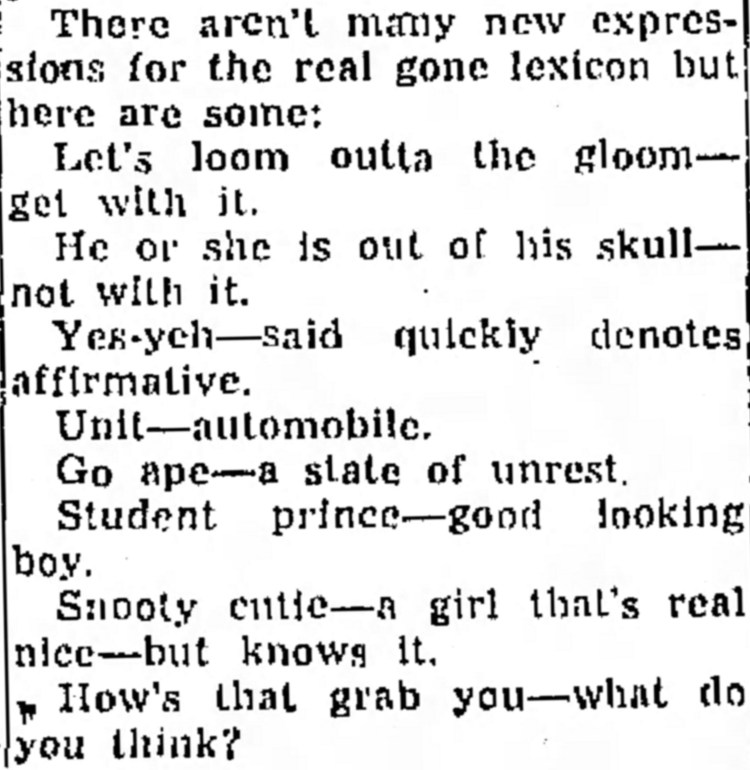
USA—‘not part of a particular exclusive group’, 1955—‘out of one’s mind’, 1958—‘smashed out of one’s skull’ (= ‘drunk’, 1963)—‘bored out of one’s skull’, 1967
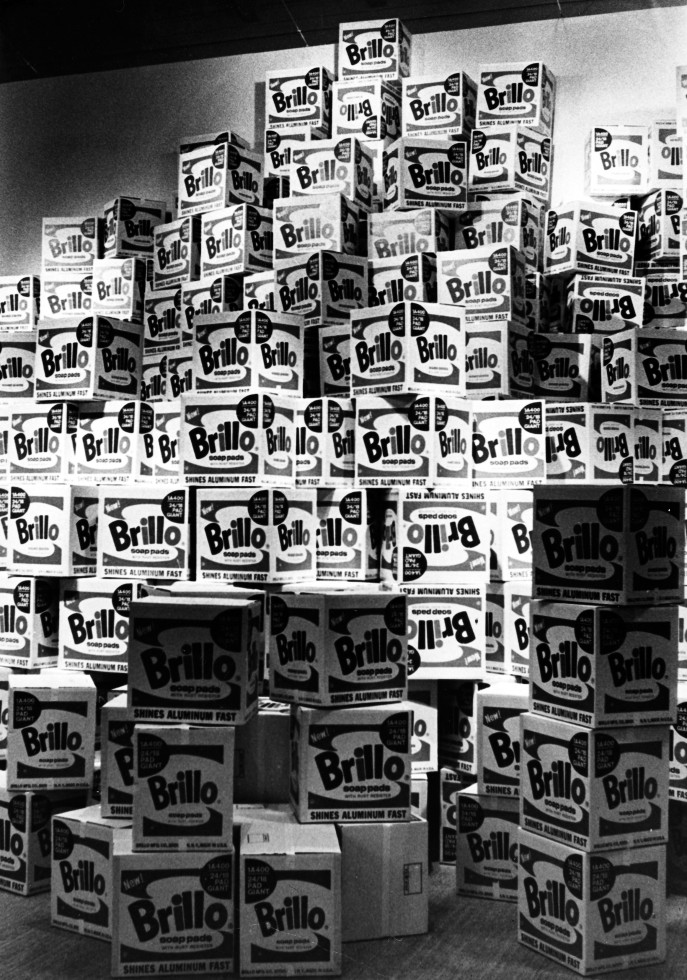
apparently misattributed to Andy Warhol in the book published for the first European retrospective of his work at the Moderna Museet, Stockholm, Sweden, in 1968

 word histories