origin of the word ‘paraphernalia’
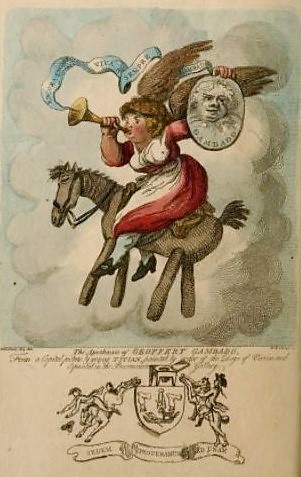
from Medieval Latin ‘paraphernalia’, short for ‘paraphernalia bona’, ‘married woman’s property’, i.e. the goods which a bride brings over and above her dowry
Read More
“ad fontes!”
from Medieval Latin ‘paraphernalia’, short for ‘paraphernalia bona’, ‘married woman’s property’, i.e. the goods which a bride brings over and above her dowry
Read More
In Psalms, the subjugated nation of Moab is compared to a vessel used for washing the feet—hence in school slang ‘Moab’: humorous for ‘washroom’, ‘tub’, ‘sink’
Read More‘mardy’: ‘sulky’, ‘moody’—from ‘mard’, dialectal alteration of ‘marred’, meaning, of a child, ‘spoilt’, and the suffix ‘-y’, meaning ‘having the qualities of’
Read More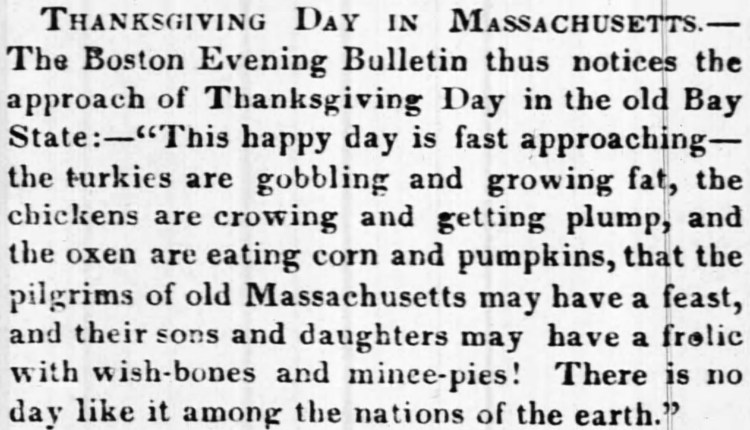
‘merrythought’, late 16th century— the forked bone between the neck and breast of a bird—so called from its resemblance to a woman’s external genitals
Read More
‘no man’s land’—first a place of execution outside London; then a mass burial ground during the Black Death; later an unoccupied zone between opposing forces
Read MoreThe verb ‘sneeze’ is an alteration of the obsolete verb ‘fnese’ due to misreading or misprinting it as ‘ſnese’ (= ‘snese’).
Read More‘Mad as a hatter’ might be from ‘like a hatter’, an intensive phrase meaning ‘like mad’, perhaps related to the verb ‘hotter’, expressing motion and emotion.
Read More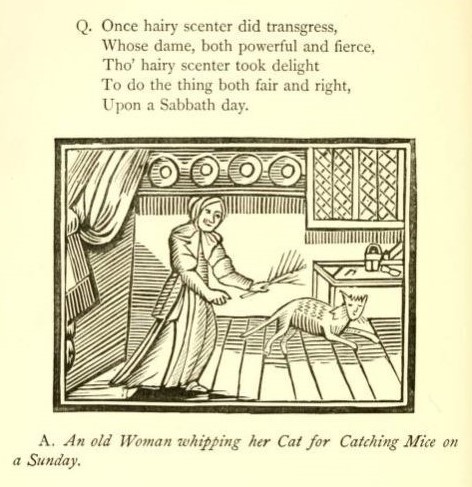
Q. Once hairy scenter did transgress, Whose dame, both powerful and fierce, Tho’ hairy scenter took delight To do the thing both fair and right, Upon a Sabbath day. A. An old Woman whipping her Cat for Catching Mice on a Sunday. from The True Trial […]
Read MoreMEANING The phrase (if you’ll) excuse (or pardon) my French is used as an apology for swearing. ORIGIN The current sense seems to derive from an actual apology for speaking French. (It is therefore unnecessary to invoke the centuries-old adversarial relationship between the English and the French.) The form pardon my French is first attested in Randolph, a Novel (1823), by the American […]
Read MoreMEANING foolish or fanciful talk, ideas, plans, etc. ORIGIN It is a shortening of moonshine in the water, meaning appearance without substance, something unsubstantial or unreal. In this phrase, moonshine means moonlight. The 15th-century correspondence between members of the Paston family of Norfolk gentry, and with others connected with them in England, […]
Read More word histories