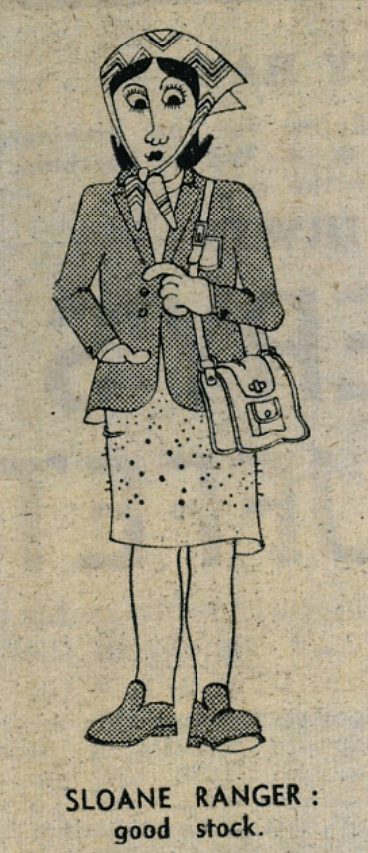
UK, 1975—an upper-class and fashionable, but conventional, young woman in London—blend of ‘Sloane Square’, the name of a square located in an affluent area of London, and ‘Lone Ranger’, the name of a well-known hero of western stories and films
UK, 1847—a fall in value, especially a reduction in wages—one of several expressions denoting the opposite in meaning of the noun qualified by the genitive case of ‘Irishman’—for example: ‘Irishman’s promotion’ (a demotion) and ‘Irishman’s hurricane’ (nautical: a flat calm)
a nickname given to London, which has, since the collapse of the Soviet Union, attracted Russian oligarchs—also used earlier in reference to Communism—modelled on Russian city names such as ‘Leningrad’ and ‘Stalingrad’
1762: the time of night when it is said that witches are active and supernatural occurrences take place—alludes to ‘the witching time of night’ in Shakespeare’s Hamlet—also (1985): the last hour of trading each month when exchange-traded stock options expire
Liverpool (Lancashire, north-western England), 1833—a speculating builder who constructs cheap houses, flats, etc., with materials of poor quality, for a quick profit—the origin of the element ‘jerry’ is unknown
USA, 1922—flappers’ slang: the sum of money that a flapper carried as a precaution so as not to be left financially helpless in case she and her boyfriend got ‘mad’ at each other while on a date
USA, 1986—something intended to divert attention from something more important—refers to the fact that when two male gorillas confront each other, they throw dust in the air to distract one another—popularised, if not coined, by Henry Ross Perot

 word histories