U.S.—‘to see the elephant’: to see life, the world or the sights, as of a large city, to gain knowledge by experience. But in 1842, the original meaning of ‘to see the elephant’ was ‘to get sick and tired of something’.
In British slang, the noun ‘piss-up’ denotes ‘a heavy drinking bout’, and the phrase ‘couldn’t organise a piss-up in a brewery’ and variants mean ‘is’, or ‘are’, or ‘am’, ‘incapable of organising the simplest event, task, etc.’—phrase first recorded in 1980.
USA, 1948—espresso coffee mixed with steamed milk—borrowed from Italian ‘cappuccino’, literally ‘Capuchin’, because the colour of this type of coffee resembles that of a Capuchin’s habit—cf. French ‘capucin’ (= ‘Capuchin’), a name for the hare, from the colour of the animal’s fur
The original meaning of beer o’clock is 5 p.m. as the end of the working day. Its first known user was Stephen King (born 1947), American author of novels of horror and suspense.
UK, 1919—possibly a mere euphemism for having too much to drink, regardless of the actual number of drinks that have been consumed (‘eight’ probably arbitrary)
UK, 1972—‘XXXX’: a euphemistic substitute for a four-letter swear word, usually ‘fuck’—it did not originally refer to the Australian lager Castlemaine XXXX
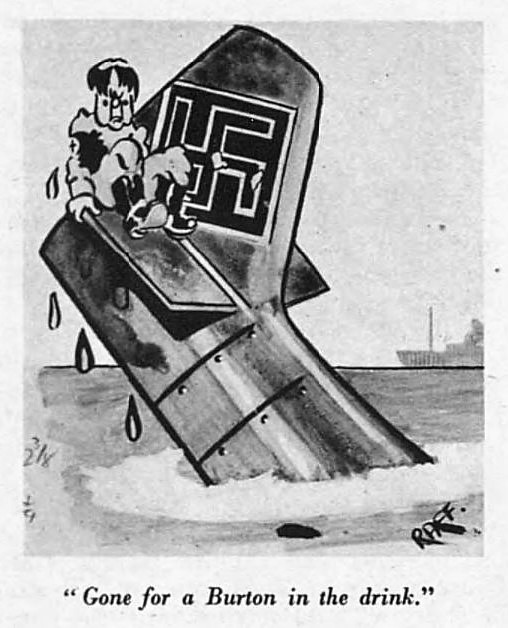
to meet with disaster; to be ruined, destroyed or killed—UK, 1941, RAF slang: (of an airman) to be killed—perhaps from ‘to go for a drink (of Burton ale)’
first recorded in ‘As You Like It’, by Shakespeare—from the former practice of hanging a branch or bunch of ivy as a vintner’s sign in front of a tavern
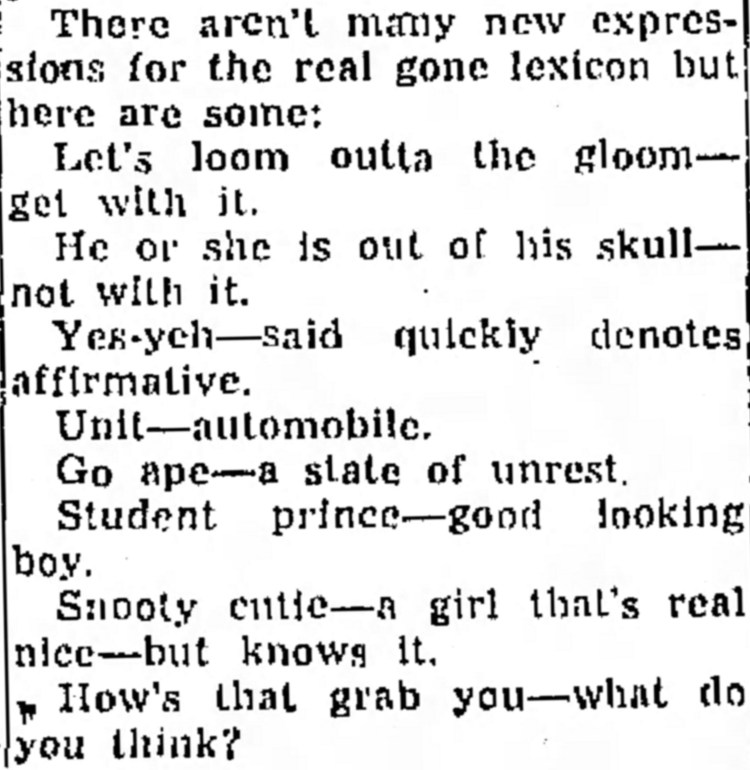
USA—‘not part of a particular exclusive group’, 1955—‘out of one’s mind’, 1958—‘smashed out of one’s skull’ (= ‘drunk’, 1963)—‘bored out of one’s skull’, 1967


 word histories