‘parson’s nose’: meaning and origin
the fatty extremity of the rump of a goose, fowl, etc.—so called from the resemblance of this fatty extremity to the human nose—UK, 1826—earlier synonym: ‘pope’s nose’ (UK, 1788)
Read More
“ad fontes!”
the fatty extremity of the rump of a goose, fowl, etc.—so called from the resemblance of this fatty extremity to the human nose—UK, 1826—earlier synonym: ‘pope’s nose’ (UK, 1788)
Read MoreUK & USA, early 20th century—used in a variety of meanings, among which: ‘a postcard on which the sender could leave the imprint of a kiss’, and ‘a brief statement about kissing’
Read MoreUSA, 1815—a circular curl of hair (sometimes artificial), usually pressed flat against the temple or forehead
Read Morein the game of whist: the four of hearts, considered as an unlucky card—southeastern Scotland and northeastern England, early 19th century—origin unknown
Read Morea person who overestimates their own influence—1661—alludes to the fable of a fly sitting on the axletree of a moving chariot and saying, “See what a dust I raise”
Read Moredominated by a woman or by women—UK, 1809—past participle of ‘ride’, ‘ridden’ combines with nouns to form adjectives meaning: afflicted, affected or dominated by something or by someone specified
Read Moreeveryone is accountable for their own actions—17th century—may refer to herrings being hung when up for sale (that is to say: every piece of merchandise must sell on its own merits)
Read Moresaid of a great number of persons or things, especially when pressed against one another—UK, 1776—refers to herrings in a barrel
Read More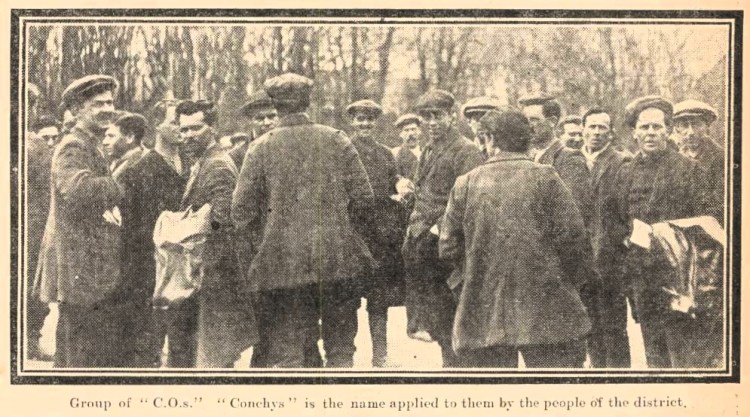
a conscientious objector—UK, 1916—from the initial syllable of the noun ‘conscientious objector’ and the suffix ‘-ie’, used to form familiar diminutives
Read Moreoriginally (1830): the rule, or the power, of paper money (as opposed to metallic currency)—later also (1940): the rule, or the power, of bureaucracy
Read More word histories