notes on the phrase ‘don’t hurry, Hopkins!’
addressed to slow persons—1858—said to be from a promissory note in which a Kentuckian named Hopkins wrote it was agreed he was not to be hurried into paying
Read More
“ad fontes!”
addressed to slow persons—1858—said to be from a promissory note in which a Kentuckian named Hopkins wrote it was agreed he was not to be hurried into paying
Read More
UK, 1884—often erroneously attributed to philosopher Herbert Spencer, who said he only repeated an assertion made by a friend of his, Charles Roupell
Read More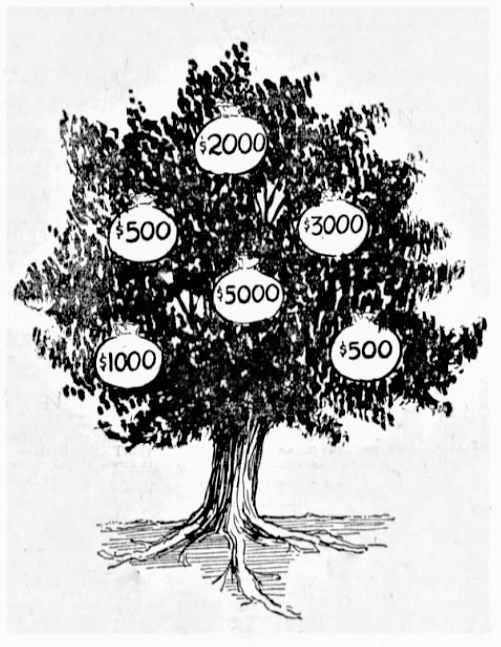
‘money tree’ (UK, 1749): a source of easily obtained or unlimited money—‘to shake the money tree’ (UK, 1851)—related to proverb ‘money does not grow on trees’
Read More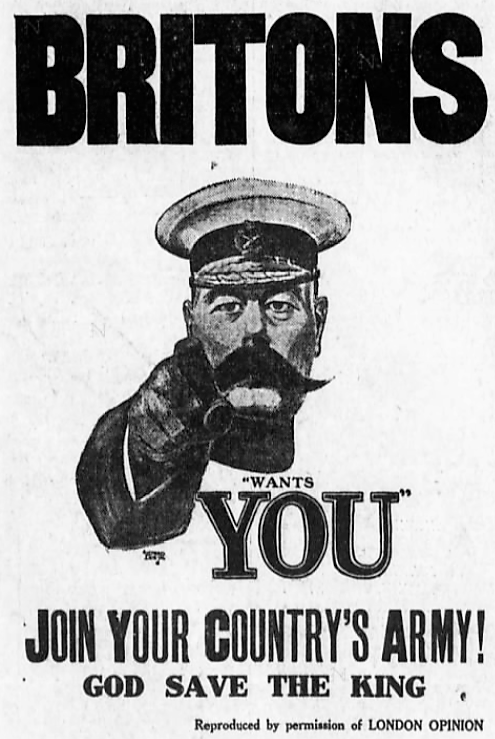
UK, 1914—from a poster showing Lord Kitchener, Secretary of State for War, used in the recruitment campaign at the beginning of World War One
Read MoreEnglish phrase (1728) preceded by ‘good wits jump’, i.e. ‘agree’ (1618)—French phrase (1775) preceded by ‘les beaux esprits se rencontrent’ (1686)
Read More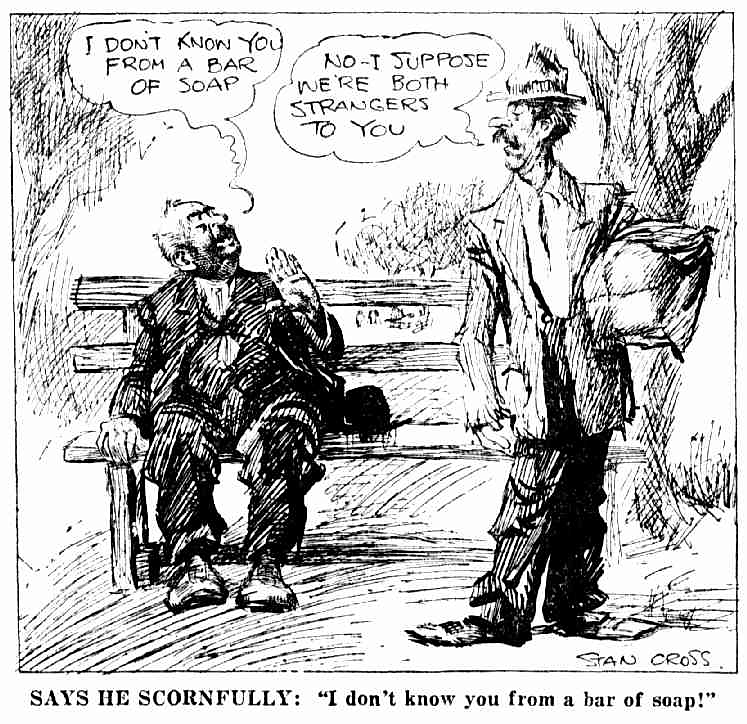
to be completely unacquainted with someone or something—most earliest uses (late 19th century) in U.S. publications, but a few in Australian publications
Read More
nourish your husband—1882 in ‘Vanity Fair’ (London)—popularised in 1885 by a cartoon by George du Maurier, published in ‘Punch, or the London Charivari’
Read MoreUK, 1842—theatre: a long pause during the delivery of a speech—refers to the English actor William Macready (1793-1873), who was given to making long pauses
Read More
1941—expresses exasperation or derision at a clumsy, erratic or idiotic person—popularised by Jimmy Clitheroe in his radio programme The Clitheroe Kid (1958-72)
Read More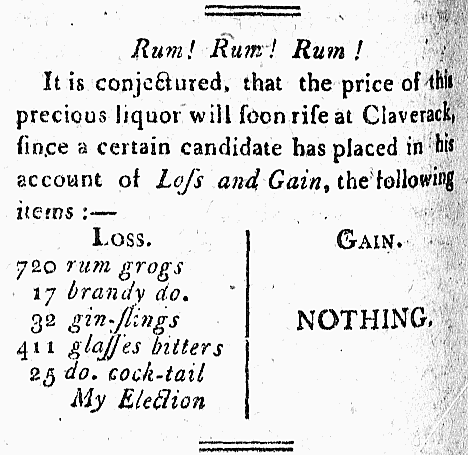
13 May 1806—The Balance, and Columbian Repository (Hudson, New York, USA)—“a stimulating liquor, composed of spirits of any kind, sugar, water, and bitters”
Read More word histories