‘no good to Gundy’: meaning and origin
Australia, 1902—of no use or advantage whatsoever, no good at all—origin unknown—alliterative effect and phonetical factors proper to Australia may have contributed to the currency of the phrase
Read More
“ad fontes!”
Australia, 1902—of no use or advantage whatsoever, no good at all—origin unknown—alliterative effect and phonetical factors proper to Australia may have contributed to the currency of the phrase
Read More
UK, 1819—has been used in various jocular phrases referring to alcohol consumption—punningly alludes to ‘lush’, which, as a noun, denotes alcoholic drink, and, as a verb, means to consume alcohol—‘the City of Lushington’: a convivial society, consisting chiefly of actors, which met at the Harp Tavern, London
Read MoreScotland, 1825 (as ‘bane idle’)—England, 1839—utterly lazy or indolent—‘bone’ seems to be used as an intensifier with adverbial force in the sense ‘through to the bone’, i.e., ‘deeply and fundamentally’
Read MoreUSA, 1927—denotes male vigour, especially sexual—with wordplay on ‘penis’—interestingly, via an alteration of the Latin diminutive ‘pēnĭcillus’, denoting literally a little tail, hence a painter’s brush or pencil, ‘pencil’ is derived from Latin ‘pēnis’, denoting literally a tail, hence the penis
Read More
The following slang expressions have been used to designate the mouth: ‘box of ivories’ (also ‘ivory-box’); ‘box of dominoes’ (also ‘domino-box’); ‘bone-box’; ‘potato-box’; ‘potato-jaw’; ‘potato-trap’; ‘kissing-trap’.
Read More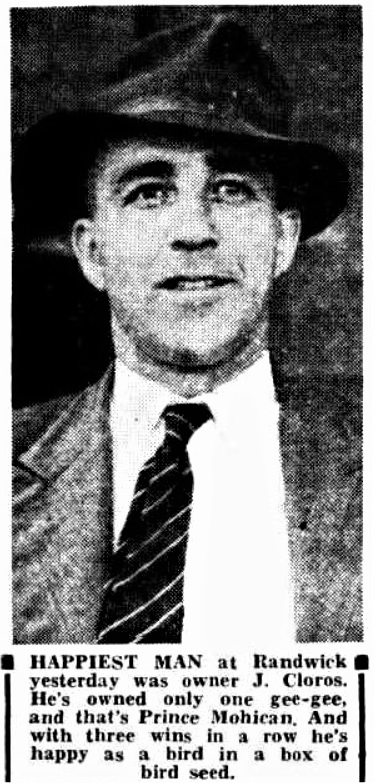
Australia and New Zealand, 1939—to be in good spirits, ‘chirpy’—the image is of a boxful of chirping birds (cf. the extended form ‘happy as a bird in a box of birdseed’)—New-Zealand variant ‘to be a box of fluffy ducks’, also ‘to be a box of fluffies’
Read MoreBritish, 1907—denotes considerable talent or ability to grow plants—in this phrase, the adjective ‘green’ refers to the colour of growing vegetation—1921: ‘green-thumbed’ (adjective)
Read MoreUK, 1996—an awkward, unfashionable or unrestrained style of dancing to pop music, as characteristically performed by middle-aged or older men
Read MoreAustralia, 1887—a forlorn hope, no prospect whatever—may refer to the British convict William Buckley (1780-1856), who escaped from custody in 1803 and lived for thirty-two years with Aboriginal people
Read More‘butterfingered’, adjective, 1615: having a tendency to let things fall or slip from one’s hands—also (English, regional) unable or unwilling to handle hot items with one’s bare hands—‘butterfingers’, noun, 1835: a butterfingered person, a person with a tendency to let things fall or slip from his or her hands
Read More word histories