meaning and origin of the phrase ‘(with) tongue in cheek’

The phrase ‘(with) tongue in cheek’ originally referred to a sign of contempt or derision consisting in sticking one’s tongue in one’s cheek.
Read More
“ad fontes!”
The phrase ‘(with) tongue in cheek’ originally referred to a sign of contempt or derision consisting in sticking one’s tongue in one’s cheek.
Read More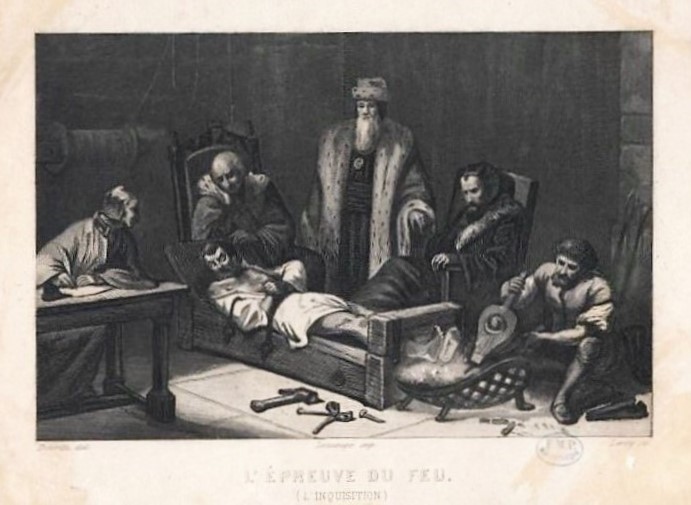
L’épreuve du feu (l’inquisition) by Devritz (painter) and Leroy (engraver) – date unknown source: BIU Santé The original meaning of the noun ordeal, from Old English ordāl, ordēl, is: an ancient test of guilt or innocence by subjection of the accused to severe pain, survival of which was taken as divine proof […]
Read More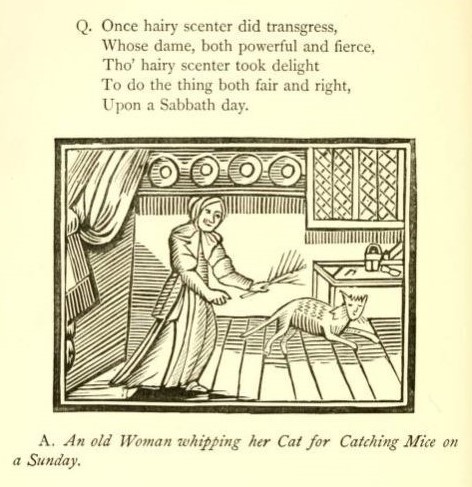
Q. Once hairy scenter did transgress, Whose dame, both powerful and fierce, Tho’ hairy scenter took delight To do the thing both fair and right, Upon a Sabbath day. A. An old Woman whipping her Cat for Catching Mice on a Sunday. from The True Trial […]
Read More
It is a circumstance rather remarkable, that the answer to Sir George Rodney’s summons of surrender, given by the respective Dutch Governours of the Islands of St. Eustatius and St. Martin’s, should be couched exactly in the same form of words without the smallest variation; from this we are either to suppose, that the […]
Read More
May your Christmas be A Pollyanna Christmas A day of gladness and good cheer, and if you have in mind to send a gift […]
Read More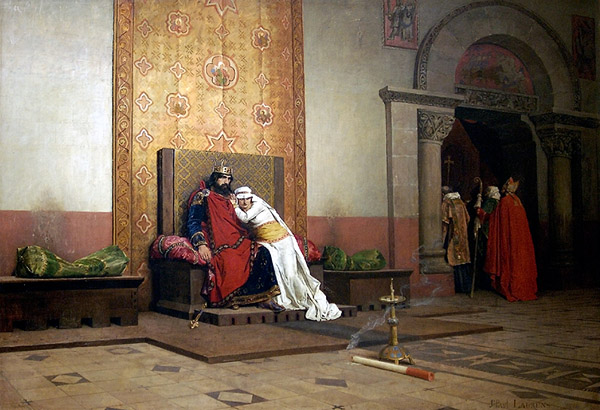
The Excommunication of Robert the Pious (1875), by the French artist Jean-Paul Laurens (1838-1921)—image: Wikimedia Commons The officiants have just excommunicated Robert by bell, book, and candle [note 1], and left the quenched candle behind. Robert II (972-1031), known as the Pious, the son of Hugues Capet, was excommunicated for incest by Pope Gregory V […]
Read More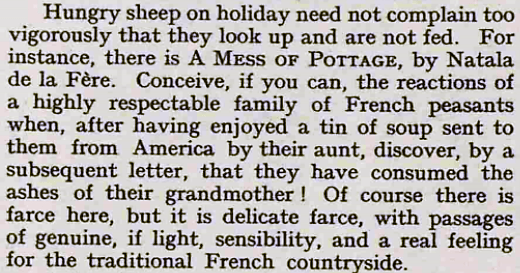
Hungry sheep on holiday need not complain too vigorously that they look up and are not fed. For instance, there is A Mess of Pottage, by Natala de la Fère. Conceive, if you can, the reactions of a highly respectable family of French peasants when, after having enjoyed a tin of soup sent to them […]
Read More
the gods at the Comedy Theatre, London, 1949 source: Historic England – The Theatres Trust Via Middle French galerie, the noun gallery, attested in the late 15th century, is from the medieval Latin of Italy galeria, an alteration of medieval Latin galilaea, designating a porch at the entrance of a monastery’s church—hence English […]
Read More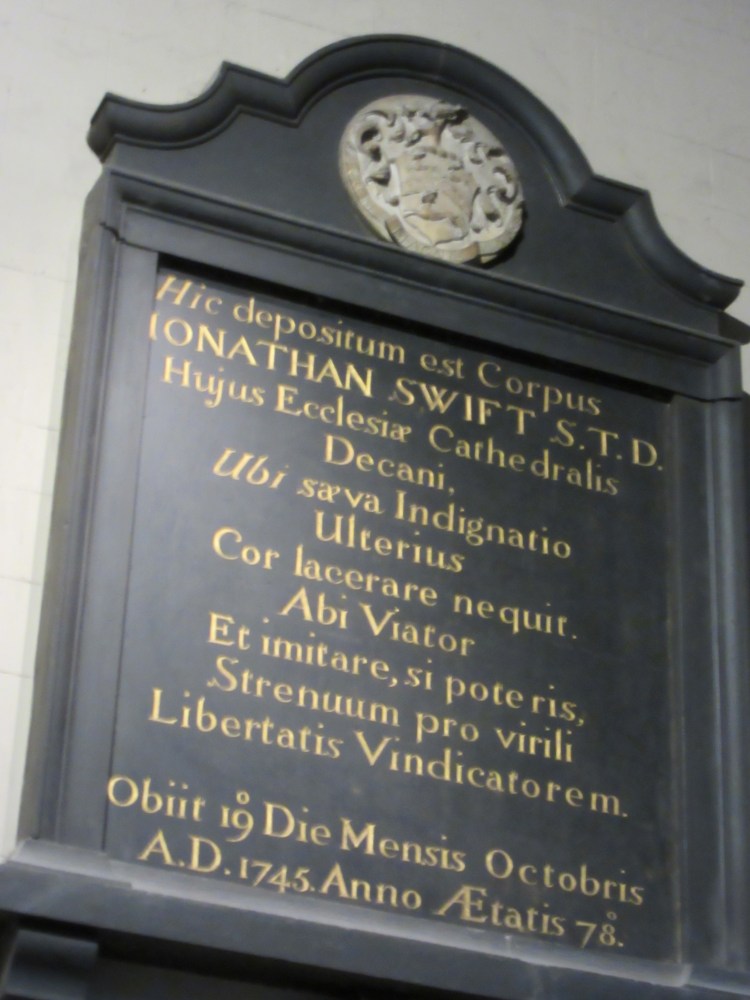
Jonathan Swift’s grave, marked by a simple brass plaque on the floor at the west end of St Patrick’s Cathedral, Dublin, is adjacent to that of his great friend in life, Stella (Esther Johnson – 1681-1728): plaques marking the graves of Jonathan Swift and Esther Johnson Latin sæva indignatio, meaning savage indignation, expresses a […]
Read MoreThe phrase cock-and-bull story denotes an implausible story used as an explanation or excuse. The French expression sauter du coq à l’âne, literally to jump from the cock to the (male) ass, means to skip from one subject to another, the image being that incoherent talking is like switching abruptly from the topic of the cock to that of […]
Read More word histories