the liturgical origin of ‘Quasimodo’

in full ‘Quasimodo Sunday’: the Sunday after Easter—from the opening words of the Latin introit for that day, ‘quasimodo geniti infantes’, ‘as newborn babies’
Read More
“ad fontes!”
in full ‘Quasimodo Sunday’: the Sunday after Easter—from the opening words of the Latin introit for that day, ‘quasimodo geniti infantes’, ‘as newborn babies’
Read More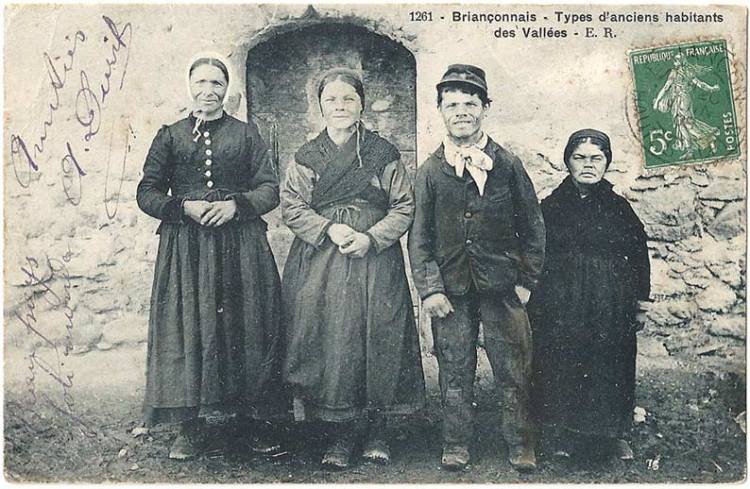
Swiss-French ‘crestin’ (= ‘Christian’): in certain valleys of the Alps, a mentally deficient, deformed person suffering from a congenital thyroid deficiency
Read MoreThe ladybird was so named on account of its seven spots, which were popularly believed to symbolise the seven sorrows of the Virgin Mary.
Read More
The word ‘folklore’ was coined in 1846 by the British author William John Thoms, inspired by Jacob and Wilhelm Grimm’s anthology of German fairy tales.
Read More
from ‘at do’ (meaning ‘to do’)—construction ‘to have’ + pronominal object (e.g. ‘much’) + ‘at do’ led to ‘ado’ reinterpreted as a noun qualified by an adjective
Read More
phonetic reduction of ‘Christ’s cross’; first element phonetically reduced as in ‘Christmas’; hence ‘criss-cross’ treated as a reduplication of ‘cross’
Read Morefrom the legal formula ‘part and parcel’, in which both nouns meant ‘an integral portion of something’, the second noun merely reinforcing the first
Read More
UK—1903: ‘the man on the Clapham omnibus’, the average or typical person—1844: ‘the Clapham Sect’, a group of social reformers based at Clapham, London
Read More
mid-16th century—meaning: to wait for the death of a person with the expectancy of succeeding to his possessions or office; implies a futile wait
Read Moreremarks on English phrases (‘to rain cats and dogs’, ‘tit for tat’, ‘the devil to pay’, etc.) – from Notes and Queries (London), 9th November 1861
Read More word histories