from the notion that even a dead cat will bounce if dropped from a sufficient height—UK, 1981: a rapid fall in the stock market with hardly any reaction—USA, 1985: a rapid but short-lived recovery in the stock market after a sharp fall—hence, 1992: any spurious success
USA, 1950s—The noun ‘doggy (or doggie) bag (or pack)’ denotes a bag, provided on request by the management of a restaurant, in which a diner may take home any leftovers; apparently, these leftovers were originally intended for the diner’s pet dog.
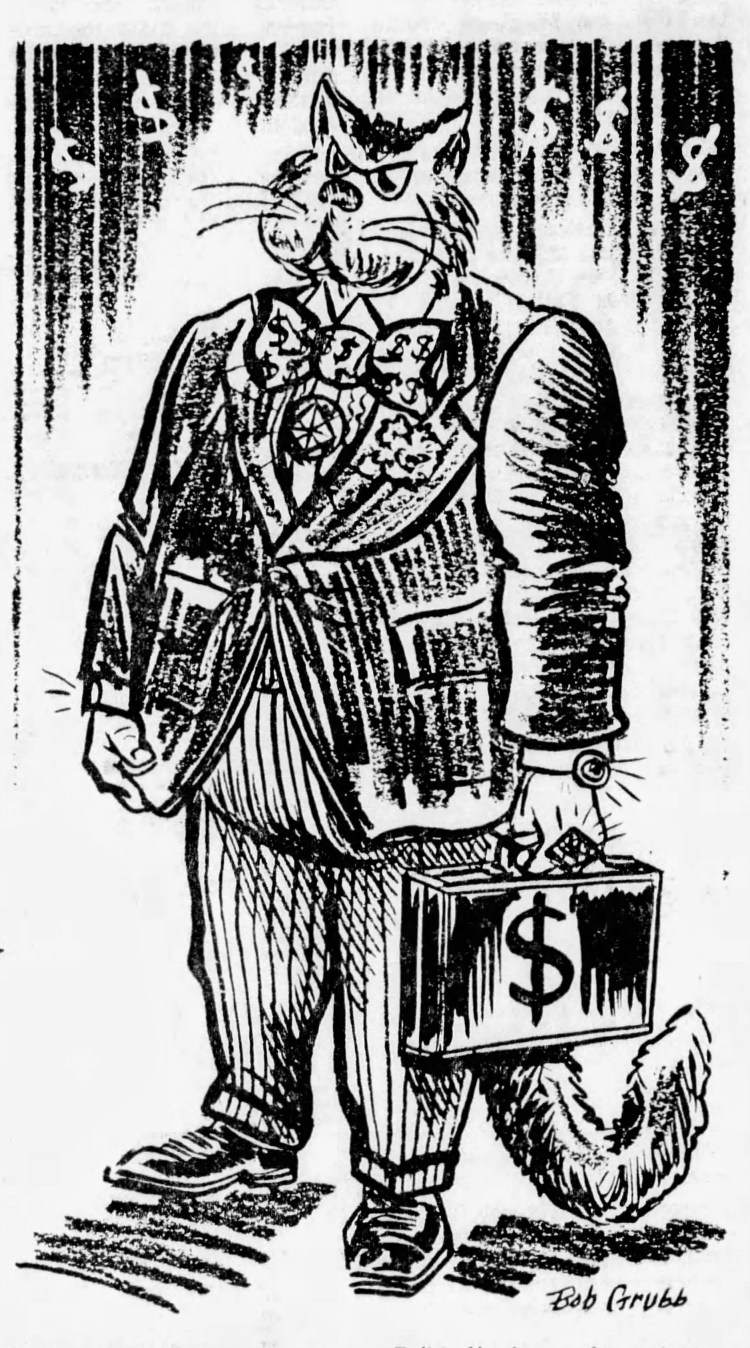
Of American-English origin, the slang term fat cat denotes a wealthy, influential person, especially one who is a heavy contributor to a political party or campaign. The earliest occurrence that I have found is from an article published in The Sun (Baltimore, Maryland) of 1 November 1925.
‘queen’s’, or ‘king’s’, ‘cushion’: a seat made by two people who cross arms and hold each other’s hands to form a support for another person—Scotland and northern England, 19th century
Greek ‘skíouros’, ultimate origin of ‘squirrel’: folk-etymologically interpreted as meaning ‘shadow-tailed’ because when the animal sits erect, it raises its tail up against its back and over its head as if to shade itself
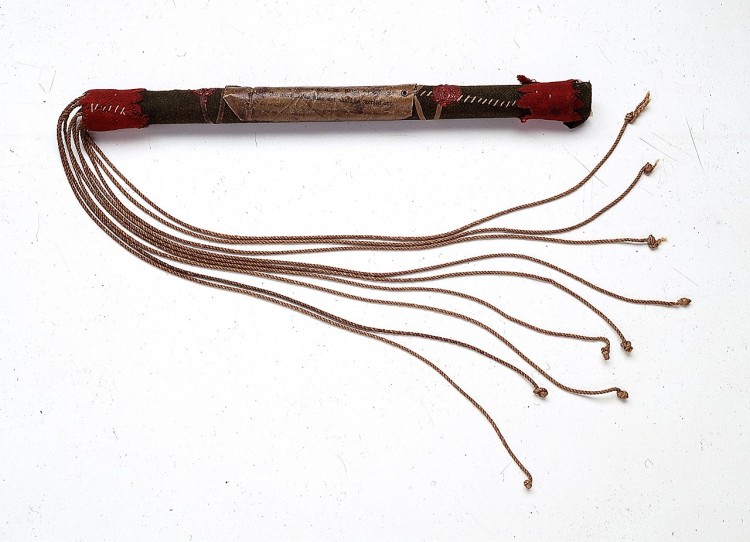
cat-o’-nine-tails (1866-79) – photograph: National Maritime Museum The noun cat-o’-nine-tails denotes a rope whip with nine knotted cords, formerly used, especially at sea, to flog offenders. This instrument of punishment was authorised in the British navy and army until 1881—cf. also to run the gauntlet. The word is first recorded in Love for […]
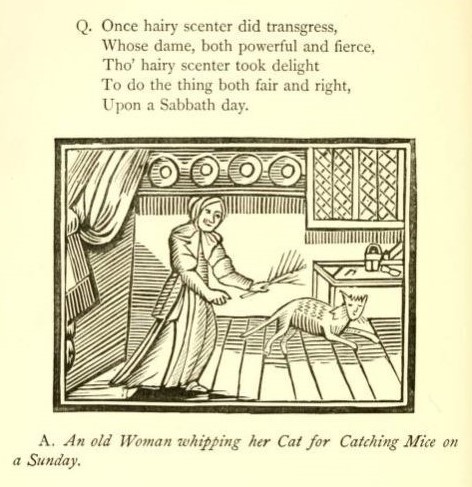
Q. Once hairy scenter did transgress, Whose dame, both powerful and fierce, Tho’ hairy scenter took delight To do the thing both fair and right, Upon a Sabbath day. A. An old Woman whipping her Cat for Catching Mice on a Sunday. from The True Trial […]
Eastern Vaudeville Bans Unseemly Slang A general order has been sent out from the Keith office to all Keith, Moss and Proctor vaudeville houses, instructing resident managers to hereafter bar the use by artists of the current slang phrases, “That’s the Cat’s Meow,” “Cat’s Pajamas,” “Hot Dog,” “Hot Cat,” etc. This means the phrases […]
Of American-English origin, the phrase to look, or to feel, like something the cat has brought in means to look, or to feel, exhausted or bedraggled. The earliest instances of the form, if not of the phrase, that I have found are in, and as the title of, a story published in The Perrysburg Journal (Perrysburg, Ohio) of 2nd February 1877 […]


 word histories