‘tinfoil hat’ (used in relation to protection)

alludes to the belief that such a hat or cap protects the wearer from mind control, surveillance or similar types of threat—USA, 1972 as ‘tinfoil-lined hat’
Read More
“ad fontes!”
alludes to the belief that such a hat or cap protects the wearer from mind control, surveillance or similar types of threat—USA, 1972 as ‘tinfoil-lined hat’
Read More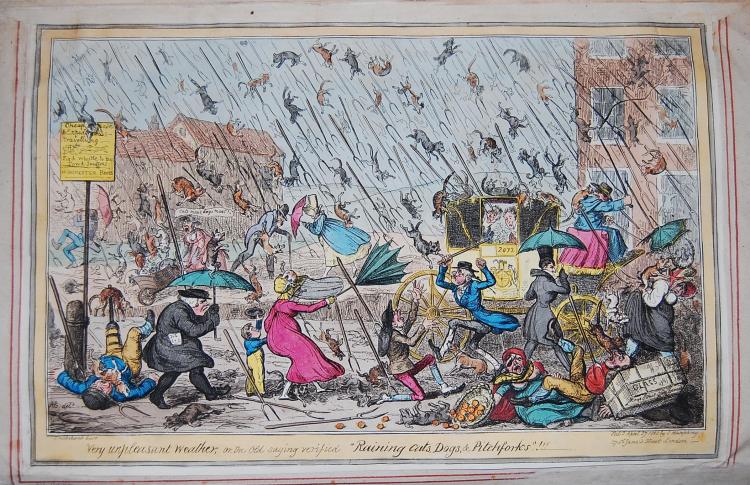
to rain very heavily—UK, 1820—sometimes appended to the phrase ‘to rain cats and dogs’
Read Morea difficult, uncooperative or unsociable person—UK, 1829—from French ‘mauvais coucheur’, literally ‘bad bedfellow’, with original allusion to a person whom a traveller had to share a bed with when stopping over at an inn
Read Morea drink consisting of vodka and Clamato juice—Canada, 1969—coined after ‘Bloody Mary’—this drink is said to have been invented by bartender Walter Chell
Read Morean event or occasion at which the expected principal participant is not present—coined after ‘Hamlet without the Prince’—‘Lear without the King’ 1904—‘Henry V without the King’ 1964
Read MoreUSA, 1981—said to have been invented by cheerleader ‘Krazy George’—popularised worldwide during the 1986 FIFA World Cup in Mexico, as a translation of Spanish ‘ola’—hence the British phrase ‘Mexican wave’ (1986)
Read Morethe practice of coasting downhill in a motor vehicle, with the engine disengaged—USA, 1949, lorry-drivers’ slang—one of the phrases in which ‘Mexican’ denotes basic devices or processes compared unfavourably with more advanced equivalents
Read Morea genre of popular fiction featuring wealthy and glamorous characters who typically engage in frequent sexual encounters and extravagant spending—USA, 1985 & 1986, in reference to British novelist Jackie Collins and U.S. novelist Judith Krantz
Read More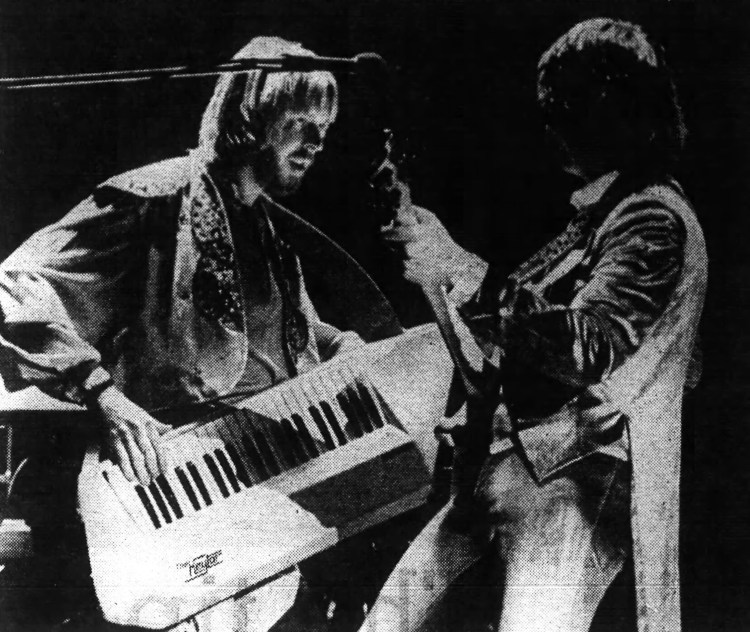
a synthesizer designed to be held in the manner of a guitar, with one hand playing a keyboard while the other operates controls on an extended handle—USA, 1979—from ‘key-’ in ‘keyboard’ and ‘-tar’ in ‘guitar’
Read More‘raspberry’: a rude sound (suggestive of breaking wind) made by blowing with the tongue between the lips, as an expression of mockery or contempt—UK, 1888—‘raspberry’ (short for ‘raspberry tart’): rhyming slang for ‘fart’
Read More word histories