‘kir royale’: meaning and origin
USA, 1974, as ‘royale kir’—a drink made from champagne, or sparkling white wine, and crème de cassis—from ‘kir’ (a drink made from dry white wine and crème de cassis) and ‘royale’ (first-rate)
Read More
“ad fontes!”
USA, 1974, as ‘royale kir’—a drink made from champagne, or sparkling white wine, and crème de cassis—from ‘kir’ (a drink made from dry white wine and crème de cassis) and ‘royale’ (first-rate)
Read MoreCanada, 1985—one who is born into the Anglican Church (i.e., an Anglican ‘from the cradle’)
Read MoreUK, 1965—humorous—the Soviet supersonic airliner Tupolev Tu-144—from ‘Concorde’, the name of an Anglo-French supersonic airliner, and the suffix ‘-ski’, in humorous imitation of Russian
Read More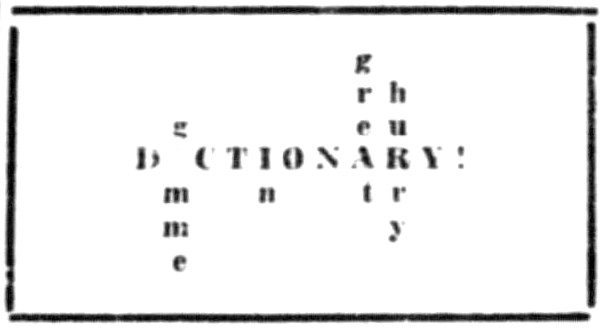
the style of language considered characteristic of crossword clues or solutions—USA, 1925—from the noun ‘crossword’ and the suffix ‘-ese’, forming nouns designating the style of language considered characteristic of the first element
Read Moreto be in control of a situation; to be in a dominant position—USA, 1899—originally (USA, 1867) used in reference to hunting game animals
Read More1910—a humorous phonetic transcription of the phrase “goes into”, as originally used at school in arithmetic lessons (as in “4 guzinter 8 two times”)—hence, by extension: a schoolteacher
Read MoreUK & USA, early 20th century—used in a variety of meanings, among which: ‘a postcard on which the sender could leave the imprint of a kiss’, and ‘a brief statement about kissing’
Read Morea narrow escape from danger, disaster or mishap—UK, 1820—refers to the act of shaving with a cutthroat razor, which may result in injury
Read Morethree daily meals plus a bed for the night (i.e., basic food and shelter)—USA, 1929—chiefly used in relation to the military, prison, and shelters for homeless people—‘hot’ designates a hot meal
Read Moreone is no longer rational or sane—USA, 1983
Read More word histories