a term of abuse or disparagement, especially for a man’s wife or female relative—1616 in Epicœne, or The Silent Woman, by Ben Jonson—perhaps in reference to an encumbrance, like a clog (i.e., a heavy piece of wood) tied to a dog
an epithet for William Shakespeare, born at Stratford-upon-Avon, on the River Avon—first used by Ben Jonson in the earliest collected edition (1623) of Shakespeare’s plays—but this use of ‘swan’ for a bard, a poet, is rooted in a tradition going back to antiquity
‘Magazine’ (= ‘storehouse’) came to denote a book providing information on a specified subject (17th c.). This gave rise to the sense ‘periodical magazine (= ‘repository’) of the most interesting pieces of information published in the newspapers’ (18th c.).
The image of the deaf adder originated in the Book of Psalms, 58:4-5: “the deaf adder that stoppeth her ear; which will not hearken to the voice of charmers”.
an argument said to have been used by John Morton in levying forced loans: a person living well was obviously rich; one living frugally must have savings
Named after Latin ‘canina litera’ (‘the canine letter’), ‘the dog’s letter’ is a name for the letter R, from its resemblance in sound to the snarl of a dog.
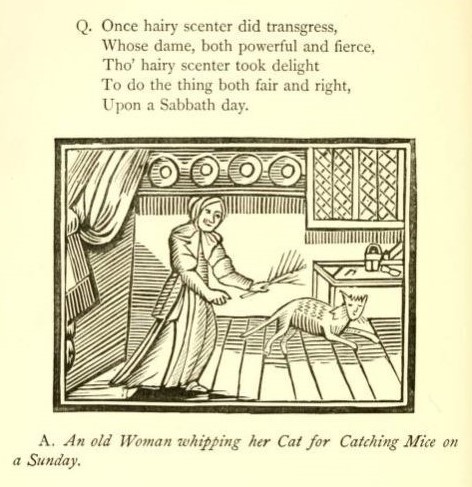
Q. Once hairy scenter did transgress, Whose dame, both powerful and fierce, Tho’ hairy scenter took delight To do the thing both fair and right, Upon a Sabbath day. A. An old Woman whipping her Cat for Catching Mice on a Sunday. from The True Trial […]




 word histories