‘Fiji uncle’: meaning and early occurrences
Australia, 1888—defined by Wilkes in A Dictionary of Australian Colloquialisms (1990) as “An imaginary rich uncle overseas, backing some venture in which the unwary may be persuaded to invest.”
Read More
“ad fontes!”
Australia, 1888—defined by Wilkes in A Dictionary of Australian Colloquialisms (1990) as “An imaginary rich uncle overseas, backing some venture in which the unwary may be persuaded to invest.”
Read MoreAustralia, 1888—denotes a letter (i.e., a written message)—‘yabber’: as a noun, denotes speech, language, talk; as a verb, means to talk—from an aboriginal stem ‘ya’, meaning to speak
Read More1979—nickname given, in particular, to singer Olivia Newton-John—alludes to the type of popular music that (like a milkshake) is discarded as soon as it has been consumed
Read Morereply to any request for somebody’s whereabouts—Australia, 1944: slang of the Australian armed forces during WWII—original meaning: absent without leave
Read MoreUSA, 1976—Australia, 1982—trendy middle- to upper-middle-class people, who are often conservationists, and who, in some cases, have moved from cities and urban areas into country areas
Read MoreAustralia, 1891—used to comment on the lack of work done—of unknown origin; may have originated in butchering, i.e., the preparation and sale of meat
Read MoreUSA, 1933—usually followed by an incongruous supposition—an allegation of incompetence addressed to the driver of a motor car by another motorist, or by a cyclist or a pedestrian
Read MoreAustralia and U.S.A, 1944—purportedly applied by the British and the Australians to the U.S. soldiers stationed in their respective countries during World War II—British self-deprecating retort: ‘underpaid, underdressed, undersexed and under Eisenhower’
Read More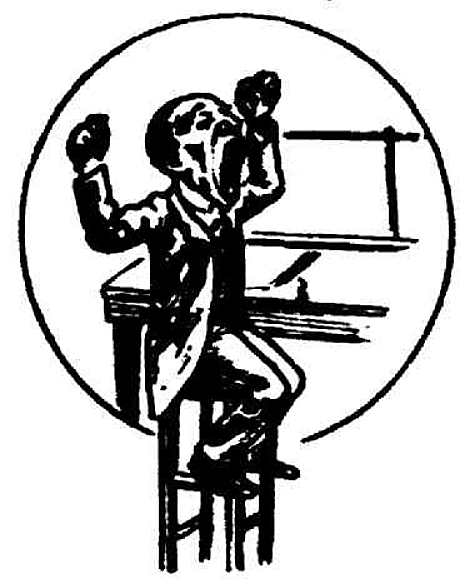
reluctance to attend school or work, or a reduction in working efficiency, experienced on a Monday morning—UK and USA, 1908; Australia, 1910—the suffix ‘-itis’ is applied to a state of mind or tendency fancifully regarded as a disease
Read More
derisive appellation given to Australian Rules (football), because the ball is often kicked high into the air, requiring players to leap and catch it—Australia, 1945—slang of the Australian armed forces during World War II
Read More
