early Australian uses of ‘more front than’
denotes effrontery—‘front’ denotes self-assurance, but the word that follows ‘than’ puns on ‘front’ in the sense of the façade of a building, the part of a garment covering a person’s front, etc.
Read More
“ad fontes!”
denotes effrontery—‘front’ denotes self-assurance, but the word that follows ‘than’ puns on ‘front’ in the sense of the façade of a building, the part of a garment covering a person’s front, etc.
Read More
the nickname that the Venetian opera audience gave to Joan Sutherland when she sang Handel’s Alcina at the Fenice Theatre on 21 February 1960—Italian ‘è stupenda’ translates as ‘she is stupendous’
Read MoreAustralia, 1884—designates the adjective ‘bloody’ used as an intensifier—although ‘bloody’ is used as an intensifier in other countries, its widespread use in Australia is seen as characteristic of this country
Read More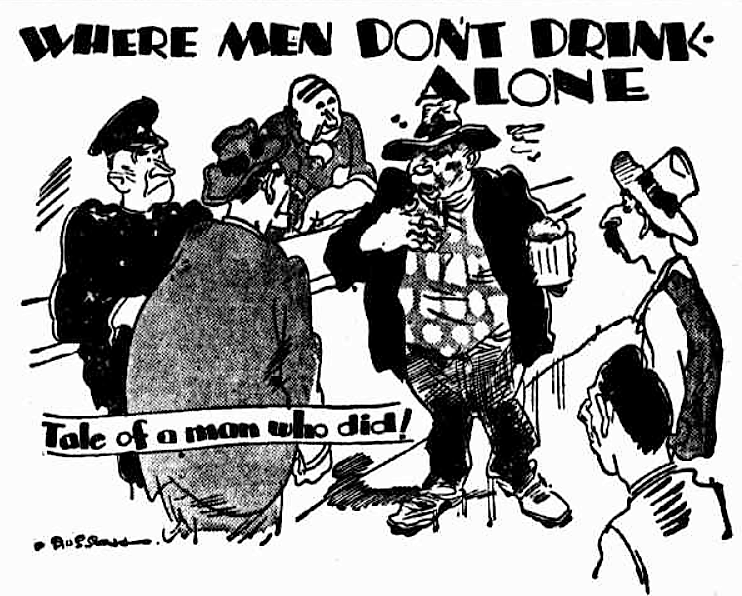
Australia, 1898—to drink by oneself in a public house, which is regarded as an unsociable attitude—the image is that the solitary drinker has no other companions than the flies
Read More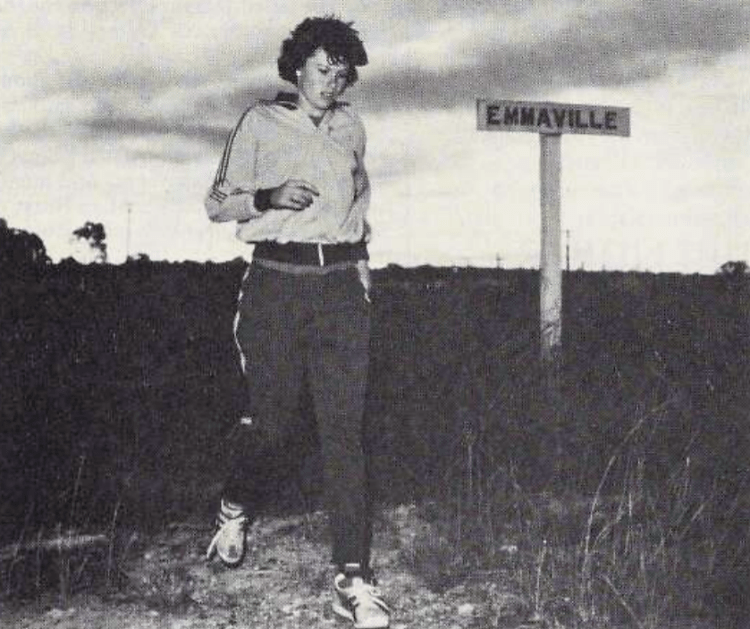
Australia, 1976—nickname of Australian sprinter Debbie Wells (born 1961), who is from Emmaville, in New South Wales—alludes jocularly to ‘express (train)’, denoting a train that stops at few stations and travels quickly
Read MoreAustralia, 1964—‘Emma Chisit’: ‘how much is it?’ (allegedly coined by English author Monica Dickens, who reportedly misunderstood the question posed by an Australian)—‘Strine’: Australian pronunciation of ‘Australian’ (coined by Australian author Alistair Morrison)
Read MoreAustralia, 1981—used by some Aborigines of those who are considered to have betrayed their Aboriginal identity in order to be accepted into the white Australian society—the image is that (like the coconut, dark on the outside, but white on the inside) those Aboriginal ‘betrayers’ are outwardly black, but inwardly white
Read More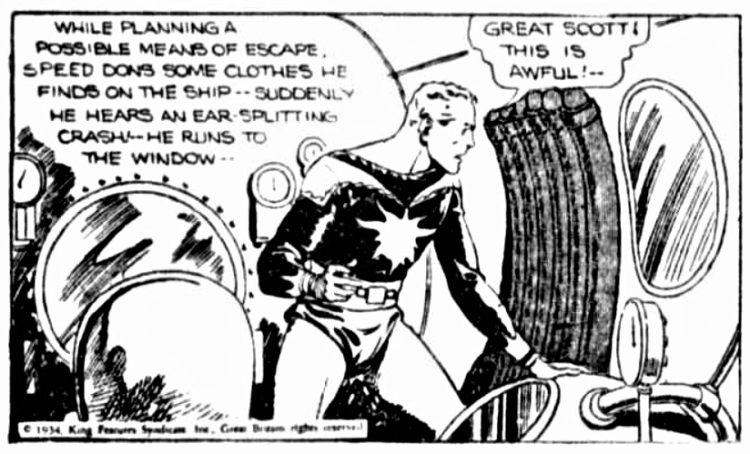
Australia, 1938—beset with extraordinary difficulties—refers to Speed Gordon, the Australian name of Flash Gordon, the hero of the eponymous space-opera comic strip first published in 1934
Read MoreAustralia, 1830—refers to the Aboriginal belief that light-skinned persons are reincarnations of dead Aborigines—extended forms: ‘jump up white fellow, plenty of sixpence’ and ‘go down blackfellow and jump up whitefellow’
Read MoreAustralia, 1941—used of any adverse situation—based on the rhyme between ‘crook’ (meaning ‘bad’, ‘unpleasant’, ‘unsatisfactory’) and ‘Tallarook’, the name of a town in Victoria—sometimes followed by ‘there’s no work in Bourke’
Read More word histories