British and Irish English, 1833—denotes qualified pleasure—also: ‘to give [someone] a poke in the eye (with a — stick)’, meaning to deprecate [someone]—from ‘a poke in the eye’, denoting something undesirable
UK, 1965—in sports such as rugby and soccer: a pass to a player likely to be tackled heavily as soon as the ball is received—the implication is that the player who receives the ball may end up in hospital, or, at least, be injured
Australia, 1973—used of anything that is absolutely unacceptable, and of any disagreeable situation or experience—‘Jap’: derogatory shortening of ‘Japanese’—Anzac Day: commemoration of the landing of the Australian and New Zealand Army Corps in the Gallipoli Peninsula in 1915
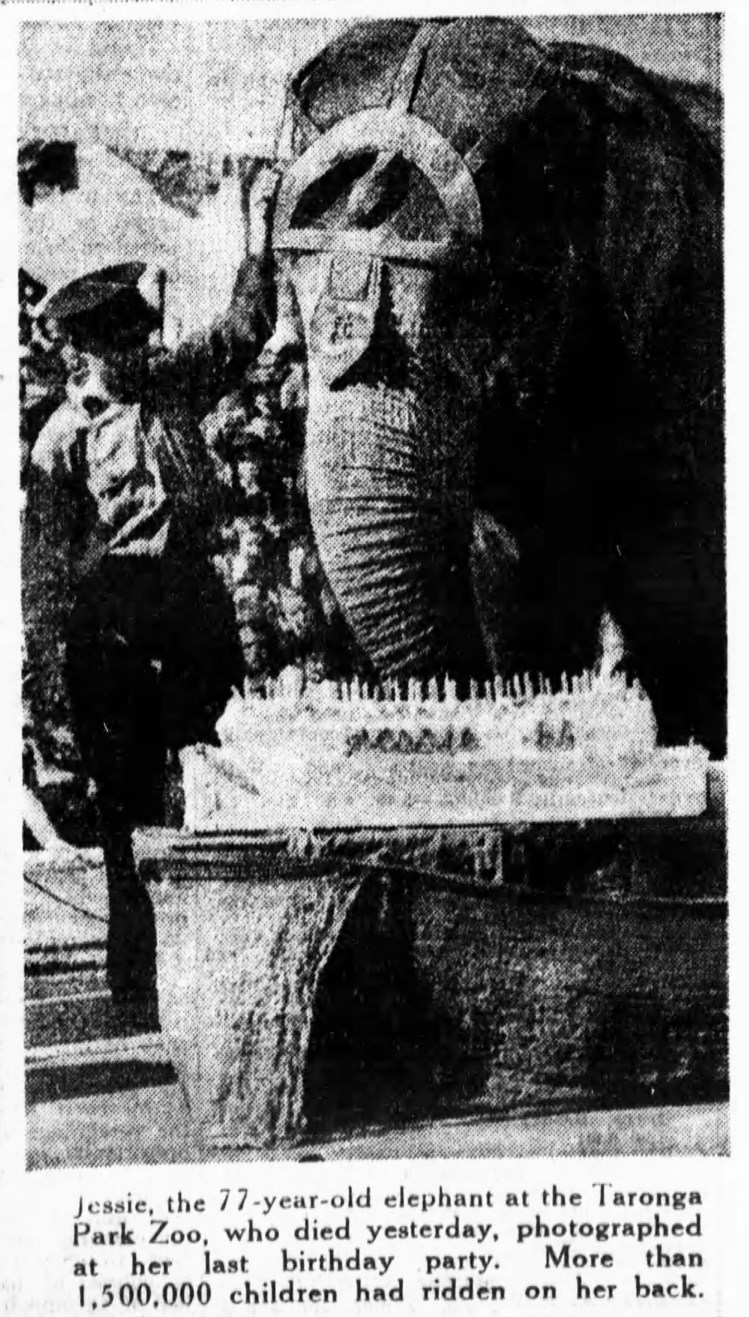
Australia, 1919—an excess of effrontery—puns on two meanings of ‘hide’ (the skin of an animal – effrontery) and refers to ‘Jessie’, the name of an elephant that was kept in the zoological gardens of Sydney, New South Wales
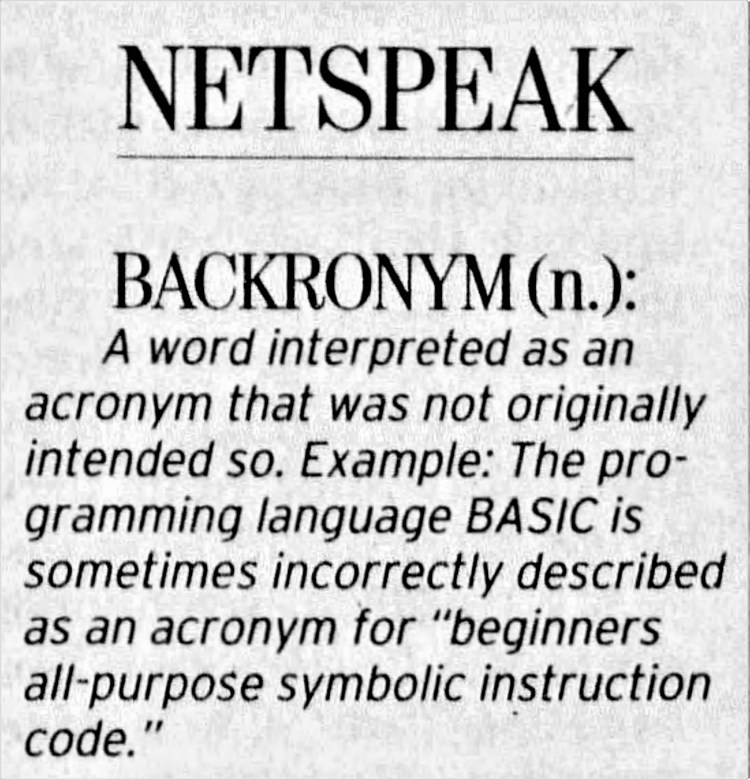
USA, 1983—an acronym deliberately formed from a phrase whose initial letters spell out a particular word or words, either to enhance memorability or as a fanciful explanation of a word’s origin—blend of the adjective ‘back’ and of the noun ‘acronym’
a sample text beginning with ‘lorem ipsum’, based on jumbled elements from Cicero’s De Finibus Bonorum et Malorum—‘lorem ipsum’: arbitrary clipping of the first syllable of ‘dolorem ipsum’ in Cicero’s text
UK, 1822—of a member of parliament: to join the party opposed to one’s present party—also to vote against one’s own party; to change sides on an issue—from the practice whereby a member of parliament literally crosses the floor to join another party
Australia, 1863—originally referred to any chain of communications by which bushrangers were warned of police movements—soon extended to any rapid informal network by which information, rumour, gossip, etc., is spread
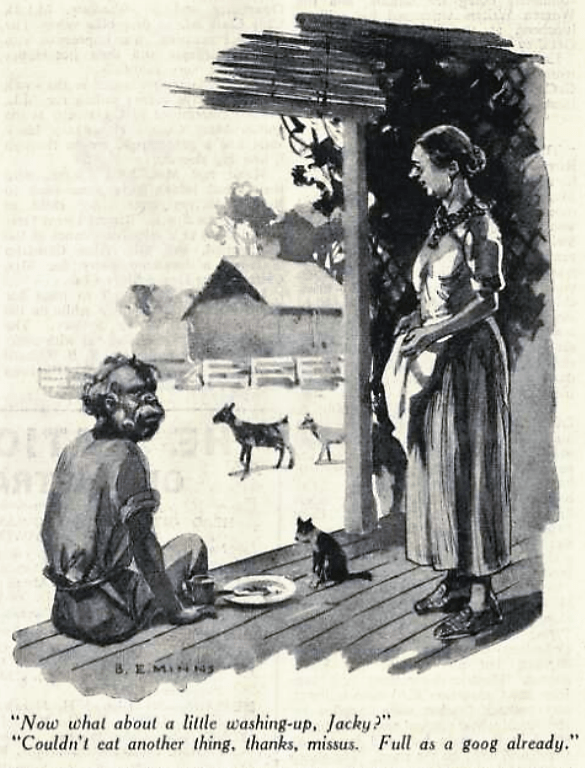
Australia, 1927—very drunk; sated with food—‘goog’, Australian-English slang for an egg, was perhaps formed on the sense of ‘gog’ in ‘goosgog’, denoting a gooseberry



 word histories