In this expression, the noun poke denotes a bag, a small sack. It is from Anglo-Norman and Old Northern French forms such as poke and pouque, variants of the Old French forms poche and pouche — the last of which is the origin of English pouch. (Incidentally, English pocket is from Anglo-Norman poket, pokete, diminutive forms of poke.) The expression to buy a pig in a poke simply cautions against buying or accepting […]
The phrase to let the cat out of the bag means to disclose a secret. Although it is possible that to let the cat out of the bag originally referred to some specific allusion, such as a line in a play, that has now been lost, it is probable that this phrase is simply based on the […]
The proverb you can’t make a silk purse out of a sow’s ear means you can’t create a fine product from inferior materials. It originated in Scotland, according to its first recorded instance, in A New Dictionary of the Terms Ancient and Modern of the Canting Crew (1699), by “B. E. Gent.”: Luggs, Ears: Hence […]
MEANING The phrase (straight) from the horse’s mouth refers to information and means from the person directly concerned or another authoritative source. ORIGIN This phrase is from horse racing, and alludes to the presumed ideal source for a racing tip. The earliest instance that I have found is from Bell’s Life in […]
Frequently used in the passive, the phrase to sell someone a pup means to swindle someone, especially by selling something of little worth on its supposed prospective value. And to buy a pup means to be swindled. The expression is first recorded in 1901. That year, several newspapers gave its most likely origin; for example, the column From Day to Day of The Daily […]
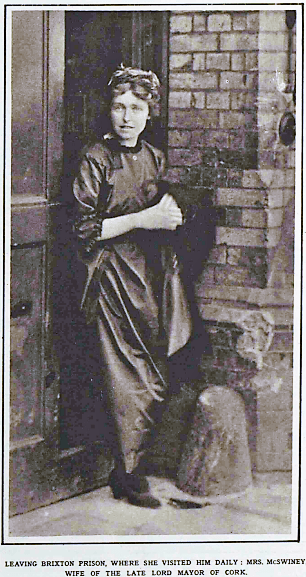
the Prisoners (Temporary Discharge for Ill-health) Act, 1913 – image: http://www.parliament.uk The Prisoners (Temporary Discharge for Ill-health) Act, 1913 was rushed through Parliament by Herbert Henry Asquith’s Liberal government in order to deal with the problem of hunger-striking suffragettes, who were force-fed, which led to a public outcry. The Act allowed for the […]
Executioner argues with King about cutting off Cheshire Cat’s head – illustration by John Tenniel (1820-1914) for Alice’s Adventures in Wonderland (1865) The executioner’s argument was, that you couldn’t cut off a head unless there was a body to cut it off from. The phrase a cat may look at a king means even a person of low […]
The phrase wouldn’t say boo to a goose is used to emphasise that someone is very timid. Here, boo is not an expression of disapproval but a later form of bo, an exclamation intended to frighten. In Notes and Queries of 10th September 1870, the English philologist Walter William Skeat (1835-1912) wrote: “Cry Bo to […]
“I think we may say everything’s more or less oojah-cum-spiff. With one exception, Jeeves,” I said, a graver note coming into my voice as I gave Gus his second helping of kipper. “There remains a fly in the ointment, a familiar saying meaning—well, I don’t quite know what it does mean. It seems to […]
The French masculine noun sanglier denotes a full-grown wild boar. It literally means a boar living on its own, separated from the herd, since, via Old and Middle French forms such as sengler and senglier, it is from the popular Latin singularis (porcus), solitary (pig) – cf. Middle-French terms such as porc sanglier, and in the Vulgate, the Latin version of the Bible, singularis ferus, the noun ferus meaning wild animal (cf. the […]



 word histories