history of ‘crow’s nest’ (lookout platform on a ship’s mast)
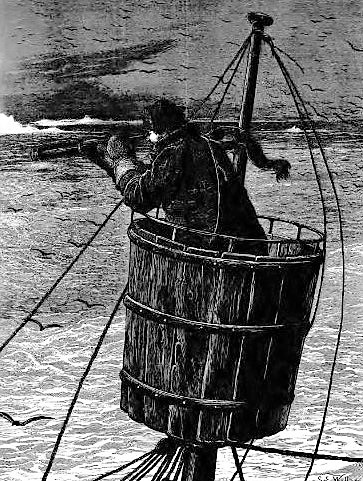
UK, early 19th century—The invention of the crow’s nest is attributed to the Arctic whaler William Scoresby Senior (1760-1829).
Read More
“ad fontes!”
UK, early 19th century—The invention of the crow’s nest is attributed to the Arctic whaler William Scoresby Senior (1760-1829).
Read MoreAttested in 1761, ‘as the crow flies’ originally referred to the interior of a country; it did not originate in a practice of early navigation at sea.
Read MoreUSA, 1837—The image is of a racoon that has been treed but the construction ‘gone + animal name’ has more generally been used in phrases of same sense.
Read MoreUSA, late 18th century—perhaps a folk-etymological alteration of British dialectal variants of ‘boon’, meaning ‘help given by neighbours’
Read Moreultimately based on the fable of the mice, or rats, who proposed to hang a bell round the cat’s neck, so as to be warned of its approach
Read More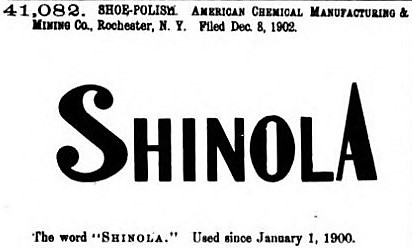
USA, 1946—to be completely unaware or innocent—from ‘Shinola’, the trade name of an American brand of shoe polish
Read More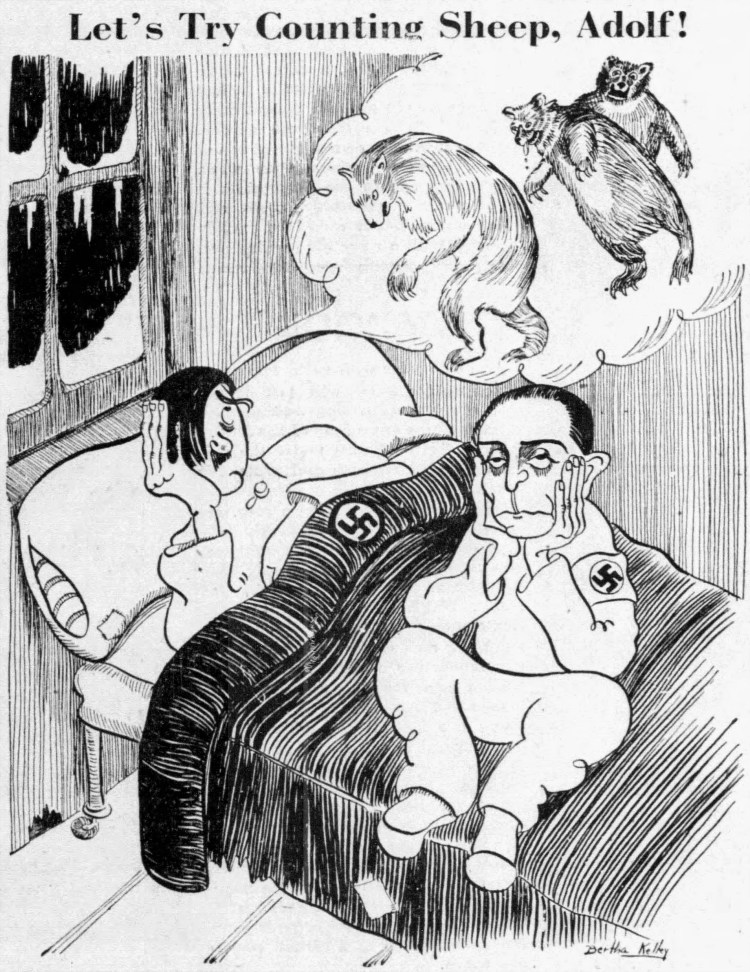
‘to count sheep’ (French ‘compter les moutons’): to count imaginary sheep jumping over an obstacle one by one, as a way of sending oneself to sleep
Read More‘like a bull in a china shop’ (UK, 1802)—French equivalent with ‘elephant’ instead of ‘bull’ (1849)
Read MoreUSA, 1960s—extreme right-wing views associated with the supposedly barbaric and tyrannical rule of Genghis Khan—the name Attila is also used
Read MoreAustralia, 1880—from the fact that bananas grow in abundance in Queensland (a state comprising the north-eastern part of Australia)
Read More word histories