‘lead-pipe cinch’: meaning and early occurrences
a complete certainty—USA, 1887 in the context of horse-racing—of unknown origin
Read More
“ad fontes!”
a complete certainty—USA, 1887 in the context of horse-racing—of unknown origin
Read Moreis used of a place that is found inexplicably deserted; also of a person’s sudden and inexplicable disappearance—alludes to the Mary Celeste, a U.S. cargo ship which in December 1872 was found mysteriously abandoned in the North Atlantic
Read More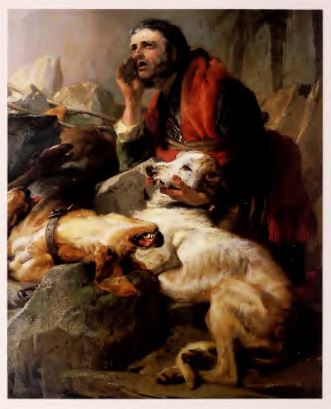
an assertion of continuing competence, strength, etc., notwithstanding evidence to the contrary—from the title of a painting by the British artist Edwin Landseer, first exhibited in 1838
Read Morethe fatty extremity of the rump of a goose, fowl, etc.—so called from the resemblance of this fatty extremity to the human nose—UK, 1826—earlier synonym: ‘pope’s nose’ (UK, 1788)
Read MoreAustralian slang, 1988—a very small distance or amount—perhaps intended as a humorous variant of ‘bee’s knee’, used of something small, insignificant or weak
Read Morea sly, treacherous or deceitful person, especially one who is secretly acting against the interests of the community or organisation to which he or she belongs—mid-19th century
Read Morea person who overestimates their own influence—1661—alludes to the fable of a fly sitting on the axletree of a moving chariot and saying, “See what a dust I raise”
Read Morelooking or feeling ill or nauseated—1843, in a letter by Charles Dickens—when applied to a person, the plural noun ‘gills’ designates the flesh under the jaws and ears; also the cheeks
Read Moreeveryone is accountable for their own actions—17th century—may refer to herrings being hung when up for sale (that is to say: every piece of merchandise must sell on its own merits)
Read Morecrowded or confined tightly together—Britain, 1706—in early use, this phrase often referred to the transatlantic slave trade
Read More word histories