‘to have the game by the throat’: meaning and origin
to be in control of a situation; to be in a dominant position—USA, 1899—originally (USA, 1867) used in reference to hunting game animals
Read More
“ad fontes!”
to be in control of a situation; to be in a dominant position—USA, 1899—originally (USA, 1867) used in reference to hunting game animals
Read Morenonsense, rubbish—USA, first decade of the 20th century—probably a euphemism for the noun ‘bullshit’, with the noun ‘dust’ used in the sense of ‘rubbish’, ‘garbage’
Read Moreliterally (1845): an enclosure in which calves are isolated from their mothers until weaned—figuratively, humorously and offensively (1885): a girls’ boarding-school—similar to the use of ‘cow’ to derogatorily designate a girl or woman
Read MoreUSA, 1867—all over the place, in disarray—perhaps originally used by cattlemen of mobs of cattle all over the place
Read Morea complete certainty—USA, 1887 in the context of horse-racing—of unknown origin
Read Moreis used of a place that is found inexplicably deserted; also of a person’s sudden and inexplicable disappearance—alludes to the Mary Celeste, a U.S. cargo ship which in December 1872 was found mysteriously abandoned in the North Atlantic
Read More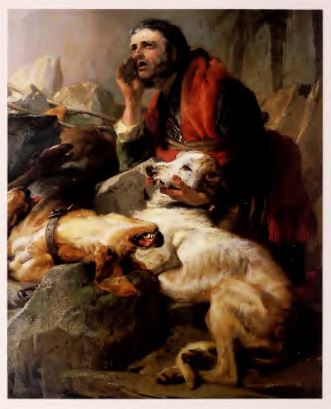
an assertion of continuing competence, strength, etc., notwithstanding evidence to the contrary—from the title of a painting by the British artist Edwin Landseer, first exhibited in 1838
Read Morethe fatty extremity of the rump of a goose, fowl, etc.—so called from the resemblance of this fatty extremity to the human nose—UK, 1826—earlier synonym: ‘pope’s nose’ (UK, 1788)
Read MoreAustralian slang, 1988—a very small distance or amount—perhaps intended as a humorous variant of ‘bee’s knee’, used of something small, insignificant or weak
Read Morea sly, treacherous or deceitful person, especially one who is secretly acting against the interests of the community or organisation to which he or she belongs—mid-19th century
Read More
