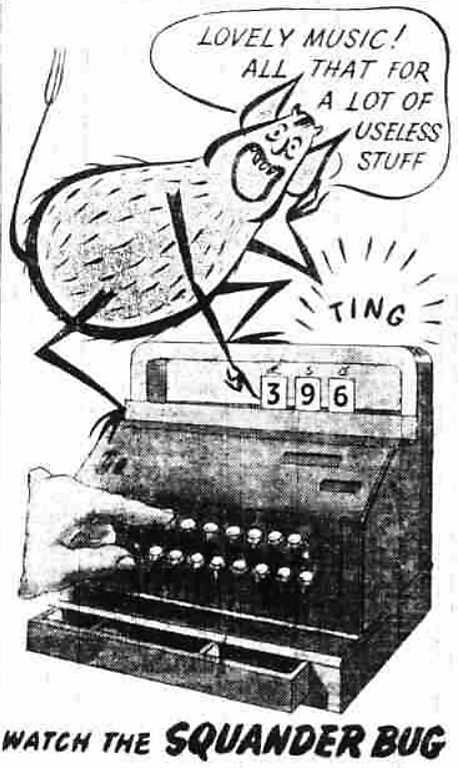
1943—a devilish insect symbolising reckless extravagance and waste—introduced by the National Savings Committee in a government publicity campaign promoting economy—hence: one who is profligate with money or resources
to use unnecessary force in destroying something fragile—alludes to a wheel used as an instrument of torture—first occurs in An Epistle from Mr. Pope, to Dr. Arbuthnot (1734), by the English poet Alexander Pope (1688-1744), who perhaps coined this phrase
Australia and New Zealand, 1939—to be in good spirits, ‘chirpy’—the image is of a boxful of chirping birds (cf. the extended form ‘happy as a bird in a box of birdseed’)—New-Zealand variant ‘to be a box of fluffy ducks’, also ‘to be a box of fluffies’
Australia, 1998—a pair of short, tight-fitting men’s swimming trunks—refers to the appearance of the male genitals in figure-hugging trunks—‘budgie’: colloquial abbreviation of ‘budgerigar’, denoting a small Australian parrot
‘red rag’—a piece of red cloth used to provoke an animal—hence, figuratively, a source of provocation or annoyance, something which excites violent indignation—the notion occurs in the late 16th century
UK, 1805—personifies France or the French people, or designates a typical Frenchman—composed of ‘Johnny’, a pet form of ‘John’ used, with modifying word, to designate a person of the type, group, etc., specified, and of French ‘crapaud’ (a toad)—coined by British sailors during the Napoleonic Wars
1747—a small outlay or risk ventured in the hope or expectation of a significant return—a metaphor from fishing, in which sprats are used as bait to catch larger fish—in early use with the words ‘salmon’ and ‘herring’ instead of ‘mackerel’
Scotland, 1806—to make a determined effort to achieve something, whether ending in success or failure—refers to the making of spoons out of the horns of cattle or sheep, which was common in Scotland till late in the 19th century
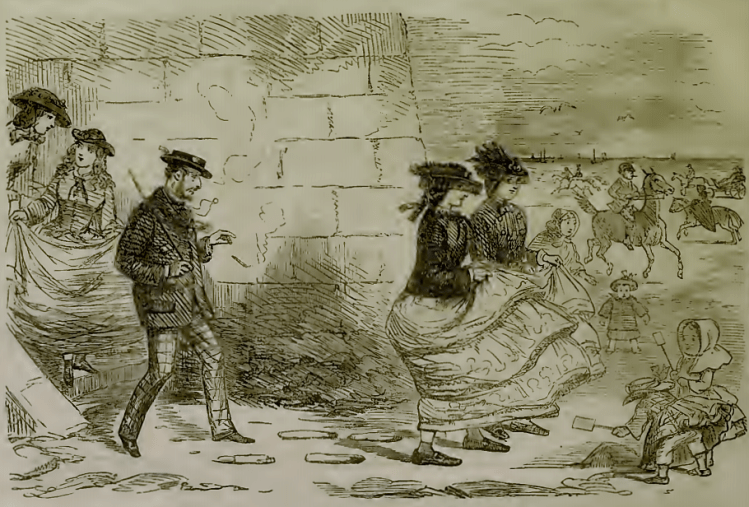
denotes a foot or a boot, especially a big one—1856, in the caption to a cartoon by John Leech, published in Punch (London, England): “A vulgar and disgusting expression, implying that a foot is big enough, and flat enough, to kill Black-beetles”



 word histories