meaning: a person cannot be expected to behave in a manner that is not in their character—numerous variants—first recorded in 1731 as ‘If we petition a Hog, what can we expect but a grunt’
(humorous and frequently ironic) determinedly or stubbornly independent—USA, 1841—apparently refers to the extreme helplessness of a hog (i.e., a pig) on the ice
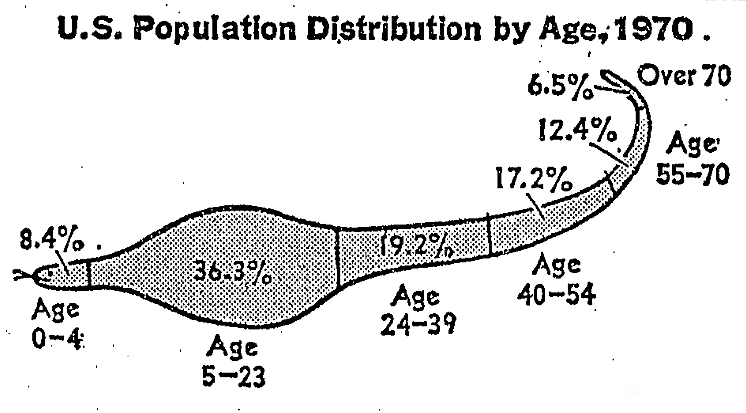
Canada, 1970—the people who were born during the ‘baby boom’ of the years immediately following WWII, considered as a demographic bulge—any short-term increase or notably large group
extremely large, huge, enormous—USA, 1967—of uncertain origin; probably a factitious adjective coined on the suffix ‘-ous’, influenced by ‘hugeous’ and ‘monstrous’, and perhaps by the stress-patterns of ‘stupendous’, ‘tremendous’, etc.
interjection used to suggest that something can be done or understood with no difficulty—UK, 2009—from the catchword uttered by Aleksandr Orlov, an animated Russian meerkat, in a television advertising campaign for comparethemarket.com
UK, 1962—a type of pedestrian crossing distinguished by black-and-white chevrons marked on the road, and having traffic warning lights activated by people wishing to cross—alludes to the black-and-white fur of the giant panda
a tall person—Australia, 1968, in the stage play Norm and Ahmed, by Alexander Buzo—gained currency from occurring in the film Gallipoli (1981), scripted by David Williamson



 word histories