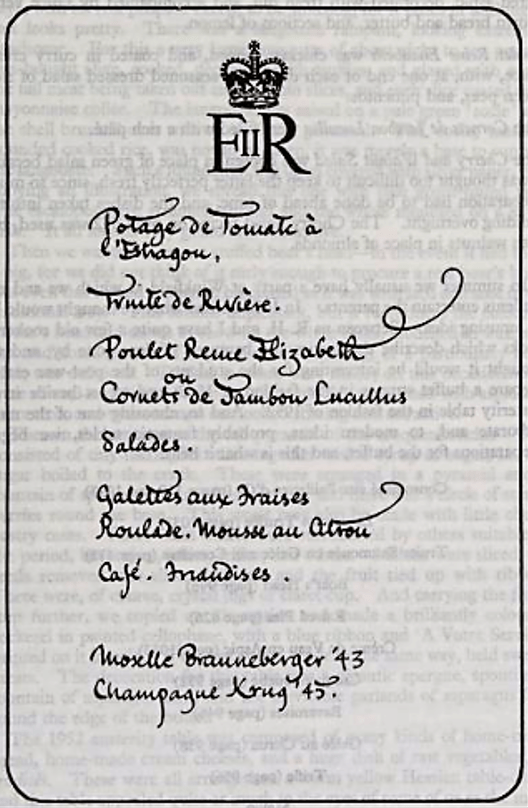
a dish of cold cooked chicken served in a mild creamy curry sauce—so named because created for a lunch held to mark the coronation of Queen Elizabeth II in June 1953, at which it was called ‘Poulet Reine Elizabeth’—also USA, April 1953: a dish created when the Poultry and Egg National Board organised Coronation Chicken Day
USA, 1888—used as a way of telling someone that they will have to accept a situation they do not like because they have no choice—the noun ‘titty’ denotes a teat, and, in the phrase, the image is of sucking a tough teat
to do or say something which causes trouble, controversy or upset—first occurs (1841 & 1843, Yorkshire, northern England) in quotation marks, which indicates that it was already in common usage
compromising information collected for use in blackmailing, discrediting or manipulating a person, group, etc.—borrowed from Russian (Soviet secret police) ‘kompromat’, from ‘kompro-’ in ‘komprometirujuščij’, meaning ‘compromising’, and ‘mat-’ in ‘material’, meaning ‘material’
‘Auntie’: familiarly used to denote a publication, an institution, etc., which is considered to be conservative or staid in style or outlook, or, alternatively, which is viewed with affection—especially applied, in Britain, to the London newspaper The Times and to the BBC
1607, as ‘as snug as pigs in pease-straw’—especially in ‘(as) snug as a bug in a rug’, phrases built on the pattern ‘(as) snug as [animal name] (in —)’ mean ‘in an extremely comfortable position or situation’
to upset, to overturn—1777—origin unknown—perhaps based on Spanish ‘capuzar’, meaning ‘to sink (a ship) by the head’—or perhaps based on a Provençal compound of ‘cap’, meaning ‘head’
Australian soldiers’ slang, 1917—literally: to fall heavily; figuratively: to suffer a failure or defeat—‘gutser’ (Scotland, 1901): originally denoted a belly flop—derived from ‘gut’ in the sense of the belly

 word histories