meaning and origin of ‘pour encourager les autres’
The phrase ‘pour encourager les autres’ (‘in order to encourage the others’) was coined by Voltaire with reference to the execution of Admiral John Byng in 1757.
Read More
“ad fontes!”
The phrase ‘pour encourager les autres’ (‘in order to encourage the others’) was coined by Voltaire with reference to the execution of Admiral John Byng in 1757.
Read More
mandragoras – from Stirpium historiae pemptades sex sive libri XXX (1583), by Rembert Dodoens The term hand of glory originally denoted a charm made from, or consisting of, the root of a mandrake. A calque of French main de gloire, it was first used in Curiosities of nature and art in husbandry […]
Read MoreIn A Dictionarie of the French and English Tongues (1611), Randle Cotgrave gave the following definition of the French word gazette: A certaine Venetian coyne scarce worth our farthing; also, a Bill of Newes; or, a short Relation of the generall occurrences of the Time, forged most commonly at Venice, and thence dispersed, euery month, into most parts of Christendome. […]
Read MoreFiguratively, a loose cannon is an unpredictable or uncontrolled person who is liable to cause unintentional damage. But in practice, it was one inadequately lashed in place on the deck of a ship, which caused havoc by rolling dangerously and unpredictably. The first known mention of a loose cannon being tossed about the deck of […]
Read MoreIn his comédie-ballet Le Bourgeois gentilhomme (literally The Bourgeois Gentleman – 1670), the French playwright and actor Molière (Jean-Baptiste Poquelin – 1622-73) invented the word Mamamouchi, an imaginary Turkish title that Monsieur Jourdain is gulled into thinking the son of the Grand Turk confers upon him. (Jourdain is a bourgeois whose aim is to be […]
Read More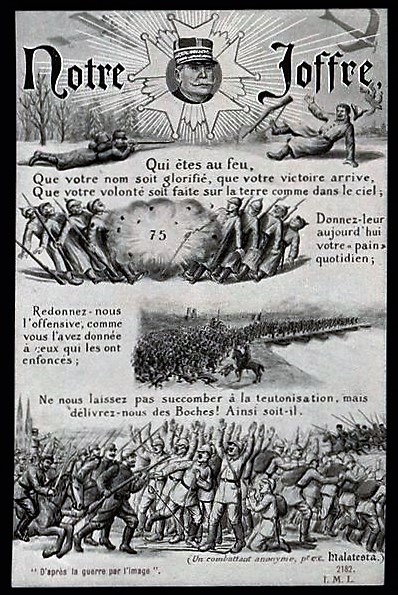
Notre Joffre (parody of the Lord’s Prayer) first published in 1914 in Le Radical de Marseille (75 refers to the French 75-mm field gun.) From 1914 to 1916, Joseph Joffre (1852-1931) was the commander in chief of the French armies on the Western Front. The following parody of the Lord’s Prayer is to be replaced […]
Read More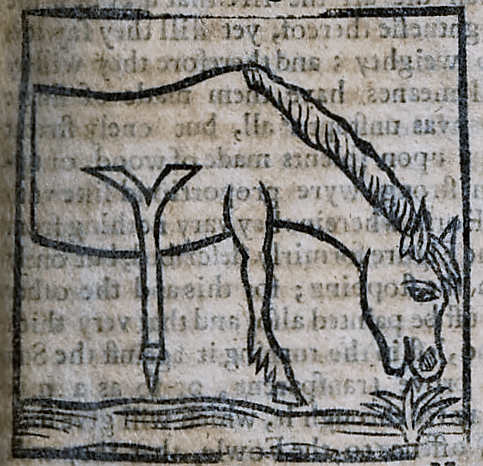
The forme and manner of the Stalking horse of Canuasse stopt. – from Hungers preuention: or, The whole arte of fowling by water and land Containing all the secrets belonging to that arte (1655 edition) The term stalking horse originally denoted a horse trained to allow a fowler to conceal himself behind it or under […]
Read MoreMEANINGS – attractive articles of little value or use – practices or beliefs that are superficially or visually appealing but have little real value or worth ORIGIN The noun trumpery, first recorded in the mid-15th century, is from the French noun tromperie, which means deception, trickery. This was one of the original meanings in […]
Read MoreThe phrase to teach one’s grandmother to suck eggs means to presume to advise a more experienced person. Raw eggs, with or without a little seasoning, used to be a popular food and were regarded as healthy. Grandmothers obviously needed no instruction about how to drink them. The phrase is first recorded in a translation from Spanish by […]
Read MoreMEANING the depths of one’s conscience or emotions ORIGIN This anatomically curious but firmly established expression is a variant of the older and more comprehensible heart of heart, meaning very centre of the heart, which was coined by the English poet and playwright William Shakespeare (1564-1616) in The Tragicall Historie of Hamlet, […]
Read More word histories