Of American-English origin, the expression to have an axe to grind (American-English spelling ax) means to have a private reason for doing, or being involved in, something. It has often been attributed to Benjamin Franklin [note 1]. For example, the New English Dictionary (NED – 1888), as the Oxford English Dictionary was known, mentions “a […]
One of the earliest instances of posh is from a cartoon published in Punch, or The London Charivari (London, England) of 25th September 1918. An RAF officer is talking to his mother: “Oh, yes, Mater, we had a posh time of it down there.” “Whatever do you mean by ‘posh,’ Gerald?” “Don’t you know? […]
image: nageur-sauveteur MEANINGS The noun starboard denotes the side of a ship or aircraft that is on the right when one is facing forward, while port denotes the opposing side. ORIGINS From the Germanic bases of the nouns steer and board, starboard, which appeared in Old English as steorbord, denotes literally the steer board, the steer side. This side of the ship […]
The phrase to take French leave means: to depart unnoticed or without permission.—Synonym: to take Dutch leave. The earliest (and most curious) occurrence of to take French leave that I have found is from the anonymous novel Benedicta (1741)—the heroine is about to get married: Mrs Butler, who on this extraordinary occasion, had taken French leave […]
MEANING The phrase (if you’ll) excuse (or pardon) my French is used as an apology for swearing. ORIGIN The current sense seems to derive from an actual apology for speaking French. (It is therefore unnecessary to invoke the centuries-old adversarial relationship between the English and the French.) The form pardon my French is first attested in Randolph, a Novel (1823), by the American […]
MEANING a member of a family or group who is regarded as a disgrace to it ORIGIN This was perhaps originally an allusion to the book of Genesis, 30. Jacob has already worked fourteen years for both of Laban’s daughters, and after Joseph’s birth he desires to take leave of Laban. They reach […]
Aunt Sally – from The Modern Playmate: A book of games, sports, and diversions for boys of all ages (new revised edition – 1875?), by John George Wood (1827-89) The Oxford English Dictionary (first edition – 1885) thus defined Aunt Sally: a game much in vogue at fairs and races, in which […]
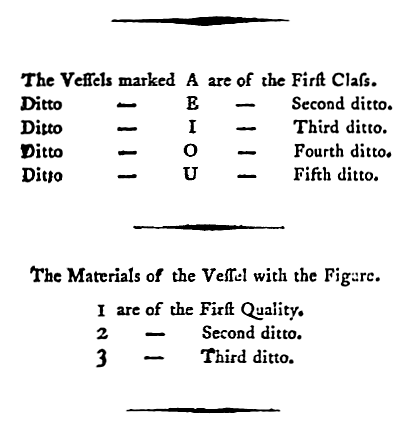
MEANING first class, outstanding ORIGIN Lloyd’s Register, historically Lloyd’s Register of Shipping, is an independent society formed in 1760 by a group of merchants operating at Lloyd’s coffee house in London, which surveys ships to ensure compliance with standards of strength and maintenance. The name also denotes an annual publication giving details […]
MEANING in the open; without dishonesty, concealment or fraud ORIGIN The adverb above board originally meant with one’s cards visible above the level of the board (that is, the playing table), so as to avoid suspicion of cheating. In A Dictionary of the English Language (1755), Samuel Johnson wrote: Above-board. In open […]
MEANING The phrase to be barking up the wrong tree means to be pursuing a mistaken or misguided line of thought or course of action—cf. also origin of ‘gone coon’. ORIGIN In Americanisms, Old and New. A Dictionary of Words, Phrases and Colloquialisms peculiar to the United States, British America, the West Indies, […]



 word histories