The phrase to let the cat out of the bag means to disclose a secret. Although it is possible that to let the cat out of the bag originally referred to some specific allusion, such as a line in a play, that has now been lost, it is probable that this phrase is simply based on the […]
Old Long Syne – broadside ballad (probably 1701) The Scots lang syne means long since, long ago. Conversely, short syne means a short time ago, recently. Especially in recalling old experiences shared with friends, auld lang syne, literally old long-ago, is used as a noun to mean the years of long ago, old times, memories of the past, and for auld lang syne is used to mean for old times’ […]
The noun cruse denotes a small earthenware vessel for liquids. It is of Germanic origin and related to words such as Dutch kroes and Swedish krus, of same meaning. The expression widow’s cruse signifies an apparently small supply that proves inexhaustible. It is an allusion to the First Book of Kings, 17. The prophet Elijah has been fed by ravens and has drunk from a […]
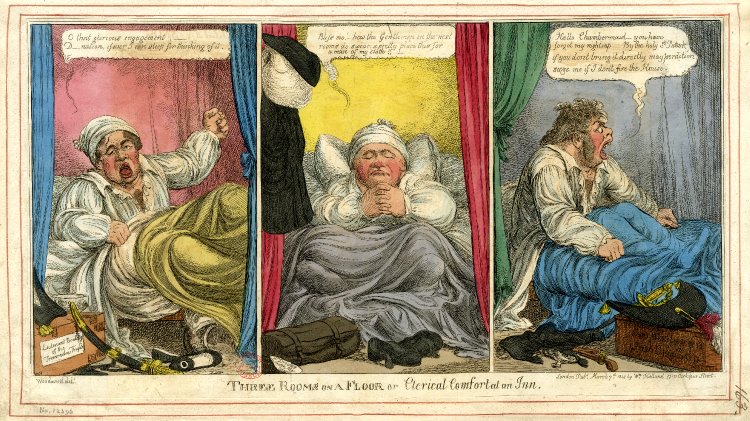
A nightcap is a cap worn in bed to keep one’s head warm. The word is first recorded in the description and valuation, made in 1378, of the articles that were in the shop of Thomas Trewe, haberdasher of London: one dozen of white caps, called “nightcappes”, was worth 2s. 3d.. The figurative […]
The proverb you can’t make a silk purse out of a sow’s ear means you can’t create a fine product from inferior materials. It originated in Scotland, according to its first recorded instance, in A New Dictionary of the Terms Ancient and Modern of the Canting Crew (1699), by “B. E. Gent.”: Luggs, Ears: Hence […]
The phrase (as) cold as charity refers to the perfunctory, unfeeling manner in which acts of charity are often done, and public charities administered. It originally alluded to the gospel of Matthew, 24:12, which is as follows in the Early Version (around 1382) of the Wycliffe Bible (wexe is the verb wax and means become, […]
The expression cold comfort means inadequate consolation for a misfortune. The adjective cold has long been used to mean felt as cold by the receiver, chilling, damping, discouraging. For example, the English poet Geoffrey Chaucer (circa 1342-1400) wrote, in The Nun’s Priest’s Tale: (interlinear translation – Harvard College) Wommennes conseils been ful ofte colde; Women’s counsels […]
MEANING The phrase (straight) from the horse’s mouth refers to information and means from the person directly concerned or another authoritative source. ORIGIN This phrase is from horse racing, and alludes to the presumed ideal source for a racing tip. The earliest instance that I have found is from Bell’s Life in […]
Frequently used in the passive, the phrase to sell someone a pup means to swindle someone, especially by selling something of little worth on its supposed prospective value. And to buy a pup means to be swindled. The expression is first recorded in 1901. That year, several newspapers gave its most likely origin; for example, the column From Day to Day of The Daily […]
A blend of breakfast and lunch, the noun brunch denotes a late morning meal eaten instead of breakfast and lunch. It originated, apparently in the late 19th century, as Oxford University slang and is first recorded in Lunch at Oxford, by Margaret B. Wright, published in The Independent (New York City, New York, USA) of […]



 word histories