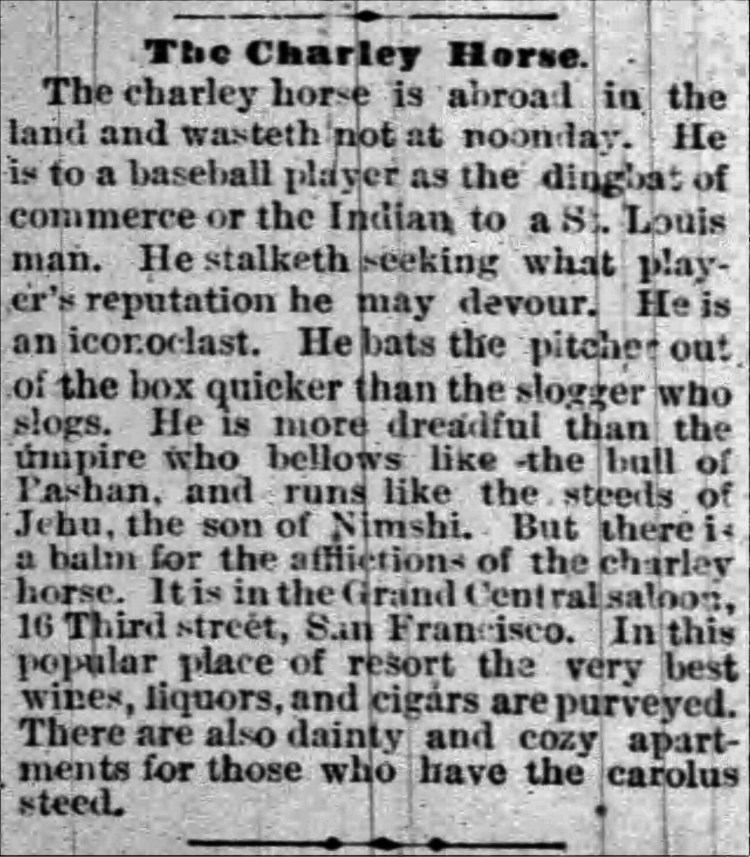
The Charley Horse. The charley horse is abroad in the land and wasteth not at noonday. He is to a baseball player as the dingbat of commerce or the Indian to a St. Louis man. He stalketh seeking what player’s reputation he may devour. He is an iconoclast. He bats the pitcher out of […]
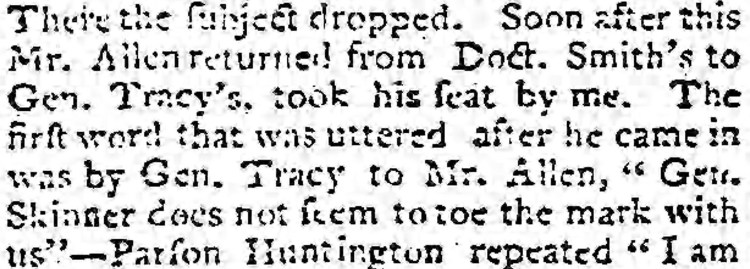
The phrase to toe the line means to accept the authority, policies or principles of a particular group, especially unwillingly. Its literal sense is to stand or crouch with the toes touching the line, especially at the start of a race or fight. The current meaning is an extension of a figurative usage, […]
In cricket, from the resemblance between the figure 0 and a duck’s egg, the term duck’s egg denotes the zero (i.e. 0) placed against a batsman’s name in the scoring sheet when he fails to score. This was explained in Very Hard Cash (1863), a novel by the English novelist and playwright Charles Reade (1814-84): […]
The phrase not to give, care or be worth a tinker¹’s curse, cuss² or damn (or elliptically a tinker’s) is an intensification of not to give, care or be worth a curse, cuss or damn, with reference to the bad language reputedly used by tinkers. The low repute in which tinkers were held is also […]
The name Hogs Norton, also Hog’s Norton and Hogsnorton, denotes a fictional town renowned for its uncultured and boorish inhabitants. It has often been used in depreciative phrases suggesting that someone is a native or inhabitant of this town. These phrases have variously associated the name: – with present-day Hook Norton, a town in Oxfordshire […]
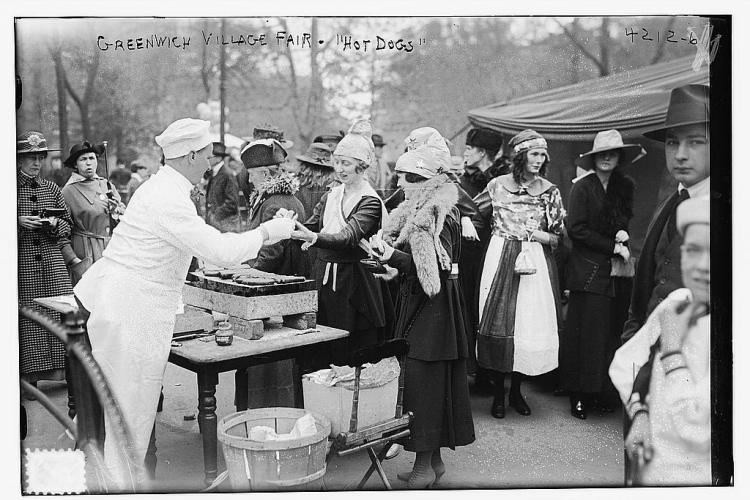
Greenwich Village Fair – “Hot Dogs” – June 1917 photograph: Library of Congress The term hot dog denotes a sausage, especially a frankfurter, served hot in a long roll split lengthways. In US slang, the noun dog has been used to denote a sausage since the late 19th century. This usage is first recorded […]
photograph: Farm Shop The noun mayonnaise denotes a thick, creamy sauce consisting of egg yolks emulsified with oil and seasoned, used as a cold dressing or accompaniment for salad, eggs, fish, etc., or as the base for other sauces. It is used in two French phrases: la mayonnaise prend, literally, the mayonnaise […]
The phrase to leave no stone unturned means to try every possible course of action in order to achieve something. (The equivalent French phrase has a cosmic dimension since it is remuer ciel et terre, literally, to move heaven and earth.) The image of turning every stone was already proverbial over 2000 years ago in […]
The sandwich (item of food consisting of two pieces of bread with a filling between them) is named after the British statesman John Montagu (1718-92), 4th Earl of Sandwich. It is generally said that the sandwich was invented because he once spent twenty-four hours at the gaming-table without other refreshment than some slices of beef […]
The phrase to steal someone’s thunder means: to use the ideas, policies, etc., devised by another person, political party, etc., for one’s own advantage or to anticipate their use by the originator. It is said to have originated in an exclamation by the English critic and ineffective playwright John Dennis (1658-1734). After the early demise […]



 word histories