origin of ‘poulet’ (love letter)

Of French origin, the word ‘poulet’, literally ‘chicken’, denotes a love letter. It probably refers to the fact that when folding these messages, one would make two tips resembling chicken wings.
Read More
“ad fontes!”
Of French origin, the word ‘poulet’, literally ‘chicken’, denotes a love letter. It probably refers to the fact that when folding these messages, one would make two tips resembling chicken wings.
Read More
plate 19: La Trénis, Contredanse source: gallica.bnf.fr / Bibliothèque Nationale de France from the 1931 reprint of the caricatures published under the title of Le Bon Genre (1827 edition), including Observations sur les modes et les usages de Paris; the following comment about La Trénis accompanies this plate: (Année 1805.) Cette danse porte le […]
Read More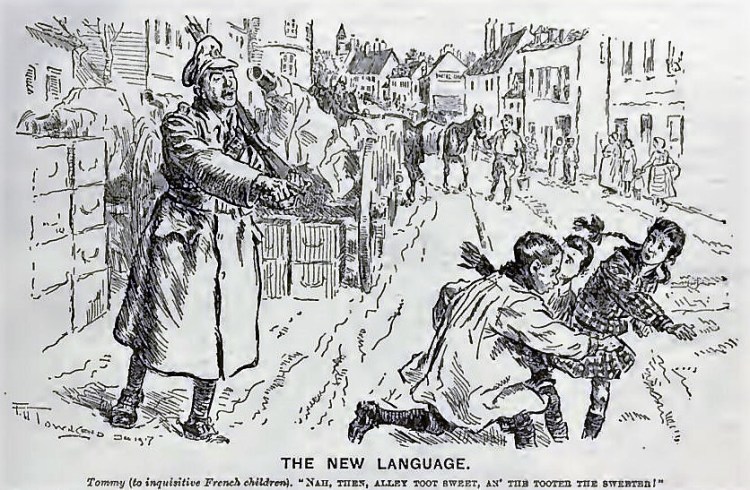
The adverb toot sweet means straight away, immediately. Humorously after the English words toot and sweet, it represents an anglicised pronunciation of the synonymous French adverb tout de suite. Before the First World War, it was only used in representations of French speech. For example, an article titled Galloglossia, published in Sharpe’s London Magazine […]
Read More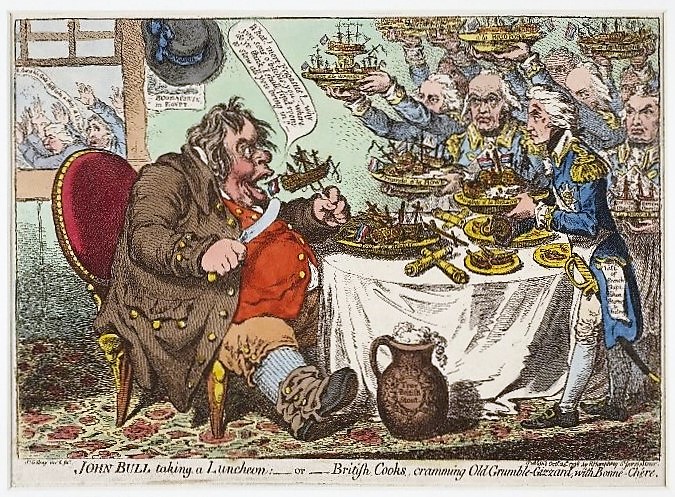
John Bull taking a Luncheon:—or—British Cooks, cramming Old Grumble-Gizzard, with Bonne-Chère. hand-coloured etching by James Gillray, published on 24th October 1798 — © Trustees of the British Museum This print was published just after Nelson’s victory at the Battle of the Nile. He is shown in the forefront of British admirals and naval heroes, serving up […]
Read More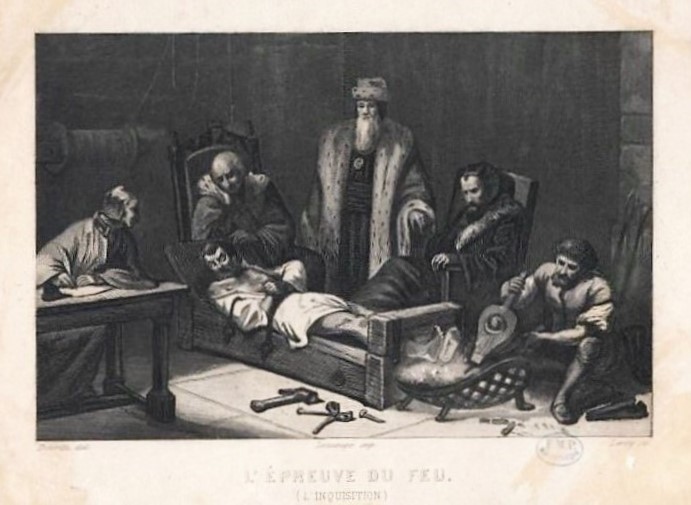
L’épreuve du feu (l’inquisition) by Devritz (painter) and Leroy (engraver) – date unknown source: BIU Santé The original meaning of the noun ordeal, from Old English ordāl, ordēl, is: an ancient test of guilt or innocence by subjection of the accused to severe pain, survival of which was taken as divine proof […]
Read MoreThe noun clue appeared as a variant spelling of clew, of same pronunciation. Not frequent until the 17th century, clue has become the prevailing form of the word in the sense of a fact or idea that serves to reveal something or solve a problem. The word is from Old English cliwen, cleowen, meaning a ball formed by winding yarn, twine or thread (it is still one […]
Read MoreThe term old chestnut denotes a joke, story or subject that has become tedious and uninteresting through constant repetition. Here, the adjective old is simply an intensifier of the noun. The figurative use of chestnut originated in American-English theatrical slang. Diary of a Daly Débutante: being passages from the journal of a member of Augustin Daly’s […]
Read More
FREE! For the Salesman who wants to add at least $50,000 to his income every year “Cold Call Selling” the great new approach that turns […]
Read More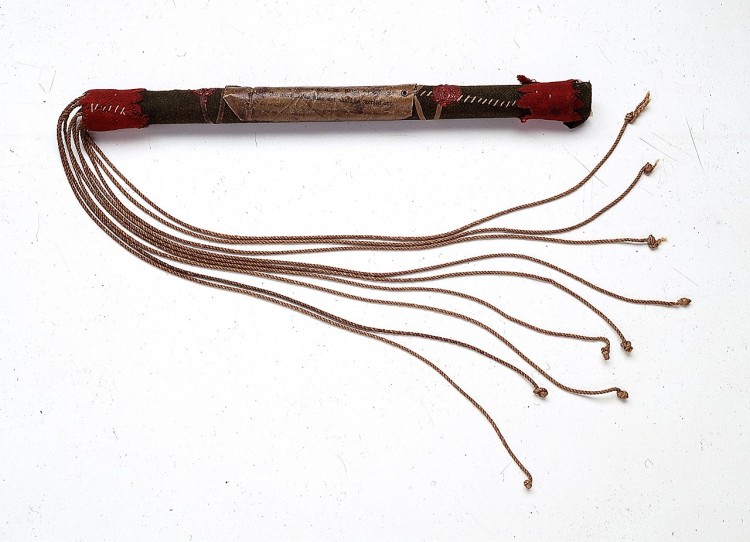
cat-o’-nine-tails (1866-79) – photograph: National Maritime Museum The noun cat-o’-nine-tails denotes a rope whip with nine knotted cords, formerly used, especially at sea, to flog offenders. This instrument of punishment was authorised in the British navy and army until 1881—cf. also to run the gauntlet. The word is first recorded in Love for […]
Read More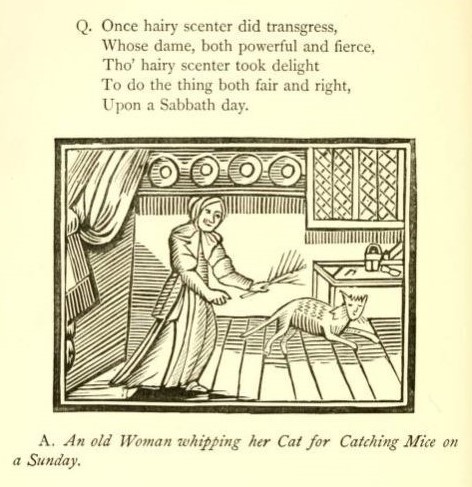
Q. Once hairy scenter did transgress, Whose dame, both powerful and fierce, Tho’ hairy scenter took delight To do the thing both fair and right, Upon a Sabbath day. A. An old Woman whipping her Cat for Catching Mice on a Sunday. from The True Trial […]
Read More word histories