history of ‘crow’s nest’ (lookout platform on a ship’s mast)
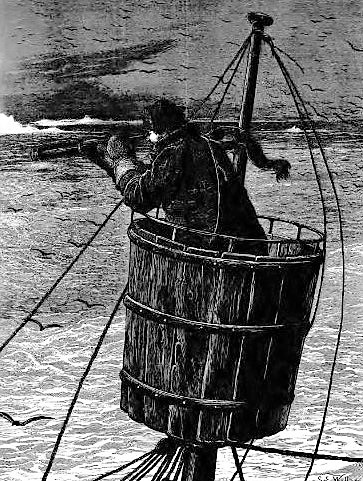
UK, early 19th century—The invention of the crow’s nest is attributed to the Arctic whaler William Scoresby Senior (1760-1829).
Read More
“ad fontes!”
UK, early 19th century—The invention of the crow’s nest is attributed to the Arctic whaler William Scoresby Senior (1760-1829).
Read MoreAttested in 1761, ‘as the crow flies’ originally referred to the interior of a country; it did not originate in a practice of early navigation at sea.
Read More
to use a temporary expedient—UK, 1889—origin attributed to Prussian statesman Bismarck in a letter written during the negotiations of the Convention of Gastein (1865)
Read MoreIn ‘couch potato’, ‘potato’ may be a pun on ‘tuber’ in ‘boob tuber’, from ‘boob tube’ (= television (set)), in which ‘boob’ means ‘stupid, foolish’.
Read MoreUSA, 1837—The image is of a racoon that has been treed but the construction ‘gone + animal name’ has more generally been used in phrases of same sense.
Read MoreUSA, late 18th century—perhaps a folk-etymological alteration of British dialectal variants of ‘boon’, meaning ‘help given by neighbours’
Read Moreto avoid work, to shirk one’s duty—originated in military slang during the First World War, the word ‘column’ denoting a formation of marching soldiers
Read Moreoriginally a kind of horse chase in which the second horse had to follow the course of the leader, like a flight of wild geese
Read MoreUK, 1793—a horse race across a stretch of open countryside, with a church steeple in view as goal
Read More‘(just) what the doctor ordered’: very beneficial or desirable under the circumstances—origin: USA, second half of the 19th century
Read More word histories