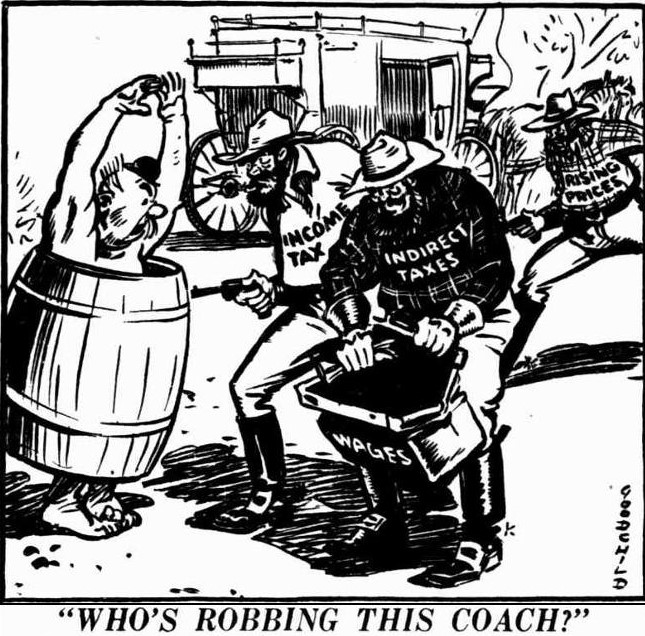
USA and Australia respectively—from a joke about robbers threatening to kiss every woman on the train/coach: when a gentleman asks them not to, a lady protests ‘who’s robbing this train/coach?’
USA, 1830—used in association with ‘see’, ‘said the blind man’ puns on this verb’s primary meaning (‘to perceive with the eyes’) and secondary meanings (‘to understand’, ‘to find out’, ‘to examine’)
writing is more effective than military power or violence—UK, 1832—often erroneously ascribed to E. Bulwer-Lytton in ‘Richelieu; or, The Conspiracy’ (1839)
personifies the highest degree of disability or incompetence—Sydney, Australia, 1910s—variant, probably referring to a local individual, of the earlier synonymous phrase ‘blind man’




 word histories