UK, 1872—the standard rules of boxing— figuratively: the standard rules of polite or acceptable behaviour—named after John Sholto Douglas, 8th Marquess of Queensberry, who supervised the preparation of the rules of boxing
a sample text beginning with ‘lorem ipsum’, based on jumbled elements from Cicero’s De Finibus Bonorum et Malorum—‘lorem ipsum’: arbitrary clipping of the first syllable of ‘dolorem ipsum’ in Cicero’s text
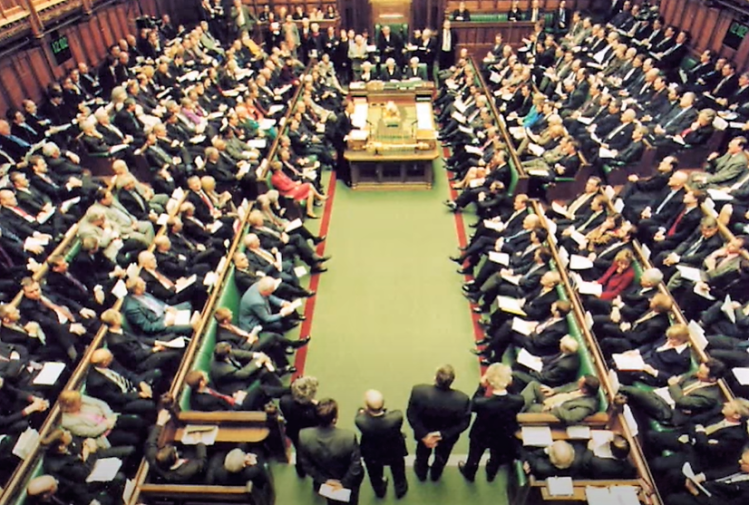
UK, 1822—of a member of parliament: to join the party opposed to one’s present party—also to vote against one’s own party; to change sides on an issue—from the practice whereby a member of parliament literally crosses the floor to join another party
UK, 1836—a person, country, etc., that appears powerful or threatening but is actually weak or ineffective—from Chinese ‘zhǐlǎohǔ’ (‘zhǐ’, paper, ‘lǎohǔ’, tiger)—used in the post-war years by the Chinese Communist Party of the USA and other reactionaries
1909 to 1923 in stories by English author P. G. Wodehouse—a facetious appellation for a home or hospital for people with mental illnesses—‘loony’: shortened form of ‘lunatic’
USA, 1889—when a situation reaches a critical point and one must commit oneself to an action or decision—the image is of having to shove when mere pushing is ineffective
American English—a surge of extremely cold air which causes rapid falls in temperature and severe wintry weather in central and eastern areas of the United States and Canada—after ‘Trans-Siberian Express’, the name of a railway running from Moscow to Vladivostok on the Sea of Japan
Australia, 1863—originally referred to any chain of communications by which bushrangers were warned of police movements—soon extended to any rapid informal network by which information, rumour, gossip, etc., is spread
UK, 1808—to make one’s beliefs or intentions plain—from the former practice of nailing an ensign to the mast of a ship, after damage during battle resulted in the ship’s colours no longer being clearly displayed, which otherwise might have been interpreted as a signal of surrender




 word histories