USA, 1856—to ask someone young, ill-equipped or inexperienced to do difficult or complicated work—this phrase usually occurs in negative contexts, especially as ‘never send a boy to do a man’s work’
British, 1907—denotes considerable talent or ability to grow plants—in this phrase, the adjective ‘green’ refers to the colour of growing vegetation—1921: ‘green-thumbed’ (adjective)
British, 1906—denotes considerable talent or ability to grow plants—in this phrase, the adjective ‘green’ refers to the colour of growing vegetation—1914: ‘green-fingered’ (adjective)
Australia, 1865—to be less of a fool than one appears to be—this phrase plays on two uses of the adjective ‘green’: 1) denoting the colour of growing vegetation, grass, etc. 2) denoting an inexperienced or naive person
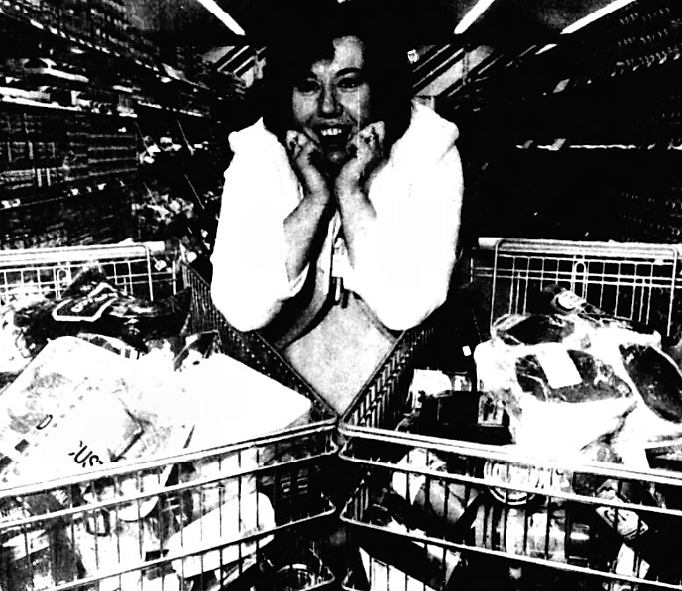
UK—1977: an event in which the winner of a game or competition is entitled to a set period of free shopping in a supermarket or other store, the object being to place as many products as possible in a shopping trolley during that time—1994: a quick or rushed shopping trip around a supermarket or other store
USA, 1888—deranged, irrational (also, in early use, drunk)—based on the image of a trolley-wheel coming off its trolley-wire—‘trolley’, also ‘trolley-wheel’: a pulley at the end of a pole, for transmitting electric current from an overhead wire to the motor of a trolley-car
a phenomenon in which the sun rises or sets in alignment with the streets that run east to west on the street grid of Manhattan, a borough of New York City—from ‘Manhattan’ and ‘-henge’, in ‘Stonehenge’, the name of a megalithic monument in England—coined by U.S. astrophysicist Neil deGrasse Tyson
UK, 1837—to go out of one’s way to start a quarrel or a fight—refers to the Irish practice of dragging one’s coat behind one in the expectation that somebody will, intentionally or unintentionally, step on it and provide the pretext needed for a quarrel or a fight
a place where one is as happy, relaxed or comfortable as in one’s own home; especially a place providing homelike accommodation or amenities—UK, 1839, in advertisements for hotels
means that the place with which one has the strongest emotional connection is the place that one regards as home—first occurred in October 1828, in an unsigned poem published in The Winter’s Wreath, an annual published in London