Australia, 1965—a panacea; a source of comfort; also indicates the need for a rest to settle down—originated in ‘A Cup of Tea, a Bex and a Good Lie Down’ (1965), a satiric revue by John McKellar—‘Bex’ was a proprietary name for a type of analgesic
Australia, 1952—the first in line; the first in a series of people or things to arrive or appear; the first to take advantage of an opportunity—refers to cab ranks (i.e., designated areas where taxicabs line up to wait for business), which operate on a first come, first served system
This proverb means that promises and plans must be put into action, otherwise they are useless. The early versions did not refer to hell or the road to hell being paved, but to hell being full of good desires, intentions, meanings, etc.
USA, 1896—one-word form representing a colloquial pronunciation of the phrase ‘hell’s a poppin’’ (1875)—meaning: ‘events are unfolding in a chaotic manner’; ‘a state of confusion and disarray is taking hold’—the verb ‘pop’ means ‘to suddenly break open’
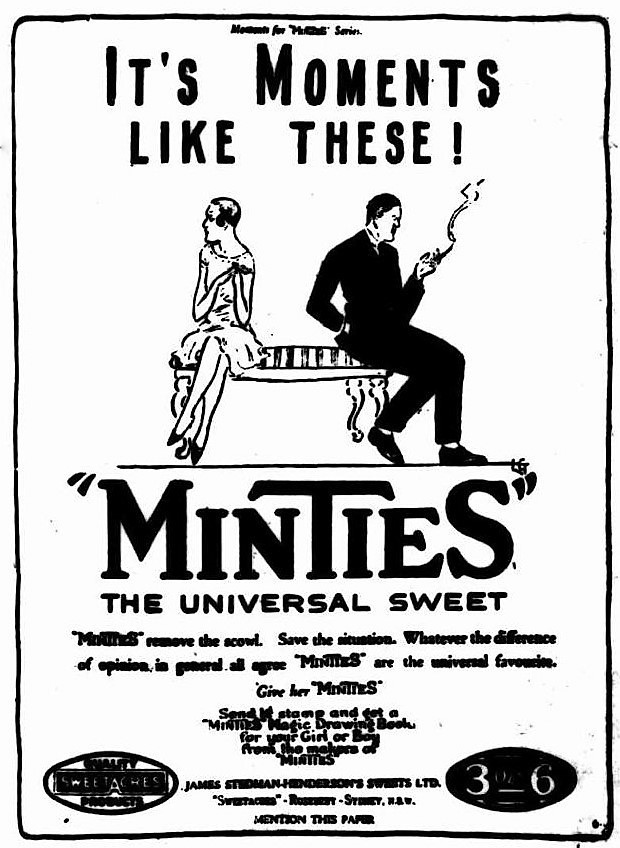
Australia, late 1920s—With reference to the slogan used in newspaper advertisements for Minties (peppermint-flavoured sweets), the phrase ‘it’s moments like these’ is applied to anyone in extremity, and the name ‘Mintie’ denotes a source of comfort.
USA, 1893—utterly despicable—jocular extension of ‘lower than a snake’—refers to the use of ‘low’ to mean ‘despicable’, and to the use of ‘snake’ to denote ‘a treacherous or deceitful person’
USA, 1982—a catchy song or melody that keeps repeating in one’s mind, especially to the point of irritation—loan translation from German ‘Ohrwurm’—original meaning (1598): an earwig
Australia, 1941—‘apples’ is used in phrases such as ‘everything’s apples’, meaning ‘everything is all right’—perhaps from ‘apple-pie order’—may have originated in the Australian armed forces’ slang during World War II


 word histories