history of ‘crow’s nest’ (lookout platform on a ship’s mast)
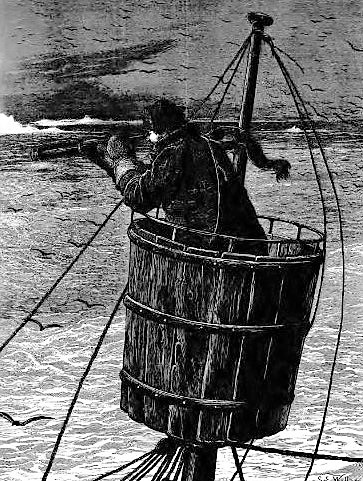
UK, early 19th century—The invention of the crow’s nest is attributed to the Arctic whaler William Scoresby Senior (1760-1829).
Read More
“ad fontes!”
UK, early 19th century—The invention of the crow’s nest is attributed to the Arctic whaler William Scoresby Senior (1760-1829).
Read MoreAttested in 1761, ‘as the crow flies’ originally referred to the interior of a country; it did not originate in a practice of early navigation at sea.
Read MoreIn ‘couch potato’, ‘potato’ may be a pun on ‘tuber’ in ‘boob tuber’, from ‘boob tube’ (= television (set)), in which ‘boob’ means ‘stupid, foolish’.
Read MoreUSA, 1837—The image is of a racoon that has been treed but the construction ‘gone + animal name’ has more generally been used in phrases of same sense.
Read MoreUSA, late 18th century—perhaps a folk-etymological alteration of British dialectal variants of ‘boon’, meaning ‘help given by neighbours’
Read Moreto avoid work, to shirk one’s duty—originated in military slang during the First World War, the word ‘column’ denoting a formation of marching soldiers
Read More‘(just) what the doctor ordered’: very beneficial or desirable under the circumstances—origin: USA, second half of the 19th century
Read Moreultimately based on the fable of the mice, or rats, who proposed to hang a bell round the cat’s neck, so as to be warned of its approach
Read MoreUSA, 1979—acronym from ‘not in my back yard’—first used in ‘the Nimby syndrome’ with reference to the disposal of nuclear waste
Read MoreUK, 1831—In ‘beer and skittles’, denoting unmixed enjoyment, the image is of a person drinking beer while playing skittles.
Read More word histories