‘useful idiot’: meaning and origin
UK, 1864: a naive person who can be manipulated to advance a political agenda—USA, 1948 (1946 as ‘useful innocent’): with reference to a communist strategy designed to gain political power
Read More
“ad fontes!”
UK, 1864: a naive person who can be manipulated to advance a political agenda—USA, 1948 (1946 as ‘useful innocent’): with reference to a communist strategy designed to gain political power
Read MoreUK, 1826—a place behind the bony point of the elbow at which a knock results in a sensation of tingling pain—in early use was perhaps partly punning on the homophones ‘humerus’ and ‘humorous’
Read MoreUSA, 1943—nonsensical or absurd talk or ideas concerning global issues—blend of ‘global’ and ‘baloney’—coined by Clare Boothe Luce in her maiden speech to the House of Representatives
Read MoreUSA, 1937—an uneasy sensation felt, especially in the stomach, as a result of nervousness or apprehension—based on the notion that the fluttering of butterflies may produce a similar sensation
Read MoreUSA, 1839—the whole group or set of people, animals or things—origin unknown—perhaps from the Dutch expression ‘de hele kit en boedel’, meaning ‘the entire house and everything in it’
Read MoreUSA, 1814—the whole group or set of people, animals or things—corresponds to modern Dutch ‘de hele boel’ (earlier ‘de hele boedel’)—‘boodle’: from Dutch ‘boedel’, estate, property, a large quantity
Read Moresouthern United States of America, 1827—used almost exclusively in the phrase ‘in cahoots’ (in early use ‘in cahoot’, ‘in cohoot’), meaning colluding or conspiring together secretly—origin unknown
Read More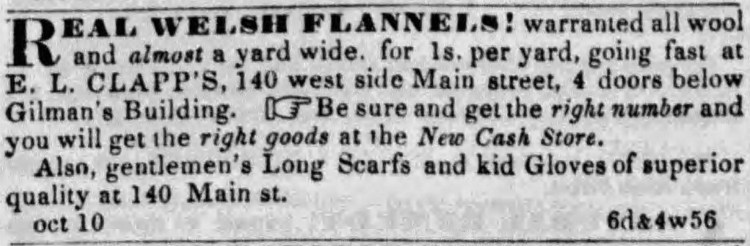
USA, 1865—of excellent quality; thoroughly sound or honourable—originally applied to cloth
Read MoreUSA, 1853—in a panic-stricken and unthinking manner—alludes to the phenomenon whereby a chicken can move about for a short time after decapitation, due to reflex activity of the nervous system
Read More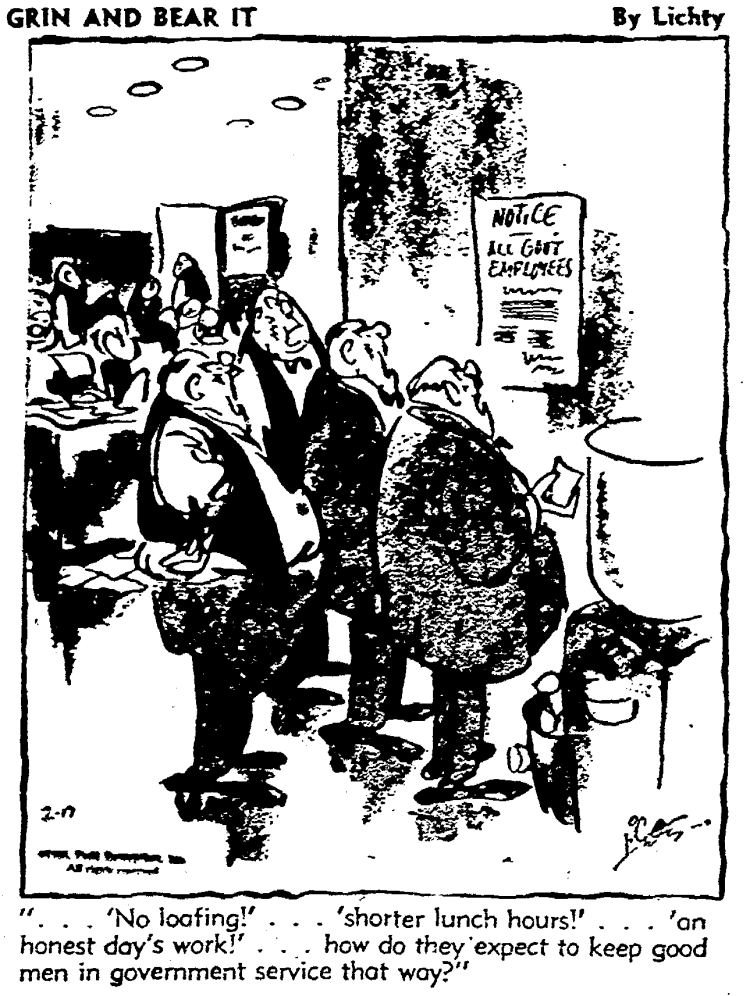
USA, 1950—a midday meal, with several martinis taken as aperitifs, enjoyed by businessmen, and/or politicians, and/or federal-government employees—especially in ‘two-martini lunch’ and ‘three-martini lunch’
Read More word histories