‘william-nilliam’: meaning and origin
1907—whether one likes it or not; haphazardly—a humorous variant of ‘willy-nilly’, after the personal name ‘William’ (‘William’ being familiarly shortened to ‘Willy’)
Read More
“ad fontes!”
1907—whether one likes it or not; haphazardly—a humorous variant of ‘willy-nilly’, after the personal name ‘William’ (‘William’ being familiarly shortened to ‘Willy’)
Read More‘parting shot’ (1817); ‘Parthian shot’ (1822): a sharp, telling remark, act, gesture, etc., made in departing—‘parting shot’: literally the final shot fired at the moment of departure—‘Parthian shot’: refers to the Parthian horsemen’s habit of shooting arrows backwards while in real or pretended retreat
Read MoreUSA, 1843—With reference to a dog used for hunting game, this phrase is used to express the opinion that a particular plan or approach will not succeed.
Read MoreUSA, 1927—denotes male vigour, especially sexual—with wordplay on ‘penis’—interestingly, via an alteration of the Latin diminutive ‘pēnĭcillus’, denoting literally a little tail, hence a painter’s brush or pencil, ‘pencil’ is derived from Latin ‘pēnis’, denoting literally a tail, hence the penis
Read MoreUSA (New England), 1868—alternately sunny and cloudy conditions usually indicate rain—the adjective ‘shet’ is a variant of ‘shut’—it was perhaps in order to provide a rhyme for the adjective ‘wet’ that the variant ‘shet’ was chosen in the proverb
Read More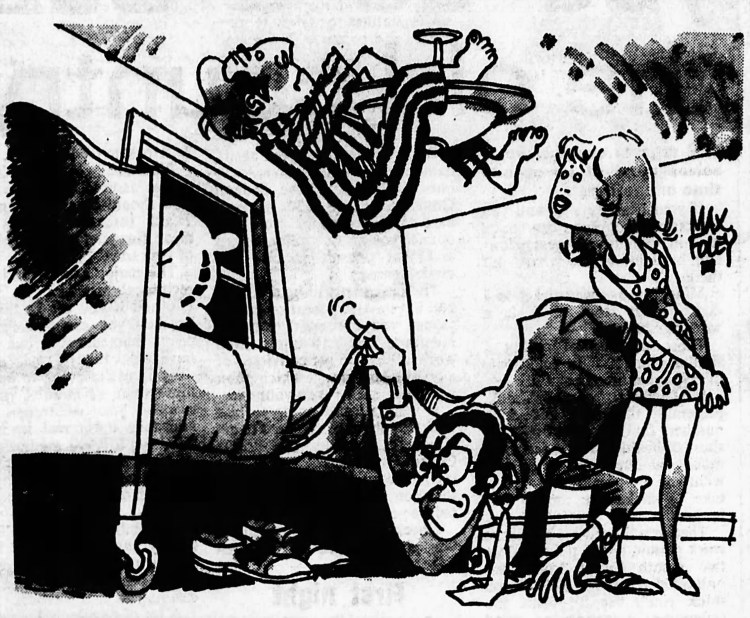
has been used to denote evidence of a de facto relationship affecting a woman’s eligibility for Social-Security benefits—refers to past practices of field officers inspecting homes and bedrooms
Read More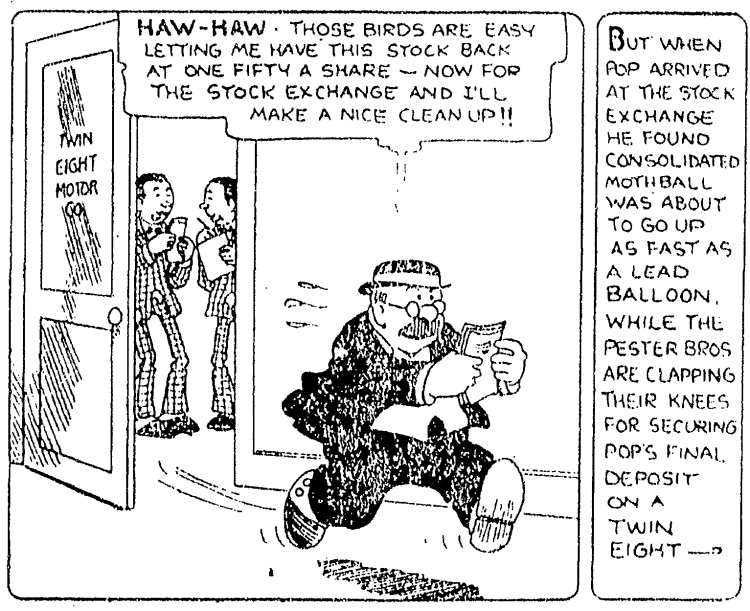
USA, 1933—a failure, an unsuccessful venture—especially used of suggestions, jokes, etc., made in public—the image is of a balloon made of lead plummeting to the ground
Read MoreUSA, 1837—to make assumptions about someone or something based on appearance or on superficial characteristics—the metaphor occurs in the preface to ‘Truth in Fiction: Or, Morality in Masquerade. A Collection of Two hundred twenty five Select Fables of Æsop, and other Authors’ (London, 1708), by Edmund Arwaker
Read Morean artist or writer who produces what is considered to be inferior work simply to earn a living—loan translation from German ‘Brotkünstler’—first used in 1827 by Scottish historian and political philosopher Thomas Carlyle in a text about German literature
Read MoreUSA—‘wishful thinking’, 1915: thinking in which one, consciously or unconsciously, interprets facts as one would like them to be rather than as they really are—‘wishful thinker’, 1917: a person who, consciously or unconsciously, interprets facts as he or she would like them to be rather than as they really are
Read More
