USA, 1901—wonderfully stylish, elegant or fashionable—a blend of ‘swell’ and ‘elegant’—popularised by its use in the song Well, Did You Evah!, interpreted by Bing Crosby and Frank Sinatra in the 1956 film High Society
USA, 1812—UK, 1818—the name of a character proverbially said to have been so great a liar that he was expelled from Hell—hence, frequently in ‘a bigger liar than Tom Pepper’, and variants: an outrageous liar
used attributively of something that may not have an end for years, if ever—especially used of a loan that the borrower refuses to pay back, and of hire purchase—refers to the line “It may be for years, and it may be for ever” in the song ‘Kathleen Mavourneen’ (1835)
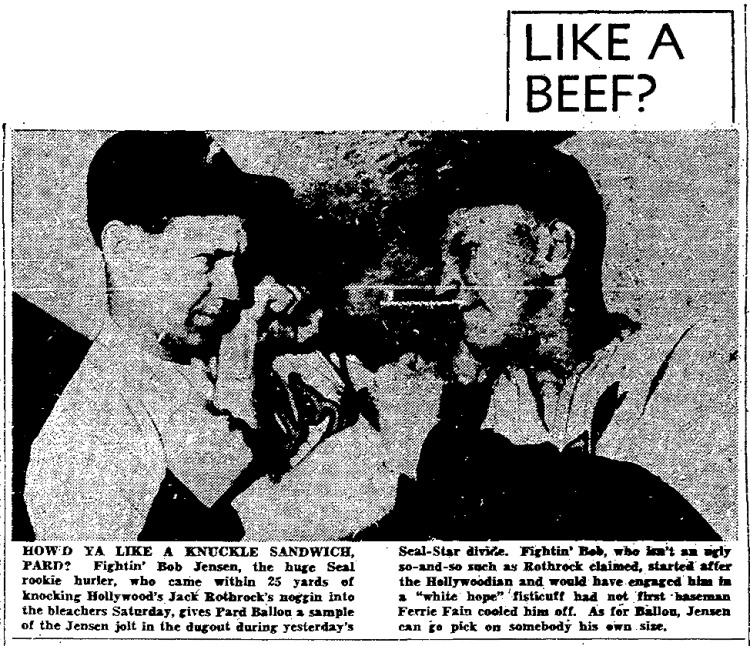
‘knuckle-sandwich’ USA, 1940—‘knuckle-butty’ UK, 1972—a punch to the mouth (or to the stomach)—the image is of a sandwich of knuckles being forced into the mouth (or into the stomach) of the person who is punched
1922—nautical—figuratively, means that different countries (or cities, spheres of activity, etc.) have different customs or practices—‘long splice’: a splice in which the ends of two ropes are interwoven in such a way that the point of joining and the ropes are of equal thickness
UK, 1677—a bad cough indicative of impending death—with allusion to the churchyard as the site of burial, ‘churchyard’ has been used attributively of something indicative of, or associated with, (impending) death
UK and USA, 1889—used of anything that is speciously high-class in appearance, but is commonplace in reality—‘Queen Anne’ means ‘beautiful’, as opposed to ‘Mary Ann’, meaning ‘vile’; ‘low’; ‘mean’
USA, 1815—UK, 1822—to use long or obscure words in speech, especially excessively or unnecessarily; to speak grandiloquently or bombastically—1680 with reference to the Latin dictionary compiled by Ambrosio Calepino

 word histories