origin of ‘Brownie’ (Girl Scout or Girl Guide)
1916—from ‘brownie’, i.e. a benevolent elf that supposedly haunts houses and does housework secretly—not from the fact that the uniform of the junior Girl Scouts and Girl Guides is brown
Read More
“ad fontes!”
1916—from ‘brownie’, i.e. a benevolent elf that supposedly haunts houses and does housework secretly—not from the fact that the uniform of the junior Girl Scouts and Girl Guides is brown
Read More
first recorded in the Los Angeles Times (California) of 15 March 1951—possibly from ‘brownie’ in the sense of ‘a benevolent elf that supposedly haunts houses and does housework secretly’
Read More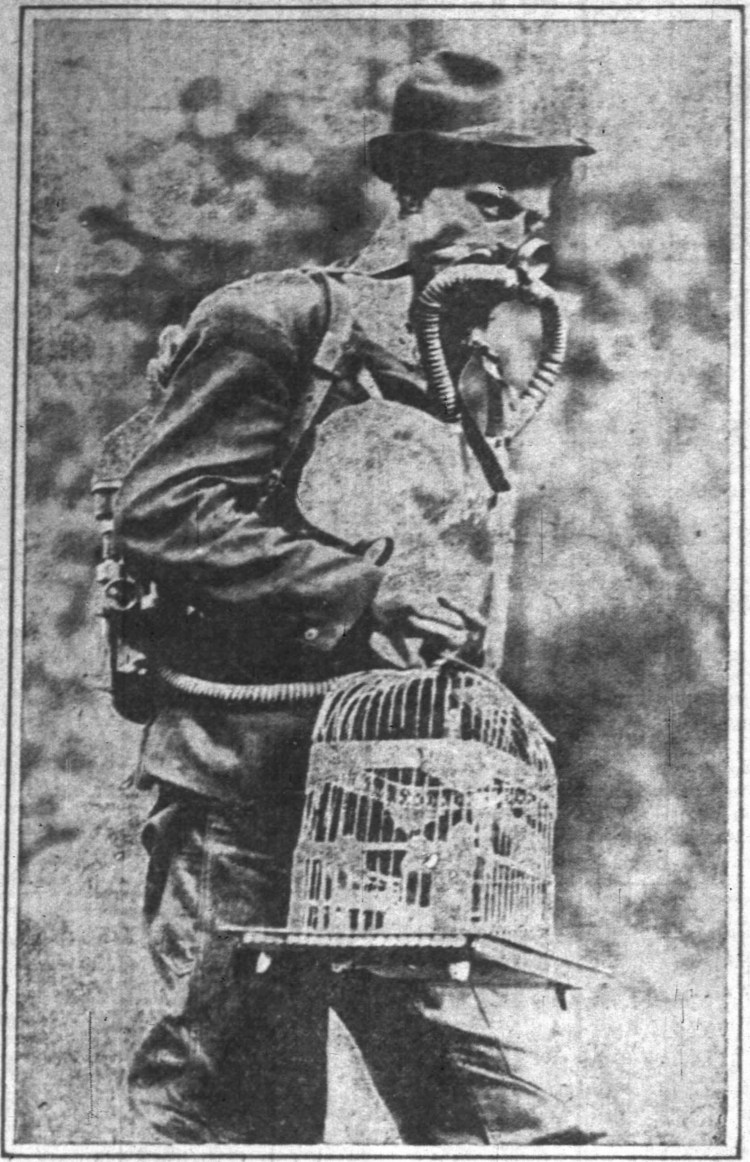
USA, 1964—‘canary in the coal mine’: an early indicator of potential danger or failure—from the former practice of taking live canaries into coal mines to test for the presence of toxic gases, the illness or death of the canaries serving as an indication that such gases were present
Read MoreThe phrase ‘a far cry’ means ‘something very different’. Its literal signification (first recorded in A Legend of Montrose (1819), by Walter Scott) is ‘a long way’, ‘a great distance’. Here, the noun ‘cry’ denotes ‘a calling distance’, as in ‘within cry of’, meaning ‘within calling distance of’.
Read More
‘coward’—from Old-French ‘cuard’, probably referring to a frightened animal with its tail between its legs—from ‘cüe’ (Modern French ‘queue’), ‘tail’, and pejorative suffix ‘-ard’ (cf. ‘bastard’)—‘cowardy, cowardy custard’, alliterative nonsensical children’s phrase (19th century)
Read Morecoined by Thomas Jefferson in Notes on the State of Virginia, first published in Paris in 1785—literal meaning: ‘to make little’ (composed of the prefix ‘be-’ and the adjective ‘little’)—criticised in The European Magazine, and London Review of August 1787 when the book was published in London
Read MoreUSA, 1795—Probably a blend of ‘irrespective’ and ‘regardless’, ‘irregardless’ means the same as ‘regardless’. It is regarded as incorrect in standard English, because the negative prefix ‘ir-’ merely duplicates the suffix ‘-less’, and is therefore unnecessary.
Read More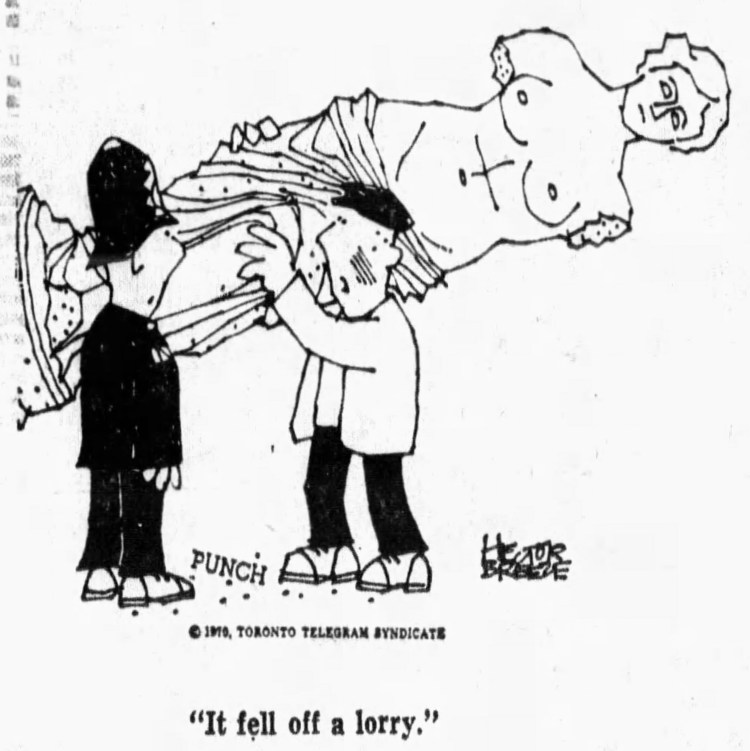
UK, 1953, humorous and euphemistic—‘to fall off (the back of) a lorry’: of goods, ‘to be acquired in dubious or unspecified circumstances’, especially ‘to be stolen’—variant with ‘truck’ came into use later in Australian and North American English
Read MoreFirst recorded in The Leeds Mercury (Leeds, Yorkshire) of Friday 26 August 1938, the phrase ‘to use one’s loaf’ means ‘to use one’s common sense’. Here, ‘loaf’, a shortening of ‘loaf of bread’, is rhyming slang for ‘head’.
Read MoreUSA, 1811—based on the three principal components that make up a flintlock gun: ‘lock’ denotes the firing mechanism, ‘stock’ the handle or wooden shoulder-piece to which it is attached, and ‘barrel’ the tube down which the bullet is fired
Read More word histories