‘to be economical with the truth’: meaning and origin
Ireland, 1832—particularly associated with Lord Robert Armstrong and the ‘Spycatcher’ trial (1986)—‘economy of truth’ was used in 1796 by Edmund Burke
Read More
“ad fontes!”
Ireland, 1832—particularly associated with Lord Robert Armstrong and the ‘Spycatcher’ trial (1986)—‘economy of truth’ was used in 1796 by Edmund Burke
Read MoreUK, 1942—a weekly hour of religious instruction provided by chaplains to British-Army units—‘padre’ (literally ‘father’) is colloquially used to designate and address a male chaplain in the armed forces
Read Morean apparent misfortune that works to the eventual good of the recipient—first half of the 18th century (from 1713 onwards) in the plural form ‘blessings in disguise’
Read Morenotoriously used of the Beatles by John Lennon in an interview published in the Evening Standard (London, England) of 4 March 1966—but had been used earlier, for example in 1927 of Charlie Chaplin
Read MoreUK, 1803, as an adjective—UK, 1842, as a noun—in reference to the action or practice of attacking, or acting against, someone in a treacherous or underhand manner
Read Moreto make bigger or greater, to enlarge—UK, 1884, as a translation of ancient Greek ‘μεγαλύνειν’ as used in the Acts of the Apostles, 5:13—recoined in 1996 in the U.S. animated television series The Simpsons
Read More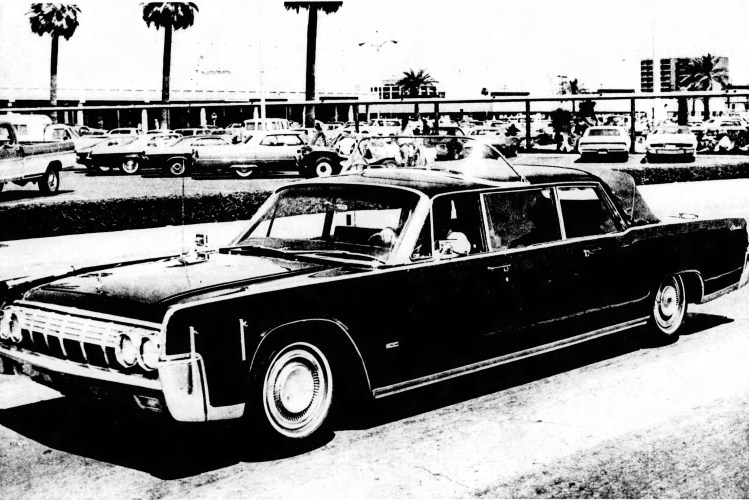
USA, 1969—the 1964 Lincoln Continental specially built and equipped for Pope Paul VI’s 1965 visit to the United States
Read Morehumorous variant of ‘one man’s meat is another man’s poison’—Australia, 1872—used in particular of the opposition between flesh-eating and fish-eating in relation to the religious observance of fasting
Read MoreUSA, 1854—the experience of life regarded as a means of instruction, in contrast to formal (higher) education—now often used with the implication that life experience is of greater benefit than formal education
Read Morea long-awaited sign that a period of hardship or adversity is nearing an end—UK, 1862—the image is of a railway tunnel, and the phrase has been used literally
Read More word histories