‘Queen Anne front and Mary Ann back’
UK and USA, 1889—used of anything that is speciously high-class in appearance, but is commonplace in reality—‘Queen Anne’ means ‘beautiful’, as opposed to ‘Mary Ann’, meaning ‘vile’; ‘low’; ‘mean’
Read More
“ad fontes!”
UK and USA, 1889—used of anything that is speciously high-class in appearance, but is commonplace in reality—‘Queen Anne’ means ‘beautiful’, as opposed to ‘Mary Ann’, meaning ‘vile’; ‘low’; ‘mean’
Read MoreUK, 1741—all day, incessantly—also, in early use, ‘morn, noon and night’—different from the juxtaposition of the nouns ‘morning’, ‘noon’ and ‘night’, which refers to an action taking place first in the morning, then at noon, and finally at night
Read Morea small component of a much larger structure, system or process; an insignificant individual within a large population or community—commonly associated with ‘Another Brick in the Wall’, the title of a three-part composition by the British band Pink Floyd in their 1979 rock opera ‘The Wall’, but has been used since 1867
Read More17th century—contrasts what the mind remembers with what it forgets (with reference to the opposition between the coarser particles, which are retained by a sieve, and the finer ones, which pass through it)—denotes an extremely poor memory (with reference to the fact that a sieve does not hold all its contents)
Read MoreUSA, 1853—in a panic-stricken and unthinking manner—alludes to the phenomenon whereby a chicken can move about for a short time after decapitation, due to reflex activity of the nervous system
Read MoreUK, 1710—in a situation in which any action one takes will have adverse consequences—‘cleft’, past participle of the verb ‘cleave’, means ‘split in two to a certain depth’—the image is of one being squeezed between the stick’s prongs
Read MoreUSA, 1871—The phrase ‘a whale of a (good) time’ denotes a hugely enjoyable time, and alludes to the enormousness of whales.
Read MoreUK, 1836—a person, country, etc., that appears powerful or threatening but is actually weak or ineffective—from Chinese ‘zhǐlǎohǔ’ (‘zhǐ’, paper, ‘lǎohǔ’, tiger)—used in the post-war years by the Chinese Communist Party of the USA and other reactionaries
Read More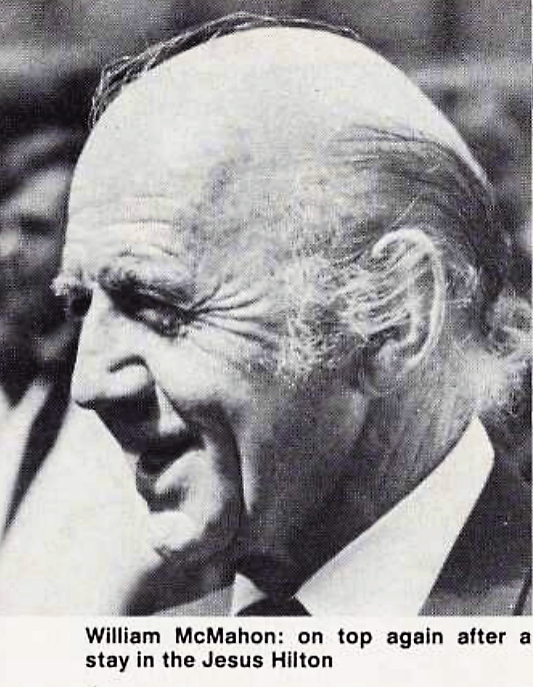
Australia—familiar name of St Vincent’s Private Hospital, Sydney—‘Jesus’ refers to the fact that the hospital is operated by a religious organisation—‘Hilton’ alludes to the hospital’s plushness
Read MoreUK, 1844—extreme meanness never made anyone better off—compare Book of Proverbs, 11:24: “There is one who scatters, yet increases more; and there is one who withholds more than is right, but it leads to poverty.”
Read More word histories