the Communist origin of ‘to vote with one’s feet’
UK, 1934—image said to have been first used by Lenin about the Russian soldiers who were abandoning the war during the Russian Revolution of 1917
Read More
“ad fontes!”
UK, 1934—image said to have been first used by Lenin about the Russian soldiers who were abandoning the war during the Russian Revolution of 1917
Read Moremeaning: everything is or will turn out all right—Scotland, 1891—‘bob’ probably related to the adjectives ‘bob’ and ‘bobbish’, meaning ‘well, in good health and spirits’
Read More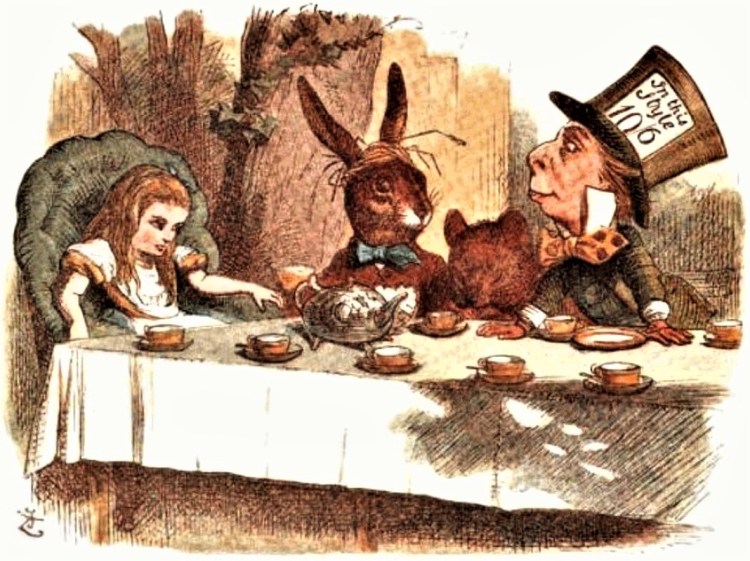
to be insane—late 19th century—originated in the fact that in 19th-century productions of Shakespeare’s ‘Hamlet’, Ophelia appeared with straws in her hair in her ‘mad scene’
Read More‘to know where the bodies are buried’: to have personal knowledge of the secrets or confidential affairs of an organisation or individual—USA, 1928, as ‘to know where the body is buried’
Read More‘to be unable to run a whelk stall’ and variants: to be incapable of managing the simplest task or enterprise—coined by John Elliot Burns (1858-1943), English trade unionist and politician, in the 1894 New Year’s address to his constituents of Battersea
Read More1808, as ‘to talk a horse’s hind leg off’—‘[animal’s] hind leg off’ is probably a hyperbolic extension of ‘to talk’, emphasising the speaker’s persistence or eloquence
Read MoreBritish, 1925—‘to throw a spanner in(to) the works’: to cause disruption, to interfere with the smooth running of something—synonym (American English): ‘to throw a monkey wrench into’
Read MoreThe original image was of throwing a monkey wrench into the cylinder of a threshing machine, and was exclusively applied to political situations—USA, late 19th century.
Read More‘the lion’s share’ (UK, 1790)—calque of French ‘le partage du lion’ (now ‘la part du lion’)—from ‘The Heifer, the She-Goat, and the Ewe, in partnership with the Lion’, a fable by Jean de La Fontaine (1621-95)
Read More‘hell in a handbasket’ (1841), ‘heaven in a handbasket’ (1834) in Irish contexts—‘handbasket’ chosen for alliteration with ‘hell’—‘to go to hell in a handbasket’ meant ‘to go to hell’—‘to go to heaven in a handbasket’ meant ‘to go to heaven’ or ‘to go to hell’
Read More
