late 16th century—from early modern Dutch ‘maelstrom’ (now ‘maalstroom’)—originally a proper name designating a powerful whirlpool in the Arctic Ocean, off the west coast of Norway, which was formerly supposed to suck in and destroy all vessels within a wide radius
USA, 1946—‘to have, or to get, egg on one’s face’: to be, or to get, embarrassed or humiliated by the turn of events—refers either to having eggs thrown at one’s face or to yolk stains left on the face after the careless eating of a soft-boiled egg
U.S., second half 19th century—from the story (1850) of a man who, having declared that he could eat anything, was challenged to eat crow; the crow he had to eat was seasoned with snuff, so that the man gave up after one bite, saying “I can eat crow, but I’ll be darned if I hanker after it.”
USA, 1939—‘there is’, or ‘ain’t’, ‘no such thing as a free lunch’: everything inevitably involves a cost of some kind—literal meaning of ‘free lunch’ (first half of the 19th century): a lunch provided free of charge in a bar, saloon, etc., as a means of attracting customers
1763 in French, 1798 in English—from the name of Étienne de Silhouette (1709-67), Controller-General of Finances in 1759—perhaps because he might have invented the portrait in profile obtained by tracing the outline of a head or figure by means of its shadow
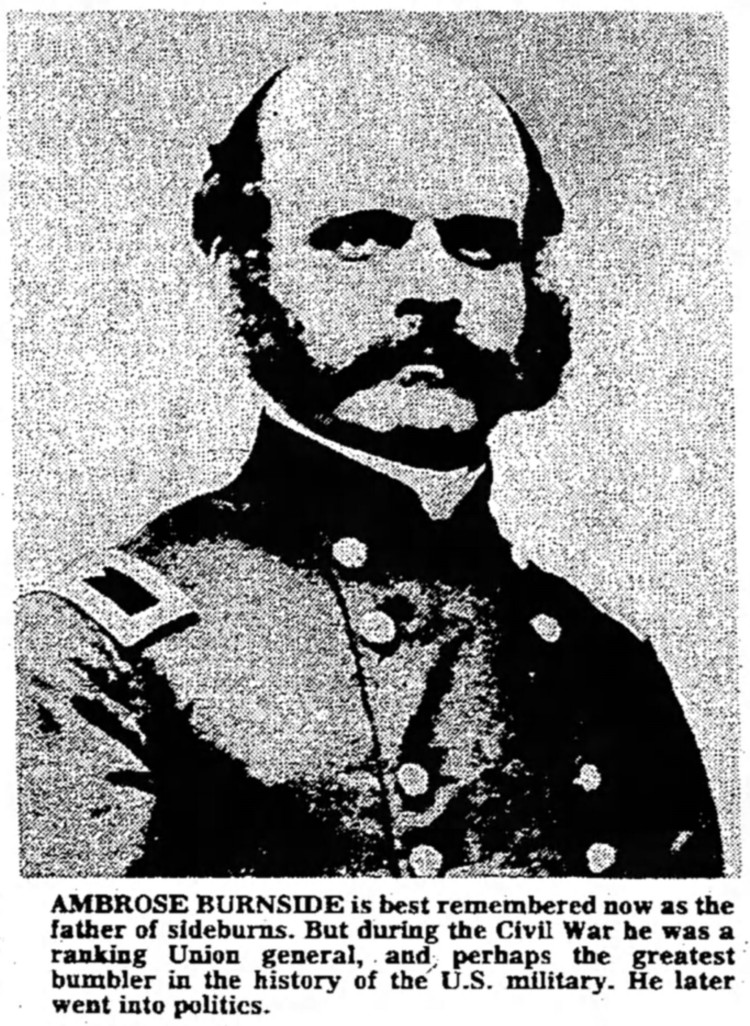
After Ambrose Burnside, Union general in the U.S. Civil War, ‘burnsides’ (1866) denotes thick side whiskers worn with a moustache and clean-shaven chin; on the pattern of ‘side whiskers’, it was altered to ‘sideburns’ (1875), itself altered to ‘sideboards’ (1882).
USA, 1811—based on the three principal components that make up a flintlock gun: ‘lock’ denotes the firing mechanism, ‘stock’ the handle or wooden shoulder-piece to which it is attached, and ‘barrel’ the tube down which the bullet is fired
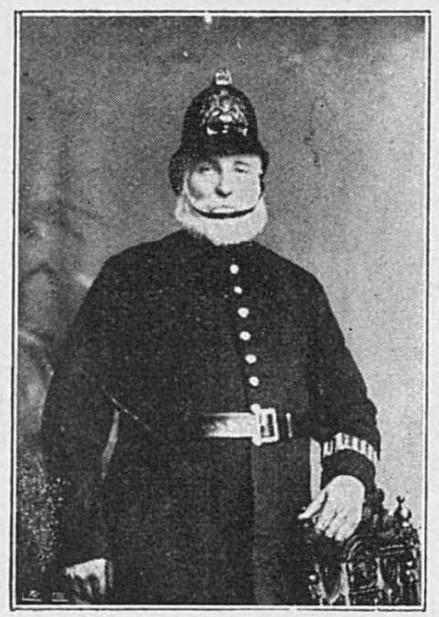
UK, 1844—‘bobby’: a policeman—from ‘Bobby’, pet form of ‘Robert’, in allusion to Robert Peel, who, as Home Secretary, established the Metropolitan Police in 1829—cf. ‘peeler’ (1816), originally a member of the Peace Preservation Force in Ireland established in 1814 by Robert Peel
‘handbag’: to bully or coerce by subjecting to a forthright verbal assault or criticism—originally used with reference to British Prime Minister Margaret Thatcher in The Economist (7 August 1982)—from literal meaning ‘to batter or assault with a handbag’
Of American-English origin, the colloquial phrase ‘hot under (or ‘in’) the collar’ means ‘extremely exasperated or angry’. The earliest instance that I have found is from The Chicago Tribune (Chicago, Illinois) of 8th July 1869.




 word histories