from the notion that even a dead cat will bounce if dropped from a sufficient height—UK, 1981: a rapid fall in the stock market with hardly any reaction—USA, 1985: a rapid but short-lived recovery in the stock market after a sharp fall—hence, 1992: any spurious success
‘a stiff upper lip’: a quality of uncomplaining stoicism—now understood as referring to what is believed to be a quintessentially British trait, the repression of emotion, but originated in fact in North America (USA, 1811)
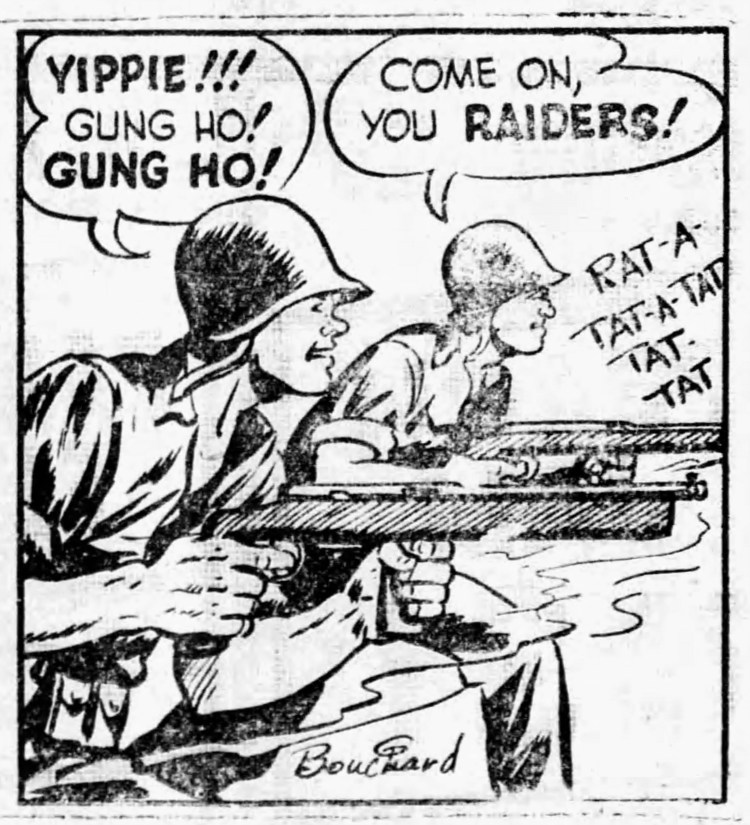
from Chinese ‘gōnghé’, short for ‘Zhōngguó Gōngyè Hézuò Shè’ (Chinese Industrial Cooperative Society)—interpreted as a slogan meaning ‘work together’ (USA, 1941)—adopted by Evans F. Carlson, commander of the 2nd Marine Raider Battalion (1942)
USA, 1916—used in collocation to seek or provide clarification between the two main meanings of ‘funny’: ‘funny-ha-ha’ means ‘funny’ in the sense ‘amusing’ or ‘comical’ – ‘funny-peculiar’ means ‘funny’ in the sense ‘strange’ or ‘peculiar’.
The phrase ‘footloose and fancy-free’ means ‘not committed or tied to anyone or anything’—it appeared in the 1860s only, in U.S. political contexts, although each of its elements dates from the 17th century.
UK, 1831—to startle or upset a sedate or conventionally-minded community—most probably from the following lines in The Tragedy of Coriolanus (circa 1607), by William Shakespeare: “like an eagle in a dove-cote, I | Flutter’d your Volscians in Corioli”
first recorded in the United Kingdom in 1914, with reference to the civilizational implication of the German invasion of Belgium at the beginning of World War One; therefore, not first used by Orson Welles in Citizen Kane (1941)
UK, 1962—the time after which programmes unsuitable for children are broadcast on television—from the image of a dividing line between two different sorts of programmes
UK, 1797—strength or confidence gained from drinking alcohol—alludes to the drinking habits ascribed to the Dutch—one of the phrases in which ‘Dutch’ is used derogatorily, largely because of the enmity between the English and the Dutch in the 17th and 18th centuries
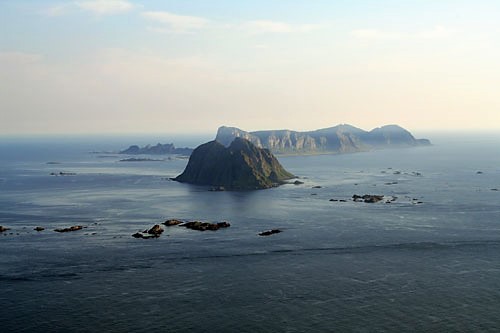
late 16th century—from early modern Dutch ‘maelstrom’ (now ‘maalstroom’)—originally a proper name designating a powerful whirlpool in the Arctic Ocean, off the west coast of Norway, which was formerly supposed to suck in and destroy all vessels within a wide radius

 word histories