meaning and origin of ‘sentence first (and) verdict afterwards’
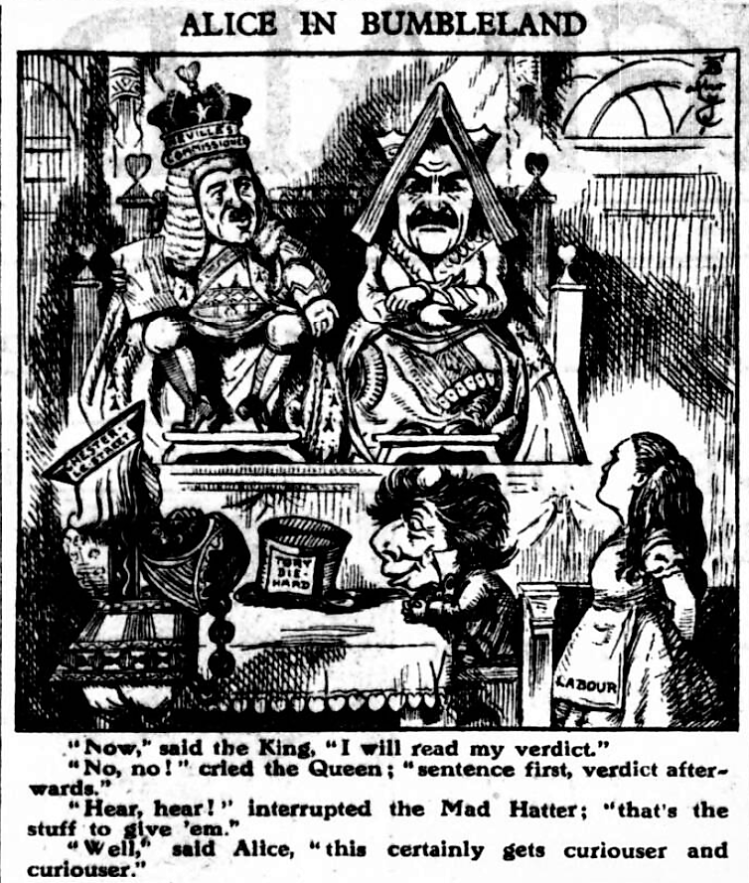
UK, 1869—used to denounce arbitrariness—alludes to a demand by the Queen of Hearts during the trial of the Knave of Hearts in Alice’s Adventures in Wonderland (1865)
Read More
“ad fontes!”
UK, 1869—used to denounce arbitrariness—alludes to a demand by the Queen of Hearts during the trial of the Knave of Hearts in Alice’s Adventures in Wonderland (1865)
Read MoreUSA, 1969—a method alternating kindness with harshness—from a police interrogation technique in which one officer is aggressive while the other is sympathetic
Read More
UK, 1939—characteristic of, or similar in spirit to, the films of the Italian-born American film director Frank Capra (1897-1991)
Read More
1934—pompous, reactionary type of person—from the cartoon character (a pompous retired British army officer voicing a hatred of new ideas) created by David Low
Read More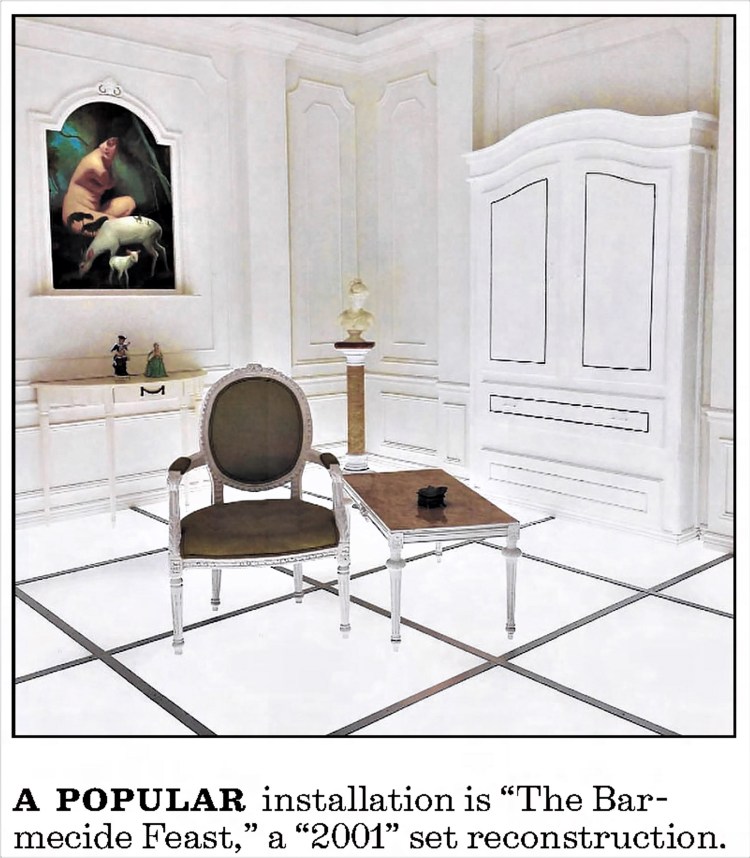
UK, 1823—pretended or illusory generosity or hospitality—from the name of a prince in The Arabian Nights, who gave a beggar a feast consisting of empty dishes
Read More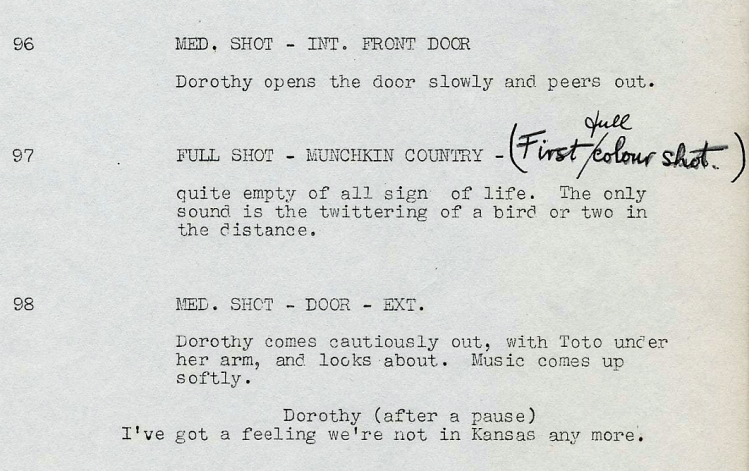
USA, 1971—in dramatically changed circumstances—said by Dorothy in The Wizard of Oz (1939) when realising she has been transported from Kansas to the land of Oz
Read More1969 as ‘No Go Land’, proper name of a Catholic ghetto in Belfast—1970 as ‘no-go area’, any Northern-Irish area to which entry was restricted or forbidden
Read More
Decided by the Académie française, the erroneous spelling ‘oignon’ (= ‘onion’) has become a symbol of prejudiced people, ignorant of the history of their own language.
Read More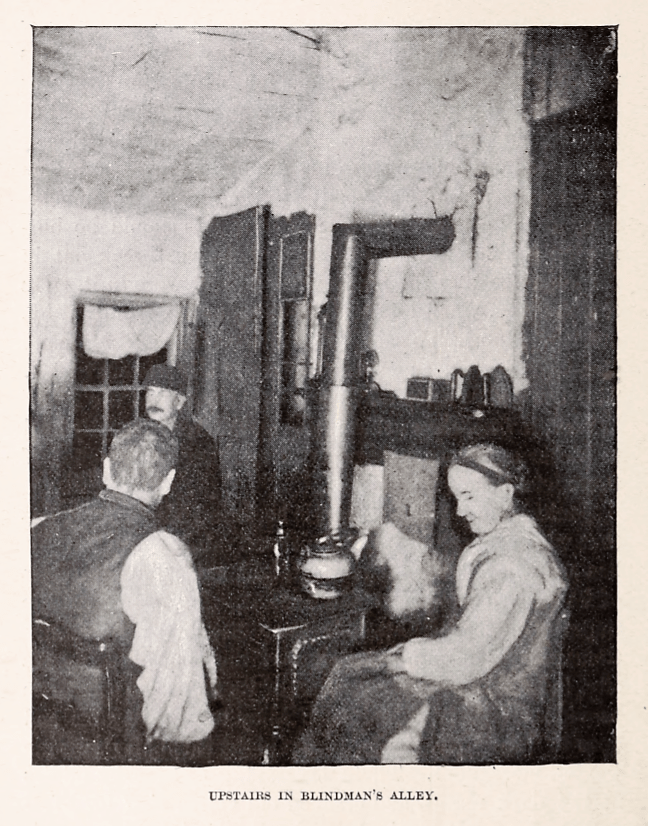
UK, 1849: cheap dingy eatery, as a translation from German—USA, from 1862 onwards: brothel, squalid lodging-house, bar; 1897: cheap dingy eatery
Read More
1850, in The Times of London, apparently as a translation from German—later instances (Minnesota, 1891-98) also associated with German to an extent or another
Read More
